Trump's Profane Ultimatum to Netanyahu Exposes Fracture Over Lebanon Escalation
President Donald Trump's expletive-laden confrontation with Israeli Prime Minister Benjamin Netanyahu on June 1 laid bare a deepening rift over Israel's military posture in Lebanon, just as the US navigates fragile nuclear talks with Tehran.
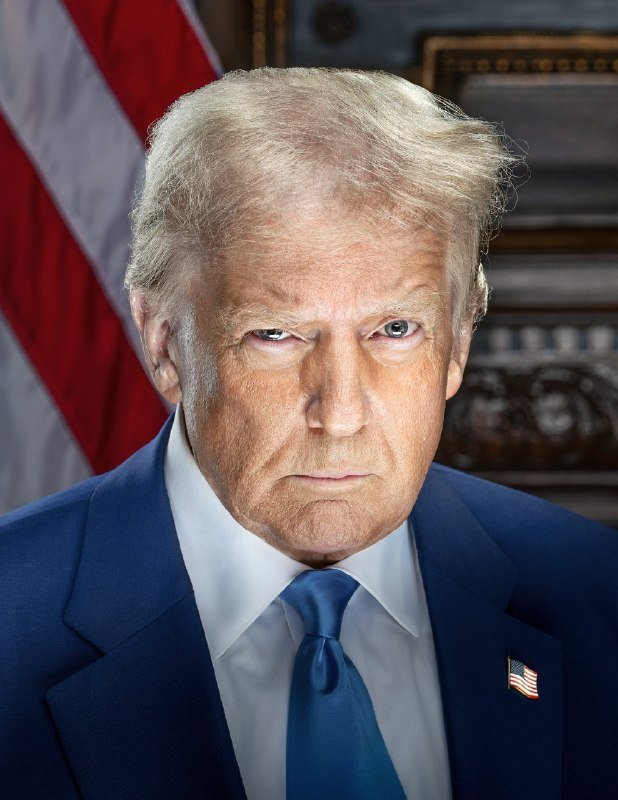
On the morning of June 1, 2026, President Donald J. Trump placed a phone call to Israeli Prime Minister Benjamin Netanyahu that, according to sources familiar with the conversation who spoke to Axios, was marked by open anger and the use of profanity. Trump reportedly told the Israeli leader: "You're fucking crazy. You'd be in prison if it weren't for me. I'm saving your ass." The exchange, first reported by Axios's Barak Ravid, represents the sharpest documented friction between the two leaders since Trump returned to office in January and has placed his administration's broader Middle East diplomacy under renewed strain.
The confrontation centres on Israel's ongoing military operations in Lebanon, which have continued despite earlier claims by Trump that both Israel and Hezbollah had agreed to cease hostilities. According to OSINTdefender, a source that has tracked the escalation closely, Netanyahu's office subsequently stated that the Israel Defense Force would continue operations — directly contradicting the American President's account. That contradiction is not merely diplomatic noise. It goes to the heart of whether the US executive can credibly broker de-escalation in a conflict where its closest regional ally is acting independently of Washington's declared position.
The Iran angle complicates the calculus
The timing of the call is not incidental. Iranian officials had threatened to withdraw from nuclear negotiations in the days preceding June 1, citing concern that Israel's military posture was designed to undermine the diplomatic process. Trump, speaking to ABC News on Monday, stated that he believed an agreement to extend the ceasefire and reopen the Strait of Hormuz could be reached "over the next week." That optimism now faces a direct challenge: if Tehran perceives Tel Aviv as acting in bad faith — and using Washington's own mediation to buy time for an expanded campaign — the diplomatic window may close before it fully opened.
The Strait of Hormuz is the critical variable. Approximately 20 percent of global oil shipments transit the waterway, and its reopening under any extended ceasefire arrangement would signal a substantive de-escalation between the United States and Iran after years of mutual escalation. Trump's team has made that outcome a priority. Israel's apparent willingness to risk that outcome for operations in Lebanon suggests a hierarchy of interests that does not automatically align with the White House's — a tension that the June 1 call made explicit.
What the public record shows — and what it obscures
The sources consulted for this article agree on the broad contours of the call: a Washington call to Tel Aviv, expressed in sharp terms, framed around concern that Israeli actions were damaging the Iran negotiating track. Where the accounts diverge is on intent. One reading is that Trump's expletives represent genuine operational frustration — a President who believes his personal credibility is on the line with Tehran, and who sees Israeli autonomy as a threat to his own diplomatic legacy. An alternative reading is that the frankness is partly performative — a calibrated signal to domestic audiences and to Tehran that the US is not endorsing Israeli escalation, without meaningfully constraining what Jerusalem does next.
The available evidence does not resolve which reading is primary. What is clear is that both readings produce the same immediate outcome: uncertainty about whether the US can deliver on its own stated ceasefire commitments when its key ally is publicly at odds with them.
Regional consequences if the fracture holds
If the current trajectory continues, several outcomes become more likely. Tehran hardliners will cite the Netanyahu episode as evidence that Washington's diplomatic overtures are a cover for Israeli strategic expansion — a framing that will be difficult for the State Department to counter without concrete demonstrations of leverage over Jerusalem. The ceasefire extension Trump told ABC News he expected could stall or collapse before a formal agreement is reached. And the US's broader credibility as a broker in the region — already strained after two years of conflict — faces a further test that its diplomatic architecture may not currently be built to pass.
Israeli security concerns are real and defensible. The northern border has seen sustained hostilities since October 2023, and Israeli officials have argued consistently that Hezbollah's ongoing military presence constitutes an existential threat that cannot be indefinitely managed through ceasefire frameworks. That position has not changed. But the gap between a legitimate security argument and a military posture that actively undermines US diplomatic leverage is real — and on June 1, the White House appears to have decided that gap was wide enough to warrant a call that, in diplomatic terms, amounted to a formal objection.
Whether that objection changes anything is a separate question. The sources do not indicate that any concrete constraint on Israeli operations was offered or accepted during the call. The fracture is now on the record. What follows will determine whether it closes.
This publication's approach to the story prioritised the US wire record — ABC News and Axios — as the primary factual basis. The Telegram wire feeds provided corroborating context but did not add independent claims beyond what those outlets had reported. The structural frame — US-Israel divergence over Iran diplomacy — was consistent across all sources consulted.
Wire provenance
This editorial synthesis draws on the following public wire/social posts:
- https://t.me/osintlive/4821
- https://t.me/osintlive/4820
- https://t.me/osintlive/4819
- https://t.me/megatron_ron/11432
- https://t.me/bricsnews/22918
- https://t.me/GeoPWatch/10887