Trump Threatens Netanyahu: You're Fucking Crazy Over Lebanon Escalation
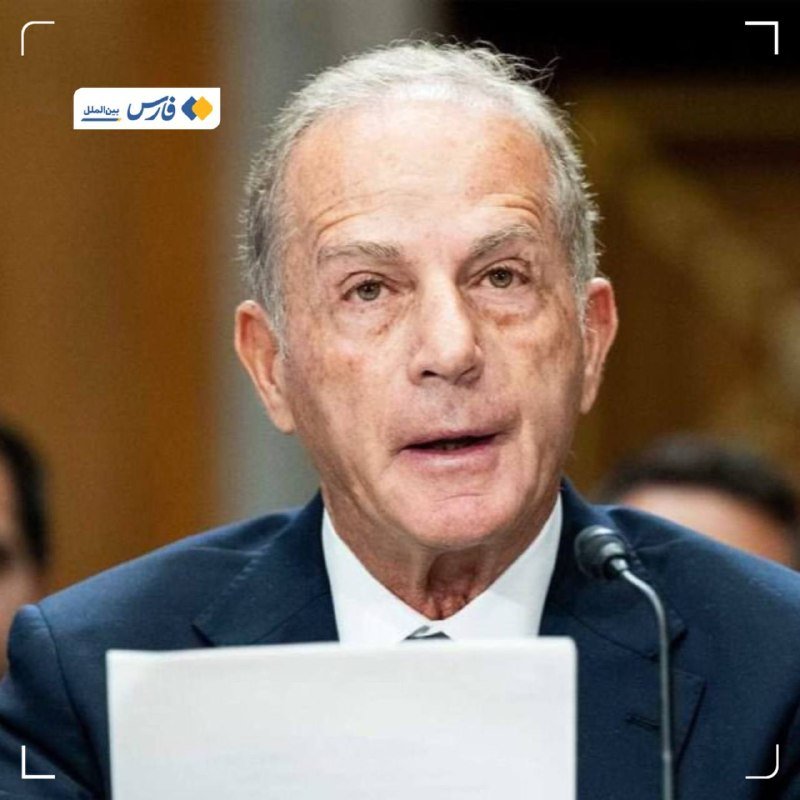
On Monday, June 1, 2026, President Donald Trump placed a call to Israeli Prime Minister Benjamin Netanyahu that insiders describe as volcanic. According to reporting by Axios, Trump told the Israeli leader in blunt terms: "You're fucking crazy. You'd be in prison if it weren't for me." The exchange, confirmed by multiple sources familiar with the call, came as intelligence emerged suggesting Israel was preparing military strikes against Beirut — a move that threatened to shatter the fragile ceasefire arrangement Trump has spent political capital brokerin
The episode exposes a fracture at the core of America's Middle East posture. Trump has positioned himself as the indispensable arbiter of regional de-escalation, brokering ceasefires and dangling the prospect of a broader Iran deal before Western audiences. Yet the Israeli government's willingness to escalate unilaterally — apparently without prior consultation with Washington — suggests Tel Aviv is operating on a different strategic clock entirely. The question this incident raises is not merely about bilateral friction; it is about whether American mediation retains any binding force over parties that possess the capacity and, as Monday's episode suggests, the inclination to act independently.
The Beirut Question
Israeli planning for operations targeting Beirut has been a live concern throughout the post-ceasefire period. Defense analysts tracking the northern frontier have noted that Hezbollah's military infrastructure remains largely intact despite the nominal halt to hostilities. Israeli officials have long argued that a degraded but functional enemy force does not constitute security; it constitutes an unacceptable residual threat. The sources describing the call to Axios indicate that Trump confronted Netanyahu precisely over these escalating contingency plans.
The expletive-laden ultimatum from Washington carries a subtext worth examining: "You'd be in prison if it weren't for me" is not diplomatic language. It reads as leverage — a reminder that Trump believes his personal protection has been essential to Netanyahu's political survival, particularly in light of ongoing corruption proceedings that predate the current regional crisis. Whether that leverage is real or performative remains contested. What is not contested is that the relationship between the two leaders has entered a new and more volatile phase.
The Iran Dimension
The same day as the Netanyahu call, Trump told ABC News that he expected an agreement with Iran to extend the ceasefire and reopen the Strait of Hormuz "over the next week." The Hormuz chokepoint is the arterial route through which roughly one-fifth of global oil shipments pass. Its closure would constitute an economic event of the first order, and its reopening — contingent on an Iran deal — has been a centerpiece of Washington's regional diplomacy since the ceasefire took hold.
The timing matters. Trump appears to be running two simultaneous negotiations with adversaries whose interests are not aligned: an Iran deal that requires de-escalation across a broad front, and an Israeli security architecture that requires continued military pressure on Hezbollah. For the Iranians, any acceptable ceasefire extension almost certainly entails a halt to Israeli operations in Lebanon. For the Israelis, the option to strike Beirut remains a card they are unwilling to surrender. Trump's ultimatum to Netanyahu suggests the president understands this contradiction — and is prepared to exert pressure directly on the more dependent party to preserve the broader diplomatic framework.
Structural Tensions in American Mediation
Monday's episode is not an isolated flare-up. It reflects a structural problem that has shadowed American Middle East policy since the original nuclear deal unraveled: Washington wants to manage regional competition without the costs of either unlimited commitment or outright abandonment. The result is a posture of strategic ambiguity that advantages actors willing to call the bluff.
Netanyahu has survived this dynamic before. His government has consistently extracted maximum operational latitude from American backing while minimizing the corresponding constraints. The call recorded on Monday suggests Trump is no longer willing to extend that latitude without visible pushback. Whether that pushback is sufficient to alter Israeli calculations — or whether it merely deepens resentment while leaving the underlying behavior unchanged — is the central uncertainty.
The sources do not specify whether additional diplomatic channels have been activated, whether Pentagon officials have been consulted, or whether allied governments have been briefed on the state of play. What is clear is that the relationship between the White House and the Israeli prime minister's office is under genuine strain — not the performative friction that periodically surfaces in joint communiqués, but the real thing.
What Remains Uncertain
The precise content of any Israeli operational planning for Beirut is not public. The sources describe reporting that such plans existed; they do not confirm whether those plans have been shelved, suspended, or merely held in abeyance pending further diplomatic developments. It is also unclear what guarantees — if any — Trump offered in exchange for Netanyahu standing down. The ABC interview suggests the Iran-ceasefire extension is the proximate carrot; whether Tel Aviv considers that carrot sufficient is a question the sources do not answer.
The broader architecture of the regional ceasefire — which includes tacit acceptance from multiple regional actors whose cooperation is not guaranteed — remains fragile. A single miscalculation on either side could restart a cycle of strikes that the ceasefire was designed to interrupt. Monday's call suggests the American president understands this; it does not confirm that the Israeli government shares that understanding.
— Monexus published this story at 22:45 UTC on June 1, 2026. The wire picture from Axios dominated initial coverage; Monexus foregrounded the Iran-Hormuz dimension, which received less attention in the first cycle but is structurally central to the leverage calculus driving the White House's ultimatum to Tel Aviv.
Wire provenance
This editorial synthesis draws on the following public wire/social posts:
- https://t.me/osintlive/89234
- https://t.me/osintlive/89236
- https://t.me/bricsnews/45612
- https://t.me/insiderpaper/78901
- https://t.me/rnintel/23456
- https://t.me/GeoPWatch/11223