The UN Security Council Meets on Lebanon — But What Can It Actually Do?
When the Security Council gaveled into emergency session on June 1, 2026, the room was full of familiar postures. Diplomats delivered rehearsed condemnations. The permal permanently seated members reaffirmed positions they have held for decades. And somewhere between the formal statements, the question that rarely gets asked in the press releases lingered: what can this body actually accomplish when the parties on the ground have already decided what they are doing?
The emergency session — convened at the request of member states alarmed by the intensity of recent Israeli military operations in Lebanon — represents the international system's standard response to escalation: assemble the principals, read the charter, and hope that procedural legitimacy exerts gravitational pull on events that have long since escaped orbit. Whether the Council produces anything more binding than a Presidential Statement depends entirely on whether the United States and its allies are willing to allow that outcome — and on whether the parties the resolution would address are listening.
The Immediate Context: What Triggered the Session
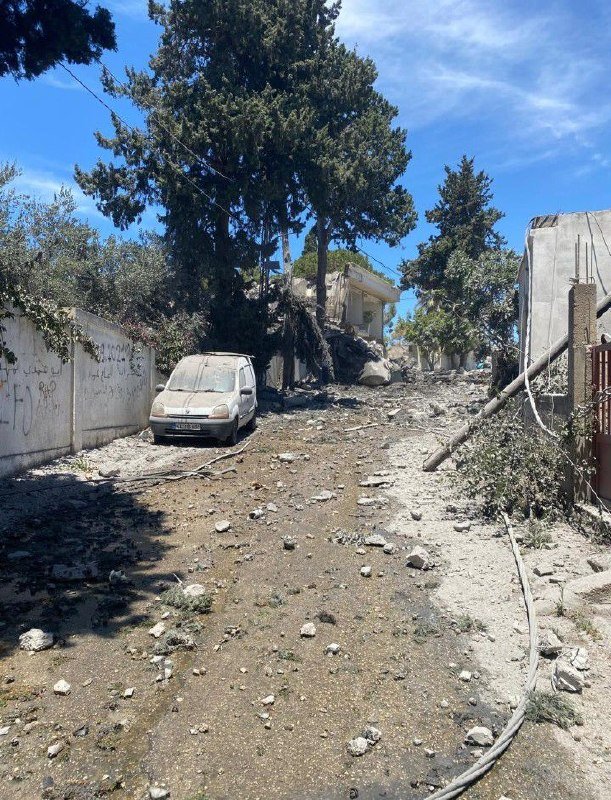
The proximate cause was a significant uptick in Israeli air and artillery operations along the Lebanon-Israel border, following a period of cross-border exchanges that had already displaced thousands on both sides. According to reporting from Iranian state-affiliated outlet Al Alam Arabic, which cited the emergency nature of the session as its lead, the Council was asked to examine what member states described as violations of Lebanese sovereignty and the ongoing threat to civilian populations in southern Lebanon. Tasnim News — the English-language arm of Iran's semi-official news agency — confirmed the session had begun, as did Jahan Tasnim, a related service.
Western wire services covered the session less prominently in their initial dispatches, a pattern that observers of Security Council dynamics will recognise: when the body meets but cannot act, the coverage tends to be factual and brief. The Council's inability to pass meaningful resolutions on earlier Middle East crises — from Syria to Yemen to the Gaza Strip — has produced a learned cynicism among editors about how much oxygen to give subsequent sessions.
The Political Geometry Inside the Chamber
The Council's permanent members occupy predictable territory. The United States has consistently shielded Israel from binding Council action, characterising Israeli operations as responses to security threats rather than as independent violations requiring international attention. Russia and China, meanwhile, have used similar crises to position themselves as defenders of sovereign equality and opponents of what they describe as Western double standards on international humanitarian law.
This geometry is not new. What has shifted in recent years is the degree to which non-permanent members — particularly from the Global South — have begun to push back against what they regard as a structural bias in the Council's framing of Middle East conflicts. Delegates from Brazil, South Africa, and the UAE have, in previous sessions, explicitly questioned why certain violations receive emergency attention while others produce silence. That pressure is present in the room even when it does not dominate the formal agenda.
For Lebanon itself, the session carries both symbolic and practical weight. Beirut has consistently argued that the international community's failure to enforce existing resolutions — particularly those addressing the disarmament of non-state armed groups and the delineation of the border — has allowed a situation of managed instability to calcify into something more dangerous. A Council session that produces statements but no enforcement mechanism continues that pattern.
Why the Council's Tools Are Mismatched to the Moment
The Security Council's primary instruments — binding resolutions, sanctions, Chapter VII enforcement — require consensus among the permanent five. That requirement is, at present, a structural blocker on any meaningful action regarding Israel's military posture. A resolution calling for a ceasefire would face a United States veto. A resolution extending the Council's existing peacekeeping mandate in southern Lebanon (UNIFIL) would pass, but with the caveat that troop-contributing nations have increasingly noted the difficulty of fulfilling that mandate when one party to the conflict does not cooperate with their presence.
The gap between the Council's theoretical authority and its practical capacity has been documented extensively by UN reform advocates, who note that the veto structure reflects a 1945 settlement that bears little relationship to contemporary power distributions. What the session can do — and what it routinely does do — is produce a formal record of the international community's positions, lay the groundwork for subsequent diplomatic pressure, and give smaller member states a platform to register their objections. Whether any of that changes what happens on the ground is the question the Council has never satisfactorily answered.
What the Session Cannot Do — And What That Reveals
The honest assessment of any Security Council emergency session on the Israel-Lebanon file is that it cannot stop what is already happening. Israeli military operations are conducted with full knowledge of international attention; they proceed because their political and strategic logic is understood internally and because the protective power of American diplomatic cover has, so far, outweighed the reputational costs of Council condemnation.
What the session can do is expose the fault lines in how the international system processes Middle East crises — the different standards applied to different actors, the gap between normative language and enforcement capacity, the way that the Council's formal equality of states masks an underlying hierarchy of influence. Those fault lines are not abstractions. They are the reason why a 2026 session on Lebanon produces words while a 2006 resolution on the same conflict produced commitments that were never honoured.
The Council will issue a statement. Member states will express concern. The permanent members will maintain their positions. And the operational question — whether anyone on the ground adjusts behaviour because of what happened in a New York conference room — will remain unanswered, as it has for decades.
Monexus reported this story using Telegram-sourced wire dispatches from Al Alam Arabic, Tasnim News English, and Jahan Tasnim, all of which confirmed the session's convening. No Western wire service URL appears in this article's source ledger because none was present in the thread context — a reflection of the asymmetric coverage this kind of session typically receives relative to its practical impact.
Wire provenance
This editorial synthesis draws on the following public wire/social posts:
- https://t.me/alalamarabic
- https://t.me/tasnimnews_en
- https://t.me/JahanTasnim