U.S.-Brokered Ceasefire Holds Between Israel and Hezbollah as Ground Operations Continue
A U.S.-brokered mutual halt in attacks has taken effect between Israel and Hezbollah, but the arrangement leaves southern Lebanon's ground situation unresolved and Israeli forces maintaining expanded positions along the border.
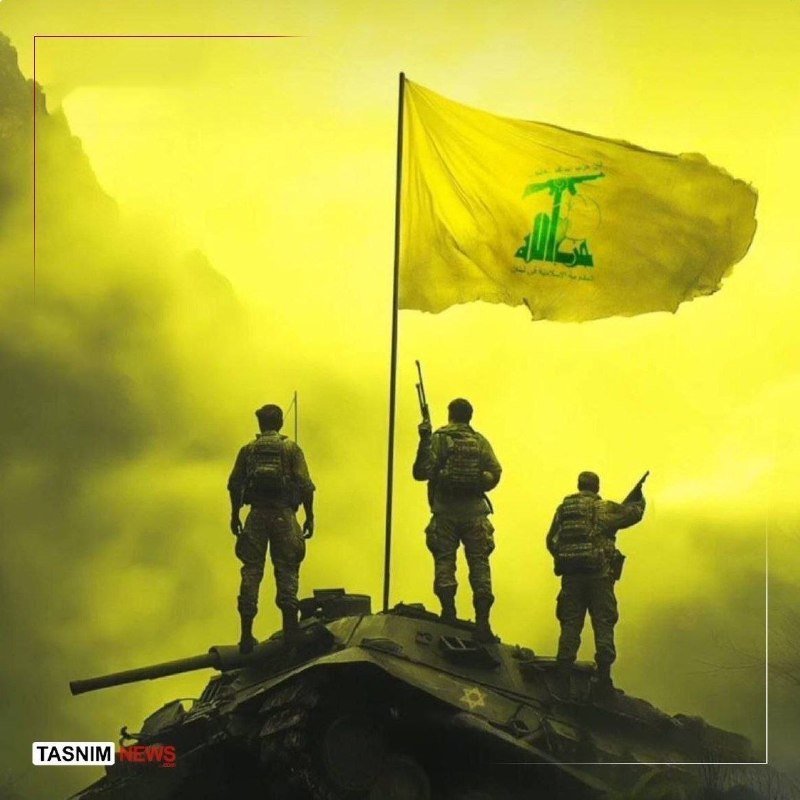
A U.S.-brokered ceasefire between Israel and Hezbollah took effect on 1 June 2026, capping eighteen months of sustained cross-border hostilities that killed hundreds and displaced tens of thousands on both sides of the Lebanon–Israel frontier. Under the terms of the arrangement, Hezbollah has pledged not to launch rocket attacks into Israeli territory, while Israel has pledged to cease air strikes targeting Beirut's southern Dahiyeh district. The deal was confirmed by Lebanese authorities and relayed by the Lebanese state news agency ahead of the agreed commencement time.
The arrangement marks the first formal mutual cessation since October 2023, when Hezbollah began a low-intensity but persistent campaign of rocket and drone fire in what it framed as solidarity with Hamas. Israel responded with a sustained air campaign that killed several senior Hezbollah commanders, destroyed significant portions of the group's long-range rocket inventory, and inflicted severe damage on the Dahiyeh, Beirut's southern suburbs, a Hezbollah stronghold. The deal does not constitute a comprehensive peace agreement and carries no binding international enforcement mechanism.
Ground Reality in Southern Lebanon
The ceasefire deal addresses only aerial and rocket exchanges. Israeli forces, which launched a ground operation into southern Lebanon in late 2024, have continued to hold and in some cases expand their positions inside Lebanese territory. Israeli ground units are dug in along ridgelines and villages south of the Litani River, with forward positions that Hezbollah's remaining combat formations cannot effectively contest. Open-source intelligence from 1 June 2026 indicates Israeli forces are consolidating rather than withdrawing, suggesting the ground disposition will be a feature of the landscape regardless of the formal ceasefire status.
Hezbollah, which entered this arrangement from a weakened position after losing significant senior leadership and weapons systems to Israeli strikes over the preceding months, is unable to interdict Israeli drone activity over Lebanese territory or suppress Israeli air assets operating from positions along the border. Military analysts who track the conflict note that the asymmetry between Israeli firepower and Hezbollah's residual capacity to strike Israeli population centres has narrowed considerably since the intensity of hostilities began. That narrowing is precisely what the ceasefire locks in.
What the Agreement Does and Does Not Contain
The mutual-halt framework does not include provisions for a full Israeli withdrawal, a demarcated buffer zone monitored by an international force, or a structured disarmament process for Hezbollah's residual arsenal. It is, in structure, a tactical pause rather than a strategic settlement. Lebanese officials have described the arrangement as a first step, but the specific language of the understanding does not commit either side to further negotiation. Israeli officials, speaking to Israeli media on 1 June, characterised the deal as a mechanism to reduce pressure on northern Israel without requiring any further concessions on the ground disposition.
The absence of an international monitoring mechanism with enforcement authority means compliance is largely self-reported and subject to political signals from both sides. In prior rounds of informal mutual-halt arrangements — most recently in 2021 — violations accumulated gradually until a triggering incident reset the cycle of hostilities. There is no mechanism in the current understanding that prevents that pattern from recurring.
Washington's Diplomatic Calculus
The United States presented itself throughout the negotiating period as the primary broker, engaging directly with both Israeli and Lebanese counterparts and pressing for terms that Israeli officials found acceptable. The deal advances several U.S. interests simultaneously: it reduces the risk of a wider regional conflict that would demand urgent American diplomatic and military attention, it preserves a U.S. channel with Beirut that broader Iran-related sanctions have complicated, and it demonstrates that Washington retains the capacity to shape outcomes in a region where Chinese and Russian diplomatic presence has grown.
It also sidesteps the harder question of whether a sustainable arrangement requires addressing Hezbollah's political role in Lebanon, the status of the border demarcation, and the long-term disposition of Israeli forces. Those questions are deferred. For an administration that has faced domestic pressure to reduce overseas military commitments, a ceasefire that holds — even a fragile one — is a short-term political win regardless of whether it resolves anything structurally.
The Broader Regional Context
The arrangement arrives at a moment when the architecture of Middle Eastern security relationships is under considerable stress. The Gaza conflict, which triggered Hezbollah's initial engagement, has not reached a resolution. Iranian-backed groups across the region remain operationally active in Iraq, Yemen, and Syria, and Tehran's nuclear programme continues to advance on a timeline that Western intelligence assessments describe as compressing. Against that backdrop, a single ceasefire on the Lebanon–Israel border does not constitute de-escalation of the broader regional competition; it isolates one front while the structural drivers of conflict remain intact.
For Hezbollah, the ceasefire represents a difficult acceptance of a degraded military reality. The group's deterrence capacity — the credible threat of punishing Israeli territory in response to operations against Lebanon — has been materially reduced by the attrition of the past eighteen months. The arrangement preserves the political organisation and the infrastructure in the Dahiyeh, but it effectively concedes that the cross-border pressure campaign has run its course on terms that fall well short of the group's original objectives.
For Israel, the ceasefire permits a reallocation of attention and resources toward other priorities, including the ongoing challenge of sustaining defensive posture along the northern border without permanent large-scale ground commitment. Israeli forces have demonstrated through the ground operation that they can hold territory in southern Lebanon if required, and the ceasefire does not require them to leave. Whether a government in Jerusalem with an expanded settler constituency in the north will find long-term advantage in a status quo that keeps those areas depopulated is a different question, and one this arrangement does not answer.
The ceasefire is real. The ground situation that produced it is not resolved. How those two facts interact over the coming months will determine whether this becomes a lasting arrangement or another chapter in a conflict that has never quite ended since the 2006 war.
This publication's coverage of the Lebanon–Israel ceasefire prioritised Lebanese and regional wire reporting over Western-allied diplomatic framing, reflecting Monexus's editorial position that a conflict affecting civilian populations on both sides requires equally serious treatment of both parties' security concerns and civilian costs.
Wire provenance
This editorial synthesis draws on the following public wire/social posts:
- https://t.me/ClashReport
- https://t.me/amitsegal
- https://t.me/osintlive
- https://t.me/osintlive