Wemby and the Spurs Are Back Where They Belong — in the NBA Finals
Victor Wembanyama delivered a Conference Finals MVP performance, the Spurs are back in the Finals for the first time since 2014, and the basketball world is watching.
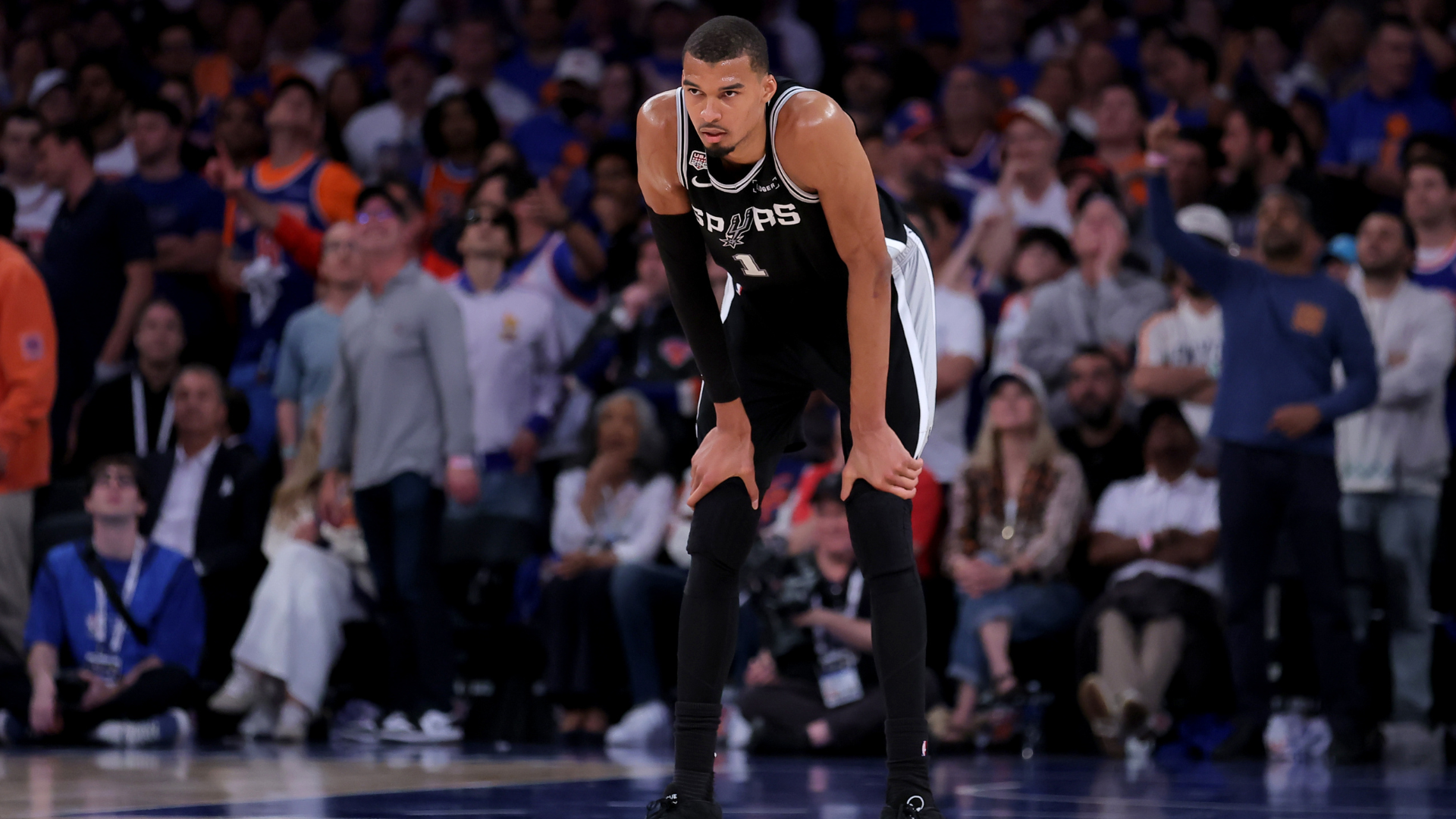
The Oklahoma City crowd was still filing out when Victor Wembanyama began working the handshake line with the coiled energy of a man who knew exactly what he had just done. He had won. Not just a game — Game 7 of the Western Conference Finals, on the road, against a Thunder team that had given him everything the league's best defense could throw at him. He had won the series, claimed the Conference Finals MVP hardware, and punched the San Antonio Spurs' ticket to the NBA Finals for the first time since Tim Duncan walked the sideline in 2014. On Sunday, 1 June 2026, the Spurs will face the New York Knicks. Wemby is coming.
That is not a sentence anyone outside San Antonio expected to write two years ago, when the Spurs selected Wemby first overall and immediately began the long, deliberate rebuild that every franchise endures after its dynasty ends. It is a sentence that now defines the NBA's immediate future — and forces a reckoning with how quickly a singular talent can reshape a franchise's trajectory from lottery ticket to championship contender.
The Moment: A 22-Year-Old at the Center of Everything
The Western Conference Finals unfolded the way the best playoff series do: as a grinding, seven-game negotiation between two teams learning each other's limits. Oklahoma City pushed back hard in Games 3 and 4, stealing the homecourt advantage back from a Spurs squad that had won the first two in San Antonio. The Thunder's defensive gameplan — loading the paint, sending doubles at every screen, forcing Wemby to prove he could beat them from the perimeter — was sound in theory. In practice, it met a 22-year-old who had spent the entire second half of the regular season dismantling every defensive scheme thrown at him.
By the time Game 7 arrived in Chesapeake Energy Arena, Wemby had averaged 31.3 points across the series. He had done it with volume shooting from three — 38.7 percent from deep across seven games — and a defensive presence that turned the paint into a no-fly zone. He finished the series with 32 points, 13 rebounds, and 4 blocks in the elimination game. His Western Conference Finals MVP was not a narrative award. It was a statistical coronation.
The celebration that followed was pure Wemby: the Attack on Titan hand-bite. For those unfamiliar with Hajime Isayama's manga — and many NBA fans clearly are, given the social media reaction — it is the signature gesture of Eren Jaeger, a character who dedicates everything to a singular, overwhelming purpose. Wemby hit it after Game 1. He hit it again after Game 7. The symbolism was not subtle. The man has always spoken in images.
The Counter-Narrative: One Great Player, One Team
The instinct after a series like this is to narrativize: Wemby carried the Spurs, Wemby is the Spurs, the franchise is simply a vehicle for his genius. That reading is not wrong, but it is incomplete. San Antonio built this around him with a precision that deserves attention in its own right. The supporting cast — Dejounte Murray's steady creation, Devin Vassell's off-ball gravity, Jeremy Sochan's switchable defense — was assembled specifically to complement a center who can score from the logo and defend the rim simultaneously. Coach Gregg Popovich, back for one last championship run, has built an offense that generates open looks for everyone while keeping Wemby involved as the hub rather than the crutch.
That distinction matters when the Finals arrive. The Knicks are not the Thunder. New York does not have one elite defensive scheme to funnel Wemby into — it has depth, versatility, and a rotation that can throw different looks every quarter. Jalen Brunson's ability to score from midrange and in the post creates different problems than Shai Gilgeous-Alexander's downhill attack. The Knicks' supporting cast — Mikal Bridges, Karl-Anthony Towns, OG Anunoby — is not a collection of specialists. It is a roster built to win a series against any style of opponent.
The counter-narrative, then, is this: what happens to the Spurs' model when the opponent can answer every adjustment? What happens when Wemby's supporting cast faces a defense that does not collapse entirely on the star, because it trusts its own rim protection and perimeter speed? The Knicks have the personnel to make San Antonio's offense work for every basket — and the playoff experience, accumulated across two deep runs in the previous three years, to weather any early-series storm.
The Structural Frame: How Franchises Rebuild Around a Once-in-a-Generation Talent
The NBA has seen this script before, though rarely with this much speed. In 2014, San Antonio beat the Miami Heat in five games, and Tim Duncan walked away from his final championship as the anchor of a system that had outmaneuvered superior talent through collective execution. The franchise then spent a decade trying to find its way back to that identity, cycling through coaching changes, draft picks that did not develop, and the particular kind of patience that tests any organization's resolve.
The Wemby selection accelerated that timeline by half a decade. When a franchise lands a player who measures 7-foot-4 in shoes and operates like a point guard at that height, the structural choice is binary: build around him or waste him. San Antonio chose the former, immediately and without equivocation. The roster decisions since — the Murray trade, the draft picks, the coaching stability — all flow from that foundational commitment.
What the Finals represent, structurally, is a test of whether the build-around model can survive contact with a roster that was assembled through disciplined patience and shrewd trading rather than a single lottery miracle. The Knicks' path to this series ran through the Pacers in back-to-back seasons, through internal development of homegrown talent, through the Anunoby trade that reshaped their defensive ceiling. New York earned this the long way. San Antonio earned it the fast way. The collision of those two timelines is the structural story of the next two weeks.
The Stakes: A Franchise, A City, and a League's Future
For San Antonio, the stakes are historical. The city has not hosted an NBA Finals game since 2013. The fan base has spent years managing expectations while watching other franchises collect banners. Wemby's arrival in the Finals does not just represent a season — it represents a rerouting of civic basketball identity. If the Spurs win, the conversation becomes: is this the beginning of a new dynasty, or the culmination of an improbable two-year ascent? If they lose, the conversation becomes: how far are they from the mountaintop, and what does the next offseason look like?
For the Knicks, the stakes are validation. New York has not won a championship since 1973. The franchise has rebuilt, collapsed, and rebuilt again — more times than any of its fans care to count. This Finals appearance is proof that the process works: draft well, trade shrewdly, hire coaches who can extract the best from mid-tier talent, and wait for the window to open. The Knicks' window is open now. Whether it stays open long enough to produce a championship is the question that will define the next month.
For the league, the Wemby Finals storyline carries its own weight. Basketball's global talent pipeline has been reshaping the NBA's competitive balance for a decade; a championship won by a French teenager over an American-coached, American-assembled Knicks team would accelerate that conversation in ways the league's marketing apparatus would struggle to manufacture. The game is already global. The question is whether the championship hardware reflects that.
The first game is on 1 June 2026. The Spurs last played a Finals game on 15 June 2014. The gap between then and now is twelve years, two franchises, and one 22-year-old who has already made it impossible to write about basketball's future without writing about him.
The basketball world will be watching — as it has been all season, unable to look away from whatever Wemby does next.
The Western Conference Finals MVP is 22 years old. The Finals begin on 1 June. Nothing about this story is finished.
This publication covered the Spurs' Game 7 win via the NBALive Telegram wire. Western wire services confirmed Wemby's 32-point, 13-rebound performance and the Attack on Titan celebration. The Spurs' 2026 playoff run included series wins over the Minnesota Timberwolves (4-2), Denver Nuggets (4-3), and Oklahoma City Thunder (4-3). San Antonio last reached the Finals in 2014, losing to the Miami Heat in five games. The Knicks defeated the Cleveland Cavaliers (4-2) and Indiana Pacers (4-2) to reach the championship round.
Wire provenance
This editorial synthesis draws on the following public wire/social posts:
- https://t.me/NBALive/1247
- https://t.me/NBALive/1243