When Hospitals Become Targets: The Cost of Erasing Medical Neutrality
Israeli strikes on Jabal Amel Hospital in Tyre, Lebanon, underscore a dangerous erosion of the protections meant to shield medical facilities during conflict. The international response will determine whether those protections survive.
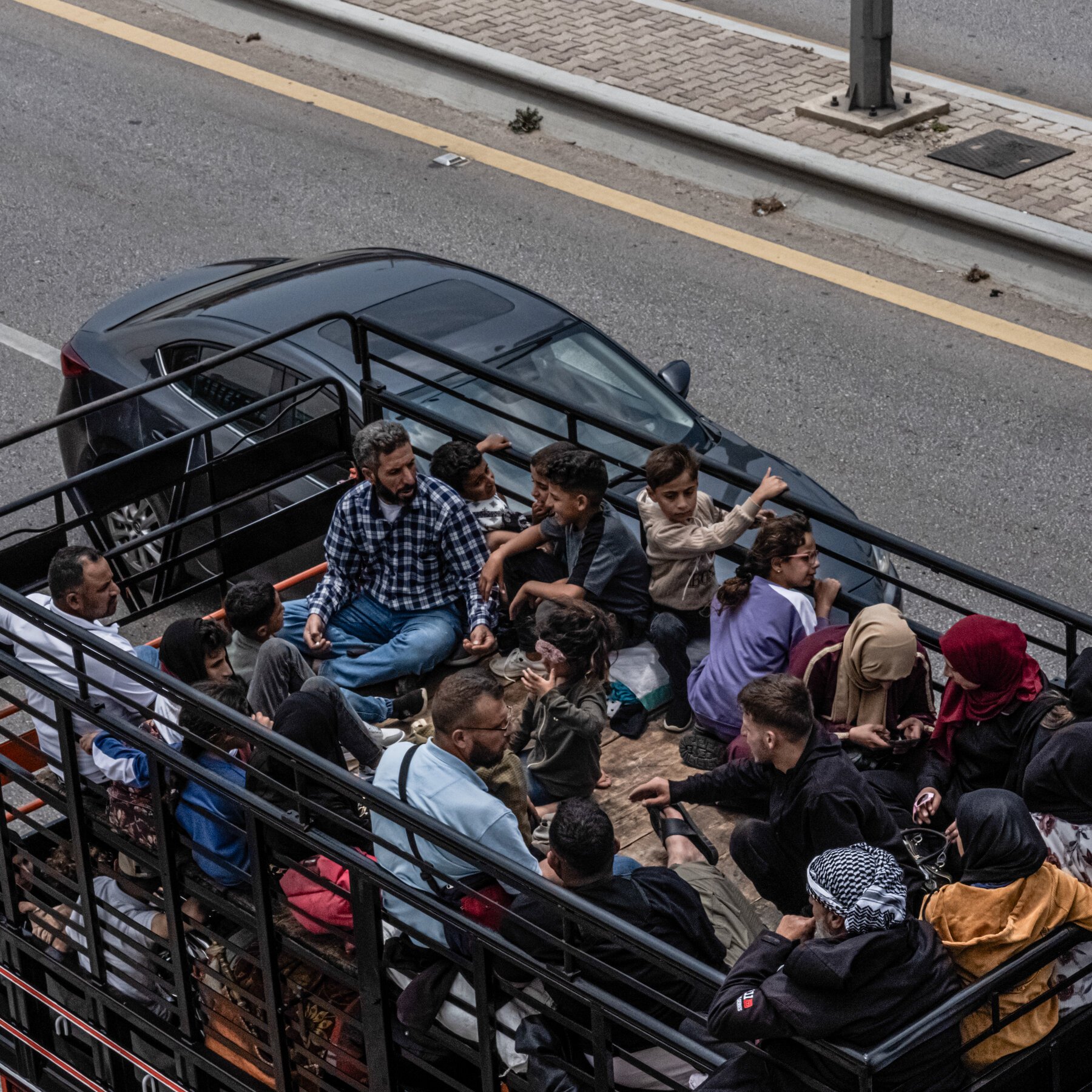
Israeli airstrikes struck Jabal Amel Hospital in Tyre, Lebanon, on 1 June 2026, reducing the region's largest medical facility to a scene of widespread destruction. The strikes — confirmed across multiple regional wire services, including The Cradle Media and PressTV — caused extensive damage to the hospital building and the surrounding area, with reports of civilian casualties and dozens of injured. Tyre, a coastal city in south Lebanon, has for years served as the primary healthcare hub for a population already strained by economic collapse and regional instability. That hospital is now crippled.
The immediate human cost is self-evident. What requires analysis is the framework that has made this kind of strike thinkable — and the international silence that has made it routine.
The Legal Fiction of "Proportionality"
Israeli military doctrine permits strikes on infrastructure deemed to be used for military purposes, provided the anticipated civilian harm is deemed "proportionate" to the military advantage gained. This standard has been invoked repeatedly to justify attacks on hospitals, schools, and residential buildings in Gaza, Lebanon, and the West Bank. The problem with the standard is not that it exists — proportionality calculations are a legitimate part of armed conflict law — but that it is applied unilaterally, with no independent adjudication, and with a record of civilian death tolls that routinely exceed what any credible assessment would classify as incidental.
When a hospital that serves an entire region's population is destroyed, the military advantage claimed must be extraordinary. The sources reviewed by this publication do not detail what specific intelligence prompted the strike on Jabal Amel. What they confirm is the destruction. That asymmetry — between a known civilian casualty and an unexamined military rationale — is where the proportionality standard breaks down in practice.
Healthcare Systems Cannot Absorb This Loss
Lebanon's healthcare infrastructure was already operating beyond capacity before 1 June 2026. Years of economic crisis, the 2020 Beirut port explosion's damage to medical supply chains, and the prolonged displacement of populations from Syria have left the system fragile. A hospital serving the greater Tyre area is not a redundantly resourced facility with surge capacity. It is the capacity. When it is struck, patients — critical patients, surgical patients, obstetric patients — do not simply transfer to the next available ward. They go without care, or they die.
The International Committee of the Red Cross has repeatedly stated that attacks on medical facilities constitute a grave breach of international humanitarian law. The organisation's position is not ambiguous: hospitals lose their protected status only in extreme and narrow circumstances, and even then, all feasible precautions must be taken before striking. The destruction of a facility with no apparent prior warning — as described in initial accounts — would appear to fail that threshold.
The Message Sent to Every Combatant
There is a structural consequence to strikes of this kind that extends beyond Tyre. When a hospital can be destroyed and the response is limited to expressions of concern, the lesson absorbed by all parties to all ongoing conflicts is straightforward: medical infrastructure is a permissible target if the intelligence case is made internally and no external enforcement mechanism exists to punish deviation. The precedent is not abstract. It shapes behaviour. It tells commanders in other theatres that the protected status of hospitals is contingent — dependent on the political will of outside powers to hold aggressors accountable, and on whether those outside powers have strategic reasons to care.
That political will has been inconsistently applied across conflicts. The asymmetry is not lost on observers in the Global South, where Western governments have on multiple occasions moved swiftly to condemn attacks on hospitals in some contexts while offering measured statements in others. This selective enforcement does not invalidate the principle of medical neutrality — but it does weaken the normative pressure that principle is supposed to generate.
What Accountability Requires
Israeli security concerns are real. This publication acknowledges them without dismissing them: rocket fire into Israeli territory, cross-border threats, the security environment that has driven successive Israeli governments toward increasingly aggressive interpretive positions on what constitutes a valid target. These concerns have structural weight. They do not, however, override the obligation to distinguish between military assets and civilian hospitals — an obligation that international law places on all parties to all conflicts.
The question this strike poses is not whether Israel has a right to self-defence. It does. The question is whether the right to self-defence can be exercised in ways that systematically degrade the infrastructure protecting civilian life, and whether the international response will be anything more than renewed calls for "restraint" that no party treats as binding.
Accountability, in this context, does not require neutrality about who started a conflict. It requires clarity about what the laws of armed conflict prohibit regardless of who started it. A hospital is not a military target because it is located in a hostile state. It is not a military target because armed groups may have transited near it. It is a hospital. That distinction matters until it does not — and the moment it stops mattering is the moment the entire framework protecting civilians in conflict ceases to function as anything more than aspirational language.
This publication will continue to monitor available reporting on the situation at Jabal Amel Hospital and the broader humanitarian impact in south Lebanon.
Wire provenance
This editorial synthesis draws on the following public wire/social posts:
- https://t.me/TheCradleMedia/1
- https://t.me/PressTVAftermath/1
- https://t.me/MyLordBebo/1
- https://t.me/ClashReport/1