Yemen's Houthis Signal Willingness to Open Northern Front Against Israel, Raising Regional Escalation Fears
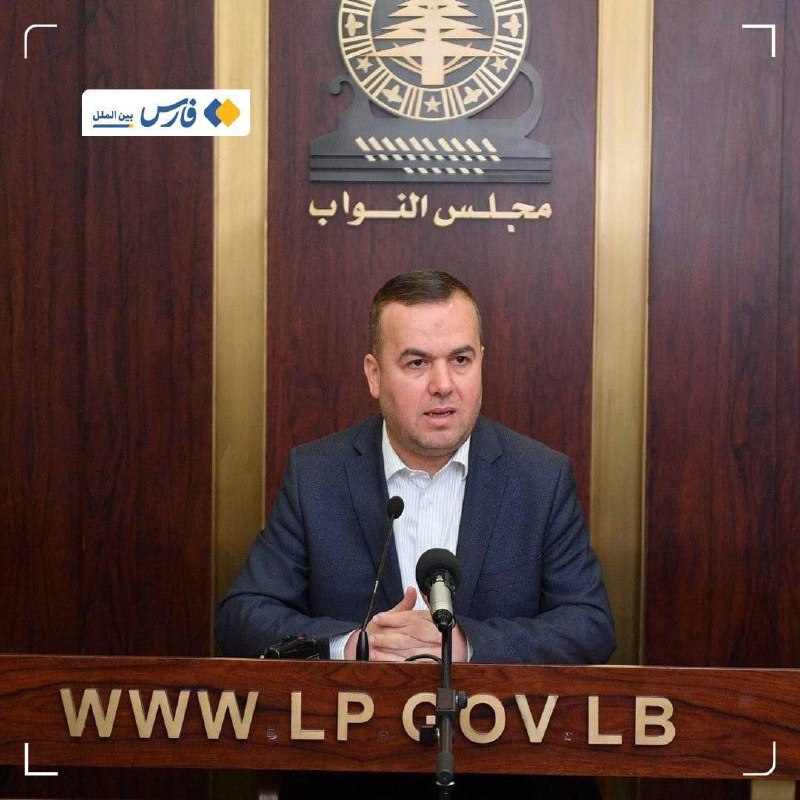
On the first day of June 2026, officials aligned with Yemen's Ansarullah movement — commonly known as the Houthis — delivered a coordinated public message through three Farsi-language state media channels simultaneously: their forces were ready, and they were waiting on Hezbollah to ask.
The statements, carried by Mehr News, Tasnim News English, and Jahan Tasnim within a twelve-minute window on the morning of 1 June, represent the most explicit articulation yet of Sana'a's willingness to commit ground forces to the broader conflict with Israel. Sources close to the Ansarullah movement, cited in the Mehr News reporting, described fighters as "impatiently waiting to fight alongside Hezbollah." The Tasnim English service quoted Sana'a as stating it was awaiting "Hezbollah's request to enter the battle with the Zionists." The framing across all three outlets was deliberately parallel, suggesting orchestration rather than organic leak.
The timing is not accidental. The reports arrived against a backdrop of stalled ceasefire negotiations following Israel's extended military operations in Lebanon, operations that Al-Akhbar — a Lebanese outlet with longstanding Hezbollah editorial proximity — described as having failed to achieve any of their stated goals in recent months. Sana'a appears to be inserting itself into a political signal: that the broader front against Israel remains open, that resistance-axis forces are coordinating rather than acting independently, and that any ceasefire calculation that excludes Yemen will face continued pressure.
What the Statements Actually Say — and What They Don't
The Houthi communications carry weight precisely because they are public and because they are framed to be read as commitments rather than aspirations. "We are waiting for Hezbollah's request" is a formula that preserves deniability — Sana'a is not declaring unilaterally that it has entered the war, but it is making clear that only a Hezbollah request stands between current posture and active participation.
Independent analysts caution against treating such statements as precise predictors of military action. The Houthis have made similar declarations of solidarity during previous phases of the Israel–Gaza conflict since October 2023, and while they have conducted a sustained cruise-missile and drone campaign against Red Sea shipping — disrupting global supply chains and prompting a US-led maritime security response — their ground operations against Israel proper have remained limited. What has changed, according to regional observers, is the context: the collapse of any credible Lebanese sovereignty settlement and the apparent hardening of Israeli strategic objectives in the north create conditions under which a Houthi ground commitment, however symbolic, carries more political weight than it did eighteen months ago.
The gap between rhetorical commitment and operational reality is not trivial. The Houthis control territory in northwestern Yemen, roughly 1,500 kilometers from the Israeli border by the most direct overland route. Any meaningful Houthi contribution to a northern front would require either proxy deployment through Syrian or Iraqi territory — crossing multiple sovereignty lines — or a significant expansion of missile and drone strike capabilities launched from Yemen. Sana'a has demonstrated sophisticated long-range strike capacity in its Red Sea campaign, but the distance and air-defense environment between Yemen and northern Israel is categorically different from the maritime strike problem.
What the sources do not specify is whether any actual military coordination with Hezbollah has been discussed, beyond the public posturing. No terms of potential joint operations, no command-and-control arrangements, and no third-party mediator involvement appear in the thread context. The statements are, in the first instance, political theatre — calibrated for an audience that includes domestic constituencies, Iranian patrons, and the international diplomatic community.
The Iranian Dimension and Media Orchestration
The decision to carry the Sana'a statements simultaneously across three Farsi-language state media platforms — Mehr News, Tasnim English, and Jahan Tasnim — is itself a form of messaging. Tasnim and Mehr are among the most prominent institutions in Iran's state-affiliated media ecosystem, and their simultaneous transmission of the same Ansarullah framing is difficult to read as coincidence. Tehran has long used its regional media assets to amplify and choreograph messaging from allied movements; the effect is to make any single actor's statement feel like part of a coordinated posture.
Iranian officials have not, in the thread context, made direct statements confirming or elaborating on the Sana'a positioning. The coordination pattern does, however, fit a structural logic well documented in regional analysis: Tehran calibrates its visible commitment level across the resistance axis, using public statements as signals to Western capitals even before diplomatic channels have been exhausted. A Houthi declaration that they are "waiting for Hezbollah's request" communicates readiness to escalate without actually triggering that escalation — keeping the initiative with Lebanese Hezbollah while maintaining pressure.
This framing also serves an internal Iranian political function. In a period when Iran's own diplomatic posture — including ongoing contacts with European interlocutors and indirect talks with the United States over nuclear and sanctions issues — requires careful management of escalation optics, the Houthis serve as a useful instrument. Sana'a's statements do not require Iranian authorization to make headlines, and they do not commit Tehran directly. The distance between Yemen and the negotiating table in Vienna or Doha is considerable enough to provide diplomatic cover.
Military Operational Realities and Limitations
The Houthis have been engaged in active combat operations since late 2023, and their operational record in that period is genuinely significant. Their anti-ship missile and unmanned aerial vehicle campaigns — conducted under the banner of "Operation Palestinian Solidarity" — have struck commercial vessels, damaged US naval assets in limited engagements, and forced a partial rerouting of Red Sea trade that affected global shipping costs. They have demonstrated the ability to sustain a long-duration strike campaign under significant US and allied air pressure in the region.
What they have not demonstrated is the capacity to project meaningful ground combat power into the Levant. The logistical challenge of moving fighters, heavy weapons, and command infrastructure across contested airspace and multiple national borders is, absent a permissive environment controlled by allied state actors, extremely difficult. Syrian and Iraqi airspace, in particular, is subject to competing control architectures — Damascus nominally controls its own skies but has de facto Israeli and US operational constraints; Iraq's sovereign airspace is contested between Baghdad's government and multiple armed factions with Iranian backing.
Hezbollah, for its part, is the resistance axis's premier conventional military actor in Lebanon. Its order of battle, its tunnel infrastructure, and its experience from the 2006 war give it capabilities that the Houthis cannot replicate remotely. A coordination request from Hezbollah to Sana'a would be significant precisely because it would suggest that Hezbollah's leadership views the threat environment as requiring augmentation from an unexpected quarter — or that it is seeking to demonstrate to domestic Lebanese constituencies and to the wider Arab street that the resistance front remains united and active.
Escalation Calculus and Regional Stakes
The most immediate stake of this public positioning is its effect on ceasefire diplomacy. International mediators — including the United States, France, and Qatar — have been working toward a framework that would produce a durable cessation of hostilities in Lebanon and a reduction of cross-border hostilities more broadly. Any credible threat of a new front opening in Yemen introduces new variables into that calculation: Israeli strategists who may have been weighing the costs of an expanded campaign now face the possibility of a two-front exposure, while mediators must factor Houthi escalation potential into any assessment of whether a ceasefire will hold.
The commercial and strategic consequences of a sustained Houthi commitment would be asymmetric. For Israel, the threat is not primarily military — the distance and technical challenges make a Houthi ground front implausible as a decisive factor — but political and psychological. A front that invokes Palestinian solidarity while Hezbollah fights in Lebanon reinforces the narrative of a region-wide resistance that is not contained by Gaza or Lebanon. For the United States, which has maintained an aircraft carrier presence in the Gulf and conducted repeated strikes against Houthi military infrastructure since early 2024, the statements add urgency to an already difficult force-protection and deterrence challenge.
The counterargument — that the statements are primarily designed for domestic and axis-consumption, that the operational reality constrains actual escalation — has merit and is not dismissed by analysts familiar with the Houthis' historical communication strategy. But the history of this conflict is, in significant part, a history of capabilities that were once considered implausible becoming operational reality. The Red Sea campaign itself was initially treated by Western officials as an abstraction; it is now a structural feature of global shipping economics.
What the source materials do not resolve is whether this week's Sana'a positioning represents a genuine change in Houthi willingness to accept operational risk, or an escalatory signal calibrated for a diplomatic moment. The answer will arrive, if it arrives, in the form of changed military facts — a missile strike on a new target class, a publicly claimed attack inside Israel, or a Hezbollah acknowledgment that the request has been made. Until then, the statements stand as the most visible expression yet of a willingness that was previously communicated only indirectly.
Monexus covered this development as a potential inflection point in regional escalation dynamics. Western wire services led with the operational threat framing; Iranian and Houthi-aligned outlets led with solidarity messaging and IDF failure narratives. This article sought to hold both dimensions simultaneously — acknowledging the political weight of the Sana'a statements while treating operational capability claims with appropriate scrutiny.
Wire provenance
This editorial synthesis draws on the following public wire/social posts:
- https://t.me/mehrnews
- https://t.me/tasnimnews_en
- https://t.me/JahanTasnim