The ceasefire is dead. Long live the ceasefire.
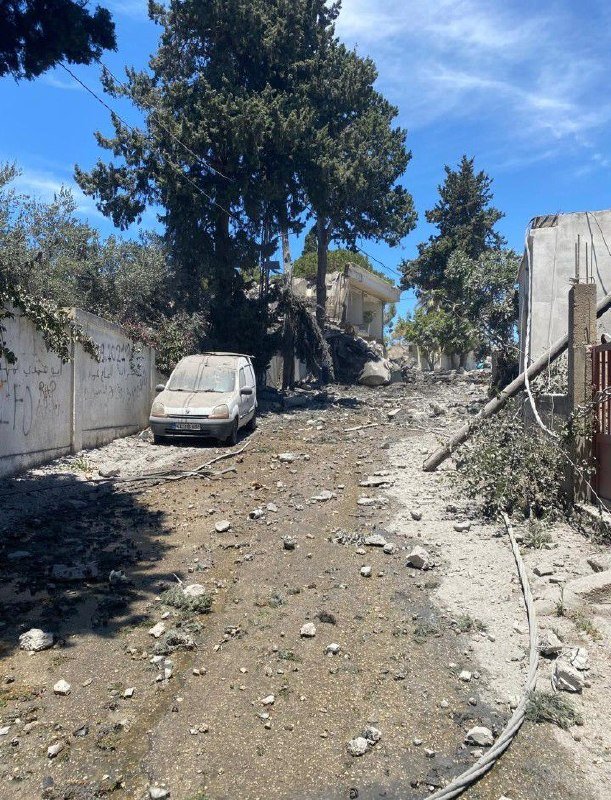
The Polymarket markets give a permanent Israel-Hezbollah peace deal roughly a one-in-five chance by the end of June. The 16% figure for Israeli withdrawal reads almost as an afterthought. And yet on the morning of 2 June 2026, the Israel Defense Forces struck Nabatieh al-Fawqa and surrounding towns in southern Lebanon, having renewed evacuation warnings for the city hours earlier. The ceasefire — whatever remained of it — is not ending with a bang. It is being negotiated away in slow motion, one strike at a time.
The market odds are not wrong, exactly. They are measuring the wrong variable. The question is not whether a formal peace deal will be announced from a podium in Beirut or Jerusalem. The question is what kind of conflict this has become, and whether the international architecture built to contain it has any remaining load-bearing function.
What the ceasefire actually was
The November 2024 ceasefire framework divided responsibilities clearly on paper. Hezbollah would withdraw its forces from southern Lebanon entirely. Israel would vacate Lebanese territory. The Lebanese Armed Forces would fill the vacuum as a state presence, backed by UNIFIL observers. Neither side had agreed to anything political. The deal was a military pause — a freeze of existing positions, not a resolution of the conditions that produced them.
That architecture held, broadly. Hezbollah did not resume large-scale offensive operations. Israel did not launch a second ground invasion. UNIFIL remained deployed in its contested corridor. But the ceasefire also contained no enforcement mechanism strong enough to prevent exactly the kind of incremental pressure campaign now underway. What we are watching in June 2026 is not a collapse of the ceasefire. It is the ceasefire working exactly as designed for a party that finds managed conflict more useful than formal peace.
Who benefits from the status quo
Israel's calculus is strategic, not impulsive. Full withdrawal from Lebanon would mean abandoning leverage. The IDF's renewed warnings for Nabatieh residents, citing alleged Hezbollah infrastructure, serve a dual purpose: they degrade Hezbollah's operational capacity near the border and they normalise Israeli military activity on Lebanese soil without the political cost of formally refusing to withdraw. The strikes are not a prelude to escalation. They are the strategy itself.
Hezbollah's position is harder to read from outside, but the absence of significant retaliation is itself a signal. The group sustained heavy losses during the 2024 conflict and has not rebuilt its pre-war posture. Escalating now would invite precisely the kind of sustained bombing campaign that reshaped southern Lebanon a year and a half ago. The rational move for Hezbollah is to absorb the pressure, contest the narrative through its political allies in Beirut, and wait. Waiting, in this context, means accepting the ceasefire's erosion while technically remaining within its terms.
This creates a curious symmetry: both parties are technically in compliance with a ceasefire neither wants to formally exit, because formal exit carries costs that incremental non-compliance does not. The IDF strikes Hezbollah infrastructure in Nabatieh. Hezbollah does not fire back. Israel calls it counterterrorism. Hezbollah calls it occupation. Both are right, which is precisely the problem.
The structural frame in plain language
Ceasefire frameworks in deeply divided conflict zones often survive not because they resolve the underlying grievances but because they make the cost of full-scale war visible to both parties simultaneously. The November 2024 deal did that work. It prevented a wider war. It also left the structural conditions that produced the conflict — the absence of a security architecture both sides trust, the contested border, the proxy relationship with Iran — entirely intact.
What we are watching now is the gap between the ceasefire's formal architecture and its operational reality widening quietly, without a triggering event dramatic enough to force international intervention. The Polymarket deadline of 30 June is a market construct, not a political one. Nothing substantive changes on 1 July. The pressure campaign will continue because it serves its purpose for one side, and because the other side has calculated that absorbing it is less costly than responding.
The international community, for its part, has largely shifted attention. The November 2024 deal was treated as a success precisely because it stopped the shooting. No one has been credited with solving the underlying problem, because no one attempted to. That absence of ambition is now the story.
What the odds miss
The 16% withdrawal probability captures something real: the market's collective assessment that Israel has no intention of leaving, and that Hezbollah cannot force it out without triggering the very conflict the ceasefire was designed to prevent. It is an accurate reflection of Israeli strategy. What it does not capture is the human cost of that strategy for the residents of Nabatieh and dozens of smaller towns who live under a form of pressure that international law has no clean vocabulary for. It is not a war. It is not quite peace. It is a low-intensity occupation with no defined end date, conducted through strikes precise enough to avoid triggering a wider response and regular enough to prevent normalisation.
The Polymarket odds are not predictions. They are market signals reflecting the aggregate uncertainty of participants who cannot know what either government's next move is. What we can say, based on the evidence of 2 June, is that the IDF's moves that morning were not inconsistent with a strategy of long-term managed pressure. The market odds may be generous to the peace-deal scenario not because a deal is likely, but because the alternative — indefinite low-intensity conflict — is too stable, too useful to too many parties, and too boring for international headlines to generate the pressure needed to change it.
The ceasefire is dead. Long live the ceasefire — the one that keeps the shooting stopped without ever requiring anyone to solve anything.
Wire provenance
This editorial synthesis draws on the following public wire/social posts:
- https://t.me/GeoPWatch/12438
- https://t.me/wfwitness/9871