The Ceasefire That Isn't: Reading the Fine Print in Lebanon
A reported US-brokered agreement offers a pause in hostilities, but Hezbollah's conditions and the asymmetric positions of both parties suggest this is an intermission, not a resolution.
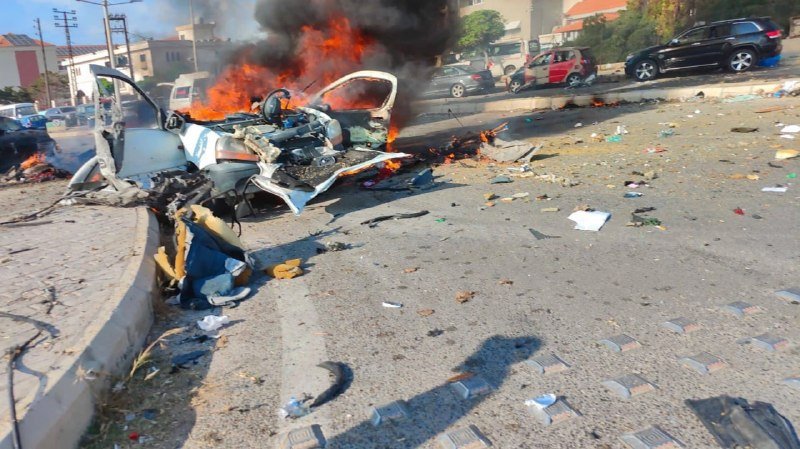
Forty-one retaliatory strikes in twenty-four hours. Six Merkava tanks destroyed across multiple battlefronts. An FPV drone footage released showing a direct hit on a tank near the historical Beaufort Castle. And then, almost simultaneously, a headline: Lebanon officials confirm that Hezbollah and the Israeli regime have agreed to a US proposal for mutual cessation of hostilities, with Israel set to halt strikes on Beirut's southern suburbs.
The juxtaposition reads like a diplomatic press release dropped into an active battlefield, which is precisely the problem with interpreting the morning's wire.
What the Agreement Actually Contains
The reported deal, per Lebanese officials cited by PressTV on 2 June 2026, includes two concrete provisions: a mutual cessation of hostilities between Hezbollah and Israel, and an Israeli commitment to cease strikes on Beirut's southern suburbs — the traditional stronghold of Hezbollah's political and military infrastructure. In exchange, the terms appear to require Hezbollah's compliance on its side of the border.
That symmetry is the arrangement's stated logic. What it papers over is the yawning gap between the parties' stated endgame conditions. Sheikh Naim Qassem, Hezbollah's deputy secretary-general, has been unambiguous: the organization fights until Israeli forces withdraw from Lebanese territory entirely. A Lebanese parliamentarian, MP Fadlallah, reinforced that position on 2 June, declaring that no unilateral ceasefire would hold — a formulation that simultaneously accepts the US framework while warning that partial implementation is a non-starter.
Israel's position, meanwhile, remains conditioned on degrading Hezbollah's military capacity along the border to a degree that prevents the kind of incursions and strikes the organization has conducted over the preceding weeks. Those strikes — 41 in 24 hours, according to Hezbollah's own count — are precisely what make the Israeli government reluctant to accept anything short of a verifiable security arrangement.
The Asymmetry the Agreement Cannot Resolve
This is the structural tension that no diplomatic language resolves: Hezbollah frames the conflict as a sovereignty dispute, with Israeli presence in southern Lebanon constituting the casus belli. Israel frames it as a security problem, with Hezbollah's military infrastructure threatening Israeli communities along the northern border. Both framings are internally consistent. Neither is reconcilable with the other's minimum requirements.
A mutual ceasefire buys time. It does not answer the question of what happens when Israel detects a Hezbollah weapons convoy moving south, or when Hezbollah interprets an Israeli drone flight as a provocative overflight of sovereign Lebanese territory. These are not hypotheticals — they are the daily texture of a frontier that has never been definitively demarcated and has been contested by force for decades.
The footage released by Hezbollah on 2 June — showing the destruction of Israeli armor at Beaufort Castle — illustrates the operational tempo both sides were sustaining before the reported deal. That tempo is not the product of miscalculation or adventurism. It reflects each side's genuine assessment of its own interests and its willingness to accept the costs of defending them.
What Washington Gains From the Announcement
The United States, which proposed the framework, gains a diplomatic win it can table before the international community. The cease-fire, even a fragile one, allows Washington to demonstrate that sustained engagement with both parties produces results — a narrative useful for domestic and allied audiences alike.
Whether that narrative survives contact with the ground depends entirely on whether the agreement's monitoring mechanisms — whatever they are — prove functional. The sources Monexus reviewed do not detail enforcement provisions. That omission matters. Previous ceasefire arrangements in Lebanon, negotiated under similar international auspices, collapsed because neither party had confidence in the other's compliance and no credible third party held the line when violations occurred.
Hezbollah's conditional acceptance — no unilateral ceasefire will hold — is simultaneously a statement of principle and a hedge. It says: we are at the table, but our fighters remain in position. Israel's parallel restraint signals a willingness to test the arrangement rather than foreclose it.
The Stakes Beyond the Headlines
The costs of continued escalation are not abstract. Civilian populations on both sides of the border have been displaced, infrastructure damaged, and a generation of Lebanese and Israeli communities forced into the routines of wartime life. The Lebanese economy, still fragile from the 2020 financial collapse, cannot sustain a prolonged military mobilization. Israel's northern communities have been effectively uninhabitable for months.
But the costs of a false ceasefire — one that produces a brief quiet followed by a more violent resumption — may be higher still. Both sides will watch the other for violations with the patience and precision of parties who have fought this kind of war before. The first detected breach will be parsed, amplified, and used to rebuild the case for resumption.
What the morning's wire confirmed is that both parties have agreed to pause. What it did not confirm is that either has agreed to stop.
Wire provenance
This editorial synthesis draws on the following public wire/social posts:
- https://t.me/presstv/124567
- https://t.me/presstv/124569
- https://t.me/AMK_Mapping/89234
- https://t.me/presstv/124571