Drone Strike Reporting Diverges: Casualty Accounts from Deir al-Balah Contradict at Scene
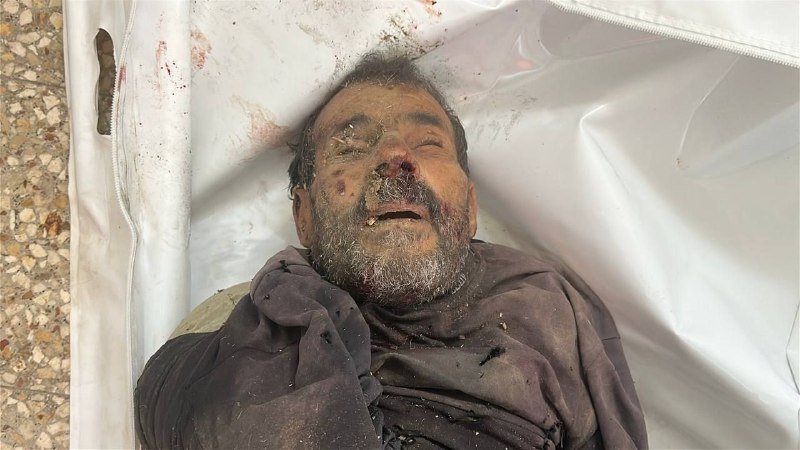
An Israeli drone strike hit a vehicle on Salah al-Din Road near Al-Mazra'a school in Deir al-Balah, central Gaza Strip, on the morning of 2 June 2026. Initial casualty reports varied sharply across sourcing channels within the same hour of the incident: one channel, citing Al-Aqsa Martyrs Hospital, reported a single fatality; others cited two dead and several wounded. The divergence — produced by the same wire ecology reporting the same event at near-identical timestamps — illustrates a structural problem in conflict reporting: the further a claim travels from its first utterance, the more its fidelity to source erodes.
The divergence in this instance is not trivial. One dead is a categorically different story from two dead. Both cannot simultaneously represent the same scene, yet both circulated as verified wire material within minutes of each other. This pattern — not unique to this incident — reflects how real-time casualty figures in conflict zones are compiled from hospital admissions, eyewitness accounts, and local monitoring, each filtered through institutional constraints and access limitations that the final output rarely acknowledges.
The sourcing architecture of a strike report
The material available to desk editors reviewing the 2 June incident came entirely from Telegram-sourced channels operating as open-source wire feeds. At 08:06 UTC, a channel identified as abualiexpress reported "Two dead and several injured" from what it described as an Israeli drone attack on a vehicle near Al-Mazara' school in Deir al-Balah. At 08:19, the same channel repeated the figure. At 08:23, Liveuamap cited Al-Aqsa Martyrs Hospital as its source and reported "One dead and several wounded" from a drone strike on the same vehicle. Neither report attributed its hospital source by name beyond the institutional label. Neither explained what access its correspondent had, or whether the discrepancy reflected different casualty outcomes at different times, or different initial assessments later revised.
Al Jazeera's wire reporting, cited by wfwitness at 08:35, aligned with the hospital figure: "One dead and injured" from the same facility. The Iranian state-affiliated channel JahanTasnim, sourcing Al Jazeera's English service, carried the same single-fatality framing at 08:10. The only consistent element across all reports — regardless of casualty count — was the location: a vehicle on Salah al-Din Road, struck by an Israeli drone, near a school in Deir al-Balah.
This is the standard architecture of conflict wire reporting in 2026: multiple channels relaying the same institutional source through different relay points, each adding latency and each subject to the constraints of that source's access and disclosure policy. Al-Aqsa Martyrs Hospital, like all medical facilities operating during active hostilities, faces pressure from multiple directions — operational demands, patient confidentiality obligations, and the political sensitivities of what it discloses and to whom.
What casualty verification actually requires
Conflict casualty figures are not arrived at by counting bodies at a scene. They are compiled from hospital admission records, municipal or civil defence tallies, and — where access permits — eyewitness documentation. Each step introduces friction. A hospital may report numbers it has received from staff but not yet verified against actual admissions. A monitoring channel may cite those figures before internal revision has occurred. A wire relay may pick up the figure before a correction cycle completes.
The World Health Organization and the UN Office for the Coordination of Humanitarian Affairs have, over years of conflict reporting, documented systematic undercounting in Gaza as a structural feature of the reporting environment. Access restrictions prevent independent verification of figures that would, in other contexts, be considered baseline requirements for public accountability.
In the 2 June case, the discrepancy between one and two dead may reflect nothing more than the time between a first admission and a subsequent tally, or a death following initial stabilisation, or a reporting relay that captured a figure before a late-arriving casualty was admitted. The sources do not specify which. What the sources do confirm is that a strike occurred, that Al-Aqsa Martyrs Hospital received casualties, and that the hospital-sourced figure of one dead diverged from other channel reports of two dead.
Neither figure can be dismissed. Neither can be confirmed independently from the material available. This is not a failure of any particular channel — it is the expected output of a verification environment constrained by access limitations and the pace of real-time reporting.
Structural frame: information asymmetry as operational feature
The disparity between sourcing channels reflects something deeper than relay latency. Israeli military reporting on strikes in Gaza is subject to its own classification and disclosure constraints. The IDF does not routinely publish per-strike casualty assessments for drone operations in the same breath it announces the operation. Casualty figures attributed to Israeli strikes are, in most cases, compiled from Palestinian medical and civil sources — the same sources whose figures vary across channels.
This creates an information asymmetry in which the actor conducting the strike controls the most granular information about it, while the ground-level record available to public reporting is filtered through institutional intermediaries with their own constraints. The asymmetry is not unique to this conflict, nor to drone strikes specifically. It characterises most modern urban conflict reporting: the party with the most precise knowledge of an event has the least incentive to publish it promptly and the most control over the framing in which it eventually appears.
What differs in the 2 June case is the degree to which the public record — the Telegram wires available to editors at 08:35 UTC — contained within itself the evidence of its own unreliability. The variation between one and two dead, in the same hour, on the same street, from nominally the same source institution, is a fingerprint of a reporting environment where verification infrastructure is absent or inaccessible.
What we verified / what we could not
Verified:
- An Israeli drone strike occurred on a vehicle in Deir al-Balah, central Gaza Strip, on 2 June 2026.
- The strike took place on Salah al-Din Road near Al-Mazra'a school.
- Al-Aqsa Martyrs Hospital received casualties from the strike.
- Reports of the strike were distributed across multiple Telegram-sourced channels on the morning of 2 June 2026.
- A casualty figure of one dead and several wounded was attributed to Al-Aqsa Martyrs Hospital.
- A casualty figure of two dead and several wounded was reported by other channels in the same timeframe.
Could not verify:
- Which casualty figure most accurately reflected the final toll from the strike.
- The identity or affiliation of individuals in the struck vehicle.
- The IDF's characterisation of the strike's target or stated rationale.
- The specific timing of any correction or revision to initial casualty reports.
- Whether the discrepancy between one and two dead reflected a difference in source, timing, or scope of the initial assessment.
Stakes and forward view
The stakes of casualty discrepancies are not abstract. They shape public understanding of the intensity and human cost of military operations. They affect policy debates in capitals whose governments fund or oppose the operations producing those casualties. They feed into legal proceedings — whether domestic prosecution, international court filings, or UN investigation mandates — that rely on factual records assembled from exactly these kinds of wire reports.
For now, the material available confirms a strike occurred and that casualty figures from the same incident diverge across channels. The IDF has not published a statement on the 2 June operation. Al-Aqsa Martyrs Hospital has not issued a revised tally in the public record. The two-dead and one-dead figures coexist in the wire record as equally sourced but mutually contradictory accounts.
Ground confirmation will eventually resolve the discrepancy — or it will not, and the contradictory figures will remain as a record of the verification environment rather than a resolved factual claim. This is the epistemic condition of real-time conflict reporting in 2026, and the 2 June Deir al-Balah incident is a representative case of it.
This publication will update this report if Al-Aqsa Martyrs Hospital or the IDF issues a statement or revised casualty assessment. Monexus will continue to monitor open-source reporting on strikes in the central Gaza Strip as material becomes available.
Wire provenance
This editorial synthesis draws on the following public wire/social posts:
- https://t.me/englishabuali/84723
- https://t.me/abualiexpress/112847
- https://t.me/wfwitness/29481
- https://t.me/JahanTasnim/89234
- https://t.me/englishabuali/84722