Escalation Without End: The Logic of Strikes That Solve Nothing
Israeli airstrikes on southern Lebanon on June 2 mark another cycle in a pattern that has become熟悉的 routine — each flare-up treated as an isolated event rather than a symptom of a structural failure in regional diplomacy.
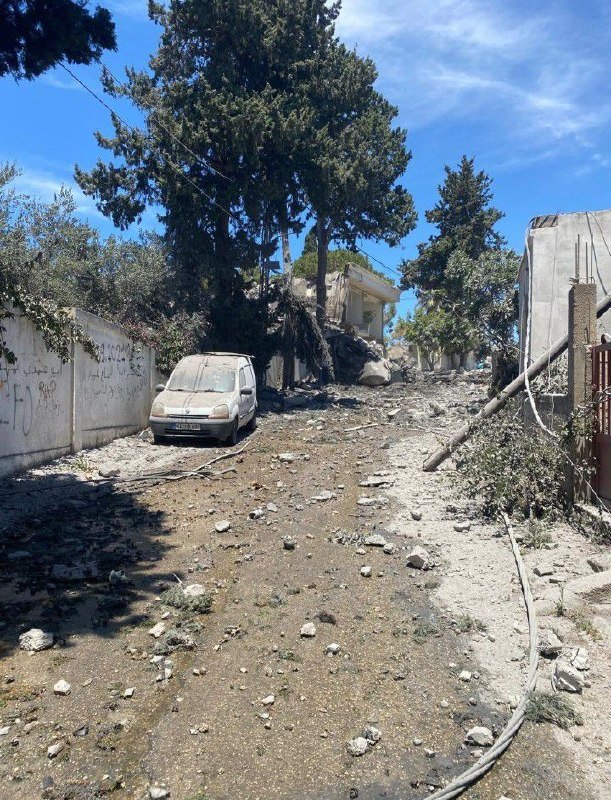
On June 2, 2026, Israeli aircraft struck the towns of Burj al-Shamali and Shahhour in southern Lebanon, according to reporting by Al Alam Arabic and visual documentation from ground-level observers. A second strike followed in the same district, targeting the Borj El Chmali area. The raids generated images of damaged infrastructure and displaced residents in communities that have weathered repeated cycles of similar violence.
This publication finds that coverage of such strikes tends to treat each incident as a discrete tactical event — a proportionality calculation here, a Hezbollah positioning there — rather than examining the strategic logic that produces the cycle itself. The strikes are real. The framing around them often obscures more than it reveals.
The Incident in Context
The specific targets on June 2 were towns in southern Lebanon, a region that has served as a buffer zone of sorts since the 2006 ceasefire framework, even as that framework has never been formally updated to reflect changed realities on the ground. IDF spokesperson statements, as reported by Israeli wire services, typically characterize such raids as responses to verified threats or pre-emptive action against hostile positioning. Lebanese state media and regional outlets tend to frame the same events as violations of sovereignty and collective punishment of civilian areas.
Both framings contain partial truth. What neither framing adequately addresses is why the threat assessment that justifies these strikes has proven essentially permanent. If Hezbollah's capabilities represent a genuine existential threat warranting repeated aerial intervention, then the international diplomatic architecture — UN Security Council resolutions, the original 2006 ceasefire terms, ongoing shuttle diplomacy — has conspicuously failed to resolve that threat. If the threat assessment is inflated or instrumentalized, that too demands examination rather than acceptance on faith.
The Problem With "Escalation Management"
The dominant diplomatic posture toward the Israel-Lebanon frontier has been described by multiple regional analysts as escalation management rather than escalation resolution. The goal, in this framing, is not to end the condition that produces periodic strikes but to keep each cycle from metastasizing into broader war.
This approach has obvious short-term utility. A regional conflict involving Hezbollah, Israel, and potentially Iran would draw in actors across the Middle East at a moment when American attention is stretched across multiple theatres. Nobody — including, notably, Israeli security planners — wants that outcome.
But escalation management contains a structural contradiction. It requires periodic demonstrations of willingness to use force in order to deter the larger conflict it seeks to prevent. The strikes on Burj al-Shamali and Shahhour serve a deterrent function within this logic. They reassure Israeli domestic audiences that the government is acting. They signal to Hezbollah that red lines have costs. They communicate to American and European partners that Israel retains initiative and is not being deterred.
The problem is that deterrence theory in practice often produces exactly what it claims to prevent. Each demonstration of willingness to strike reinforces the adversary's assessment that the other side cannot be trusted, that diplomatic engagement is a cover for strategic positioning, and that self-reliance remains the only credible posture. Hezbollah's continued build-up of precision-guided munitions and tunnel infrastructure in southern Lebanon is, from its perspective, rational hedging against the demonstrated unreliability of ceasefire frameworks.
Who Wins and Who Loses
The structural beneficiaries of the current arrangement are consistent with any status quo that preserves the current balance of power without requiring painful compromises from any party. On the Israeli side, the current government benefits from a framing in which it is perpetually responding to threats rather than making concessions. On the Hezbollah side, the IRGC-backed militia benefits from demonstrating relevance and extracting Lebanese state resources and legitimacy in the process. On the American side, the current posture avoids the political cost of either pressuring Israel into concessions or committing to a larger regional security architecture.
The losers are more numerous and less represented in the rooms where these decisions are made. Lebanese civilians in the south have endured eighteen years of limbo since 2006 — neither the peace of a genuine normalization nor the clarity of an open conflict that might produce a definitive outcome. The economic devastation in southern Lebanon is documented by UN agencies and international NGOs. Israeli communities along the northern border have lived under the same uncertainty, with tens of thousands displaced by intermittent rocket fire and the psychological toll of perpetual alert.
What Remains Unresolved
The sources reviewed for this article do not specify what specific threat assessment triggered the June 2 strikes, whether any casualties resulted, or what diplomatic response, if any, was forthcoming from Washington or European capitals. This publication has not independently verified the identities of individuals killed or injured in the strikes; that information remains contested across different wire services.
What is clear is that the pattern continues. Burj al-Shamali and Shahhour will appear in the next cycle of reporting as the context for the next round of strikes, which will themselves be framed as proportional responses, and the analysis will proceed accordingly. The failure to examine the structural logic of perpetual escalation management is not a gap in any single article — it is a gap in the aggregate coverage that treats each flare-up as an exception rather than the rule.
The strikes solve nothing. They are not designed to. They are designed to manage, and management is not a strategy.
This publication's coverage of Israel-Lebanon tensions prioritizes reporting from mainstream Israeli and Western wire services, with regional outlets used as supplementary context. The structural analysis presented here is the editorial position of Monexus and is not attributable to any named wire source.
Wire provenance
This editorial synthesis draws on the following public wire/social posts:
- https://t.me/alalamarabic
- https://t.me/wfwitness
- https://t.me/wfwitness