Final squads land as World Cup clock runs tight
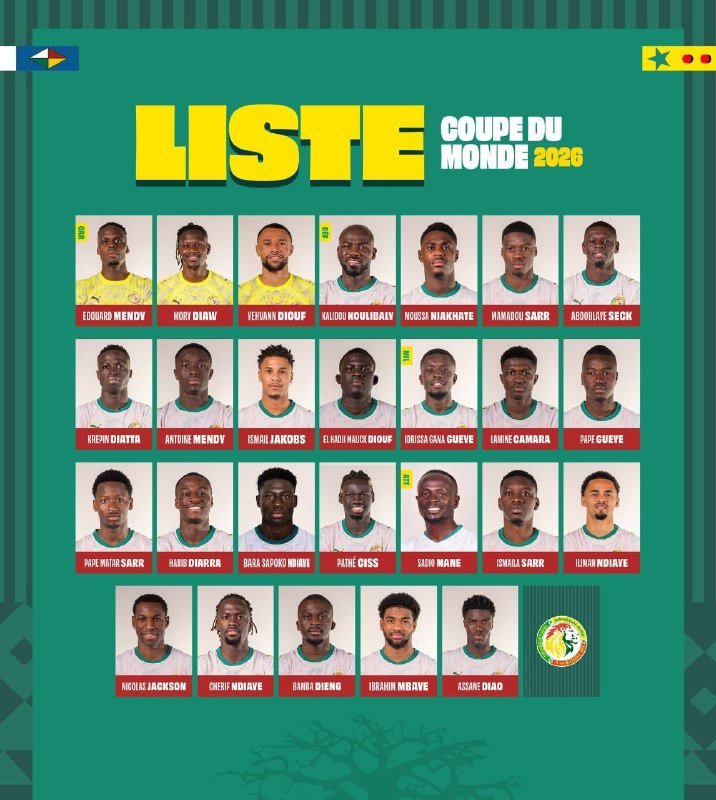
England, Germany, Turkey and Senegal each released their final squad lists on 2 June 2026, a milestone that typically arrives six weeks before a World Cup but in this cycle feels more like a deadline than a ceremony. For coaches navigating the intersection of squad depth, fitness concerns and political pressure from domestic leagues, the confirmation is less a triumph than a managed compromise.
The timing matters. Unlike previous cycles where final lists dropped in late May, the 2026 edition has compressed every preparation phase. Clubs concluded domestic seasons on tight schedules; players who reached finals in the Champions League or Europa League are reporting to national camps with limited recovery windows. The squads confirmed on 2 June therefore reflect not just who the managers want, but who is demonstrably available.
What the final lists tell us
Squad announcements from major football nations rarely surprise entirely, but the margins between inclusion and omission generate the most scrutiny. For England, the confirmation follows months of debate about whether younger players from the domestic league would displace experienced campaigners whose clubs had underperformed in the preceding season. The 2 June release, posted by Transfermarkt, arrived with the understated finality that characterises official announcements at this level — no fanfare, no reveal event, just the list itself.
Germany's squad confirmation on the same date carried its own tensions. The manager's public comments over the preceding weeks had flagged specific positions as unresolved. Finalising that list against a background of domestic league obligations and player fatigue is a process more akin to engineering than selection. A squad sheet published and distributed to federation staff, media contacts and opposition analysts within hours of confirmation becomes the foundation for every tactical brief that follows.
Turkey's final roster, confirmed on 2 June via Transfermarkt, reflects a nation whose qualification path gave the coaching staff more visibility than many of their counterparts in Western Europe. Turkish clubs completed their season earlier, allowing for a longer national team preparation window. That structural advantage does not erase the pressure of finalising a roster that must satisfy both technical requirements and the expectations of a fanbase accustomed to treating World Cup selection as a matter of national consequence.
Senegal, whose squad confirmation also appeared on 2 June, represents the more complex logistical case of the four. African qualification campaigns conclude with less lead time than European ones, and the logistical chain from final qualifier to final roster confirmation runs through federation administrative processes that European counterparts navigate more smoothly. The 2 June date suggests the Senegalese federation worked within the same FIFA deadlines as everyone else, but the compressed window between confirmation and tournament kick-off leaves less room for the integration work that squads with more European-based players typically require.
The pressure points that don't make the list
Behind every final squad announcement lies a set of conversations that never appear publicly. A player who has been fit enough to train but not fit enough to start a high-intensity match. A midfielder whose club form has declined sharply since the last international window. A defender whose leadership in the dressing room the manager values but whose pace no longer matches the tournament's tactical demands. These are the decisions that define a manager's tournament, and they are precisely the decisions that final confirmation statements elide.
What the 2 June announcements confirm is the end state, not the process. For England, the debate about squad composition played out across three months of league football, two international windows for tune-up matches, and an injury list that fluctuated week by week. The Transfermarkt confirmation is the fixed point after all that movement. For Germany, the manager's public comments across the same period had gestured at specific formations and role requirements, leaving the final list to be read as the answer to questions that were posed in public but answered only now.
The omission list matters as much as the selection list. Every player who expected to be confirmed and was not will have a reason — fitness, tactical fit, internal politics, a loss of form that went unaddressed between the last camp and the confirmation date. Those reasons are rarely disclosed fully. What surfaces instead is the roster, and the interpretation of the roster becomes the next news cycle.
What the compressed timeline means for preparation
Six weeks is not a long time to build a tournament team. For squads that confirmed on 2 June, the preparation window includes travel to a host nation, base-camp establishment, tactical sessions with a full group, and the inevitable adjustment period when players who have not played together in the same system arrive from different clubs with different tactical languages. The manager who announced the final squad on 2 June must now convert that squad into a coherent team within that window.
The compression is not uniform. Teams whose domestic seasons ended later — those still competing in cup finals or league run-ins at the end of May — arrive at the 2 June confirmation date with players who have played more minutes, fewer recovery days, and less time to reset physically before the demands of international football resume. England and Germany, whose club seasons finished in late May, will be managing that recovery alongside the initial tactical integration work.
Turkey's position is structurally different, as noted, given the timing of the domestic season. Senegal faces the opposite challenge — the Confederation of African Football qualification process operates on a different calendar, and the final confirmation arrived with a shorter gap to the tournament than the European squads have. That gap matters. It is the difference between a camp with four full weeks of work and a camp with two, and it shapes what the manager can realistically achieve in terms of team development before the first match.
The stakes, simply stated
Final squad confirmation is the moment when the abstract becomes concrete. Before 2 June, the squad was a set of intentions. After 2 June, it is a set of obligations. The manager must work with the players confirmed. The players confirmed must perform in the system selected. The federation that backed the manager's selection process must now manage the consequences — good or bad — of that selection when the tournament begins.
For England, Germany, Turkey and Senegal, the confirmation means the clock has shifted from selection to execution. The window between now and the first match is the resource, and every training session, recovery day, tactical meeting and friendly fixture must be optimised. What happened in the months before 2 June is now data. What happens after is the tournament.
This publication noted the squad announcements as they appeared across the wire on 2 June, with particular attention to the timing — the same date across four nations — which suggests a degree of coordination or FIFA-enforced alignment that is not always apparent in how these moments are covered. The confirmation dates received less coverage than the contents of the lists themselves, a pattern that reflects how football journalism tends to foreground the names over the administrative machinery that produces them.
Transfermarkt confirmed final rosters for England, Germany, Turkey and Senegal on 2 June 2026.
Wire provenance
This editorial synthesis draws on the following public wire/social posts:
- https://t.me/Transfermarkt/14842
- https://t.me/Transfermarkt/14841
- https://t.me/Transfermarkt/14840
- https://t.me/Transfermarkt/14839
- https://t.me/Transfermarkt/14843