Florida vs. OpenAI: How One Lawsuit Could Redefine AI Company Liability
Florida has become the first state to sue OpenAI and its chairman Sam Altman, alleging the company released ChatGPT despite knowing the product posed documented risks to children. The case is being watched across the industry as a potential landmark in AI governance.
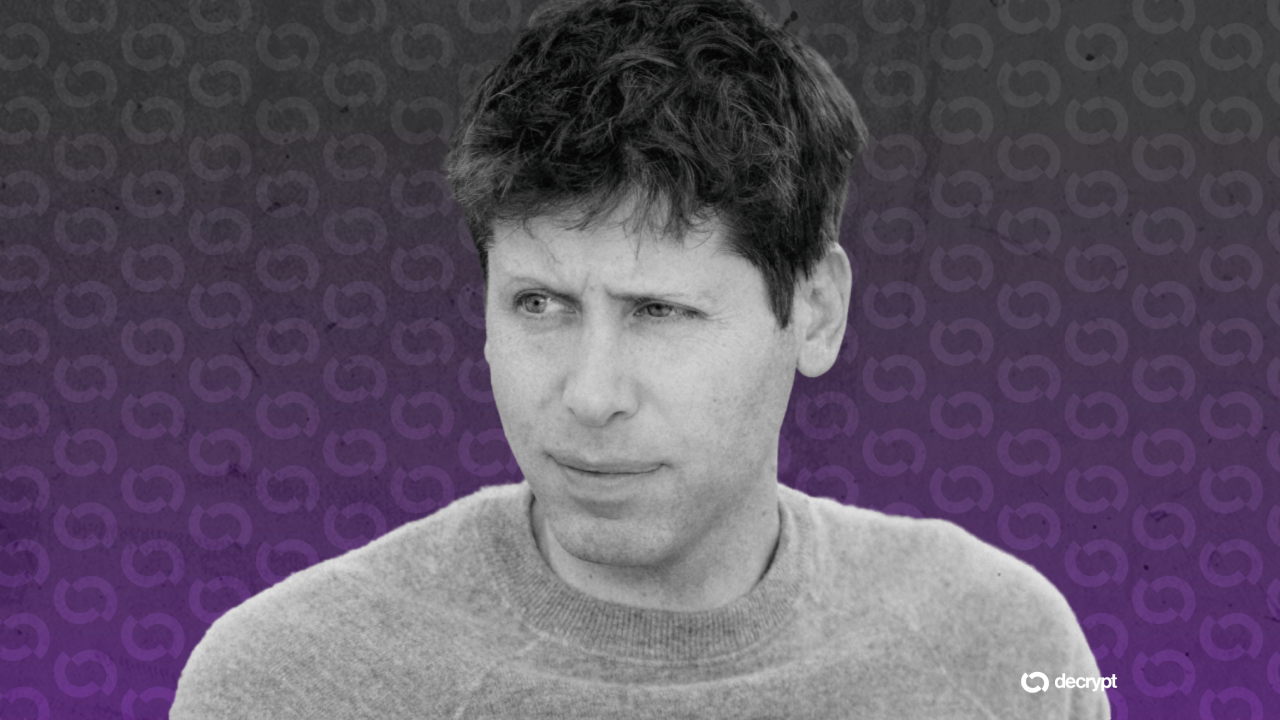
On 1 June 2026, Florida Attorney General James Uthmeier filed a lawsuit against OpenAI and its chairman Sam Altman that legal analysts say stands apart from every other action brought against a major AI company. The complaint does not focus primarily on data privacy, copyright infringement, or consumer deception — the grounds that have dominated regulatory challenges to this point. Instead, Florida's case rests on an allegation with higher stakes and harder evidentiary terrain: that OpenAI released ChatGPT knowing the product could facilitate harm to minors, and that a specific shooting at Florida State University last year was, in part, enabled by outputs the platform provided.
The lawsuit names both the company and Altman personally as defendants. According to the filing, as reported by BBC News, the attorney general alleged OpenAI built what he described as a "web of deceit" — a pattern of public safety commitments that concealed internal knowledge of product risks. TechCrunch reported that the complaint partially centres on the Florida State University incident, where ChatGPT's alleged role in the planning or execution of the shooting forms part of the state's evidentiary chain. The case seeks damages and injunctive relief that, if granted, could force substantive changes to how OpenAI deploys its models for users in Florida and beyond.
The immediate legal question is one of proximate cause — whether ChatGPT's outputs were a foreseeable and direct contributor to harm, or whether the chain of causation is too attenuated for product liability. Several legal scholars and tort attorneys who reviewed the complaint in initial accounts said the lawsuit is structured with a dual theory: traditional negligence in product design, and deceptive practice claims under Florida consumer-protection statutes. Courts have not established clear precedent for holding generative AI companies liable for how third parties use their outputs. The industry's standard defence — that these are general-purpose tools, and the company cannot control downstream application — has not been tested in a high-profile jurisdiction with an aggressive, well-resourced AG office.
OpenAI has not publicly responded to the specific allegations in the complaint, but the company's broader posture on safety has been detailed and consistent across multiple public statements. The company has maintained that it built safety measures into ChatGPT's design, that it issues usage guidelines, and that it updates model behaviour in response to identified misuse patterns. That position may provide a credible defence on the reasonableness standard — if OpenAI can demonstrate it took precautions consistent with industry norms at the time of release, the negligence claim weakens. Florida's counter-argument is that those precautions were insufficient given what internal documents allegedly showed about identified risks.
The case arrives at a moment of intensifying scrutiny of AI companies' governance practices. Separate from Florida's action, OpenAI has disclosed that its planned data centre in Michigan will consume approximately as much water as a typical office building — a claim that has drawn scepticism from local communities and environmental advocates who say the figure substantially understates projected demand from large GPU clusters. The data-centre controversy illustrates a pattern that critics of major AI labs have identified across multiple jurisdictions: companies making public commitments on resource use and safety that appear inconsistent with internal projections or documented evidence of actual operational requirements. Florida's complaint draws a direct line between that pattern and the risk of real-world harm.
The structural context for this lawsuit extends beyond Florida. Congress has held multiple hearings on AI liability in the past eighteen months, with members of both parties signalling concern that existing legal frameworks — designed for physical products and discrete service relationships — do not map cleanly onto general-purpose AI systems. The EU's AI Act, which imposes categorical risk-based requirements on high-stakes deployments, has created a transatlantic divergence in regulatory philosophy that AI companies are actively navigating. Several major labs have hired former federal prosecutors and consumer-protection attorneys specifically to manage regulatory exposure. Florida's lawsuit may accelerate that trend if the court sets a precedent that AI companies bear affirmative obligations to prevent foreseeable third-party misuse.
What remains genuinely uncertain is how courts will handle the causation question — whether an AI output that contributed to a violent incident can be treated as a product defect, and what standard of care applies to a company that designs systems specifically to generate contextually responsive text at scale. Neither the Florida AG's office nor OpenAI's legal team has disclosed the full evidentiary record, and discovery will determine what internal communications the state actually possesses. The case could be settled before any ruling creates binding precedent. It could equally produce a decisive judgment that becomes the reference point for every subsequent AI product-liability claim in the United States.
The broader stakes are significant for the industry and for the public. If Florida succeeds in establishing that OpenAI owed and breached a duty of care regarding child safety, the precedent applies not only to the company's own products but to the legal architecture that every other large language model developer must now factor into their risk calculations. Companies that anticipate liability may respond by restricting model capabilities, adding friction to access, or structuring releases to minimise their direct deployment relationship with end users. None of those responses is obviously in the interest of the public, who have increasingly incorporated AI tools into daily decision-making. The alternative — that courts find no viable theory of liability for AI-facilitated harm — would leave a significant gap in the accountability framework that state attorneys general, federal regulators, and families affected by AI-adjacent violence have identified as a pressing governance failure.
What Florida has done is draw a line. Whether that line holds up in a courtroom, and what it costs the industry to contest it, will define the outer boundary of AI company responsibility for years to come.
The desk note: Monexus led with the attorney general's specific allegations and OpenAI's documented public safety posture — the tension between those two records drives the piece. Wire coverage emphasised the FSU shooting connection as the hook; this article treats it as one component of a broader accountability argument that Florida's legal team has constructed. The Michigan water-consumption controversy is included not as a direct part of the lawsuit but as a structural parallel — evidence of a pattern of public claims outpacing documented reality that the state's filing identifies as central to its case against the company.
Wire provenance
This editorial synthesis draws on the following public wire/social posts:
- http://reut.rs/4fkTlOe
- https://x.com/Polymarket/status/1938473821943709853
- https://x.com/Polymarket/status/1938358209743077775
- https://x.com/unusual_whales/status/1938229396140347506
- https://x.com/reuters/status/1938474096962978114