Four Nations, Four Continents: How the 2026 World Cup Squad Announcements Reveal Football's New Geography
On June 1, 2026, four nations from four different continents finalised their World Cup squads within eight hours of each other — a synchronicity that reveals more than rosters. It maps the fault lines of an expanding tournament and the changing geography of competitive football.
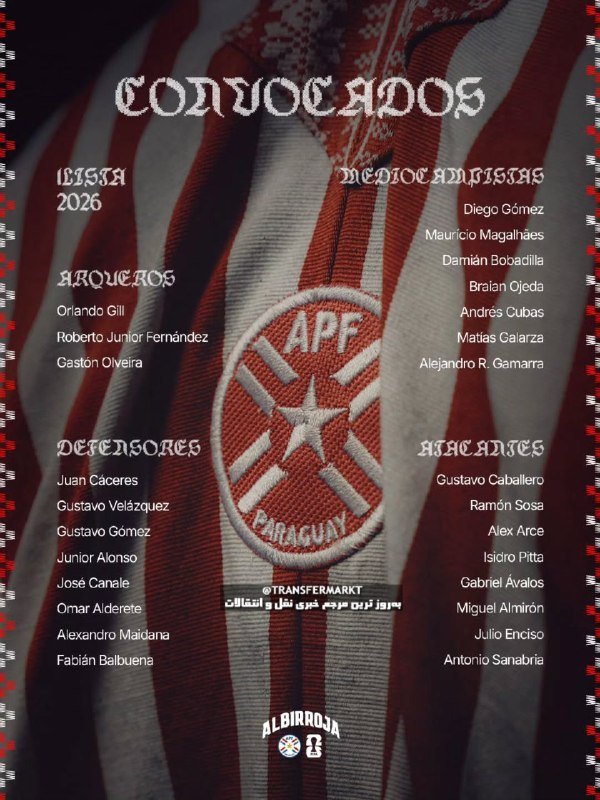
On June 1, 2026, four national federations finalised their World Cup rosters within eight hours of each other — Croatia from Europe, Paraguay from South America, Iran from Asia, and Mexico as a co-host from North America. The synchronicity was logistical coincidence, but its geographic reach is not. The announcements, posted by football data outlet Transfermarkt across its Telegram channels between 09:10 and 17:28 UTC, offer a snapshot of an expanding tournament that now draws from a wider pool of nations than any edition in the sport's history.
The significance runs deeper than the names on a list. What these four announcements collectively expose is a shift in competitive football's geography: the gatekeeping role once held by European and South American federations is being diluted by an Asian contingent that has grown more tactically sophisticated, financially resourced, and institutionally ambitious over the past decade. Paraguay's presence, meanwhile, underscores that South America's conveyor belt of elite talent has not stalled — it has simply redirected some of its output toward clubs outside the traditional European leagues. Croatia, an nation of 3.9 million people, continues to punch at a weight class that defies easy explanation, a reminder that population size and footballing output remain poorly correlated.
The Eight-Hour Window: Reading the Squad Announcements
Transfermarkt's Telegram posts on June 1 provide the raw material. Mexico's roster appeared first, at 09:10 UTC. Iran's final list followed at 12:44 UTC. Paraguay's squad was posted at 15:58 UTC. Croatia's — the last of the four — landed at 17:28 UTC. The sequencing matters only insofar as it reflects the administrative cadence of four federations working to FIFA's deadline from different time zones and institutional cultures.
What the posts share beyond timing is their format: each lists the confirmed 26-man squad, annotated with each player's estimated market value as calculated by Transfermarkt's proprietary model. That model has its critics — it is a composite estimate, not a transaction price — but it provides a rough hierarchy of squad investment. For Paraguay, whose players are distributed across South American, European, and North American leagues, the aggregated values reveal a squad less top-heavy than the generation that reached the 2010 World Cup quarter-final, but more evenly spread across multiple competitive environments. For Iran, the values reflect a domestic league that has improved its export pipeline to European clubs, particularly in the Balkans and Central Europe, a shift that has accelerated since the mid-2010s.
The Regional Picture: What Each Continent Is Sending
The four announcements are not representative in any statistical sense — they are a convenience sample of a single day's output. But they are instructive as a pattern. Europe continues to produce the highest concentration of elite individual talent, and Croatia's continued qualification for major tournaments illustrates that depth of domestic league infrastructure and youth development pipelines remain structural advantages that smaller nations can exploit if the talent identification system is sound.
South America's qualification picture, reflected in Paraguay's presence, operates differently. The continent's footballing ecosystem remains heavily oriented toward producing attacking players — forwards and attacking midfielders — and Paraguay's squad reflects that emphasis. What has changed in recent cycles is the destination of those players: where once a Paraguayan talent would have moved to Argentina or Mexico as a staging post before Europe, the pipeline now increasingly routes directly to European clubs, or bypasses the traditional hierarchy entirely by developing within South American clubs that have invested in infrastructure to a standard that was not available a generation ago.
Iran's qualification is the most structurally significant of the four. The Islamic Republic qualified for the 2026 World Cup as one of eight Asian representatives — a quota that reflects the continent's expanded allocation under the revised qualification format for the expanded tournament. Iran's squad, drawn from a domestic league that has invested in coaching standards and facilities over the past decade, represents a level of tactical organisation that has become characteristic of the region's best teams. The market values attached to Iran's roster are lower, on average, than those of European and South American counterparts — a reflection of the economic structure of Iranian football rather than a reliable indicator of competitive capacity.
The Expanded Tournament: What 48 Teams Changes
The 2026 World Cup is the first edition to feature 48 teams, up from 32. The expansion, agreed by FIFA's Council in 2017 and first implemented at this tournament, has been debated along familiar lines: critics argue it dilutes competitive quality; proponents argue it broadens the sport's commercial reach and gives more nations a stake in the global game. The squad announcements from June 1 offer a partial answer to that debate.
The expansion has produced a more geographically diverse participant pool. Iran and Paraguay would likely have qualified under the previous 32-team format — Iran as one of Asia's consistent performers, Paraguay as South America's fifth or sixth strongest side — but the expanded allocation makes their presence less contingent. For Mexico, the expansion is essentially irrelevant: as a co-host, the nation qualified automatically. The squad announcement is, in Mexico's case, a formality — the roster was always going to be announced, and the question was never whether Mexico would be there but who would be on the plane.
The structural effect of 48 teams on the tournament's competitive narrative is still being worked out. More participating nations means more games, a longer schedule, and a group stage that distributes quality more unevenly than in previous cycles. The major footballing powers — Brazil, Germany, France, Argentina, Spain — will face a softer group-stage environment on average. The harder test comes in the knockout rounds, where the pool of opponents becomes denser. For nations like Croatia, the expansion is a net positive: a gentler group stage conserves resources for a knockout phase where the squad's quality becomes decisive.
Geopolitics Off the Pitch
The squad announcements are not inherently political documents, but the contexts surrounding them are. Iran arrives at the 2026 World Cup with a football federation navigating international sanctions regimes that constrain player movement, limit access to high-level international friendly matches, and complicate logistical planning in ways that European and South American federations do not face. The country's participation — and the quality of its competitive showing — will be read in Tehran and across the Middle East as a data point in broader debates about national capacity and international standing.
For Paraguay, the tournament comes at a moment of relative institutional stability in South American football governance, following a period of turbulence that saw several national federation presidents face criminal charges related to corruption in FIFA's commercial structures. The squad's performance will matter to a domestic audience that has experienced economic volatility and political uncertainty, and to a diaspora spread across Buenos Aires, Madrid, and increasingly, cities in the United States where Paraguayan communities have grown.
Croatia, as a NATO member and EU candidate-country, competes in a European context where footballing success has occasionally been leveraged as soft power — but the country's small population and limited economic weight mean that sporting achievements carry disproportionate cultural significance relative to the nation's material capacity. The squad announcement matters beyond the pitch in a way that is distinct from larger nations, for whom World Cup qualification is assumed rather than celebrated.
What Remains Unresolved
The sources for this article are the Transfermarkt Telegram posts from June 1, 2026, which provide the squad lists and market valuations but do not contain the tactical analysis, federation statements, or player reaction quotes that would typically accompany a full squad announcement story in the sports press. The specific inclusions and omissions within each squad — who was left out and why — are not detailed in the source material and are not reported here. The market valuations cited by Transfermarkt are estimates and should be read as such; they reflect a model, not a transaction.
This desk covered the squad announcements as a study in geography and power rather than a player-by-player review. Most sports coverage of national team announcements foregrounds individual storylines — the comeback, the omission, the debut. This piece foregrounds what the four announcements, taken together, reveal about an expanding tournament and its changing competitive map.
Wire provenance
This editorial synthesis draws on the following public wire/social posts:
- https://t.me/Transfermarkt/18456
- https://t.me/Transfermarkt/18454
- https://t.me/Transfermarkt/18453
- https://t.me/Transfermarkt/18452