Hezbollah accepts ceasefire as Iran reasserts control over regional dynamics
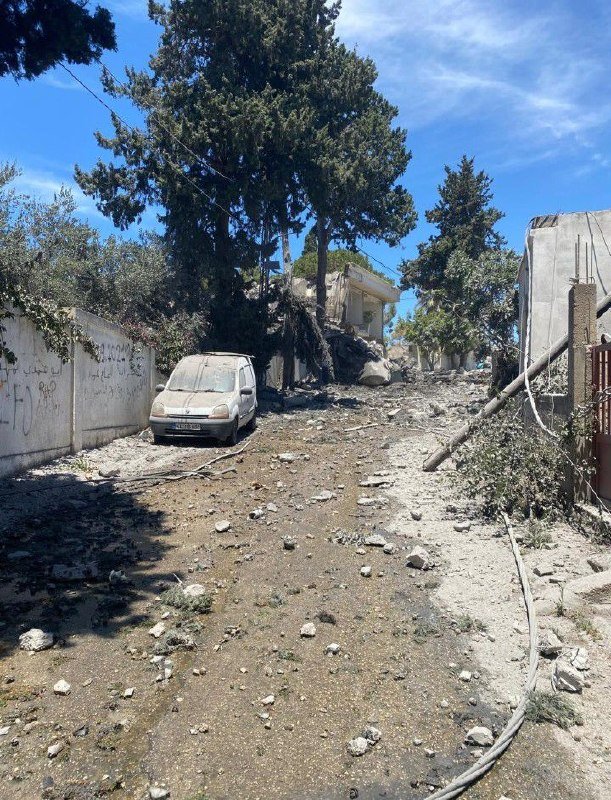
The Lebanese embassy in Washington confirmed on 2 June 2026 that Hezbollah had formally accepted a United States proposal for a mutual cessation of hostilities with Israel, according to reporting by Reuters. The announcement, which came hours after President Donald Trump claimed to have held a productive conversation with Hezbollah leadership, landed against a backdrop of competing narratives about who is driving events — and whether the stated commitments reflect genuine deal-making or diplomatic theatre.
The immediate picture is one of managed de-escalation. Trump, speaking at the White House, said both Israel and Hezbollah had agreed to tone down the fighting, framing the development as part of a broader push toward a negotiated settlement in Lebanon and a potential bridge toward talks with Iran. The Deutsche Welle dispatch from 2 June quoted the US president directly: both parties, he said, had accepted the terms of the proposed halt. For the Lebanese government, which has spent months navigating between Hezbollah's military posture and its own formal commitment to state sovereignty, the announcement offered a rare window of public clarity.
But the framing falls apart under scrutiny from multiple directions. A separate report from Sprint er Press noted that the Iranian newspaper Maariv — an Israeli outlet — had published a pointed analysis: Iran, the piece argued, is now setting the rules of the game. The threat from Tehran to suspend its own nuclear negotiations with Washington, Maariv reported, is what ultimately forced Trump to press Israel to stand down from a previously anticipated military operation in Lebanon. That framing, if accurate, means the ceasefire is less a product of US diplomacy than a product of Iranian leverage — and that Tehran's decision to allow it tells us something about what Iran wants from this moment.
The Iran variable
Iran's position in this story has received insufficient attention in the initial wire coverage. Tehran suspended its own talks with Washington shortly before the Hezbollah announcement, insisting — according to reporting from Deutsche Welle — that any durable peace in the region must include Lebanon as a central pillar. That condition is not incidental. It is a statement of interest: Iran views Hezbollah not as a peripheral asset but as an integral component of its deterrent architecture in the eastern Mediterranean, and it is unwilling to accept a settlement that resolves the Lebanon question without its own participation at the table.
By threatening to walk away from the nuclear track, Iran demonstrated a capacity to impose costs on the US approach that no Arab intermediary can replicate. The implicit message to Washington was straightforward: a region-wide negotiation that bypasses Iran's regional relationships is not achievable on the timetable the White House wants. This is not a new dynamic — Tehran has used its network of proxy relationships as a negotiating tool for decades — but the specific mechanics of this episode suggest a more deliberate and calculated deployment than the reactive pattern that characterized earlier periods.
The Maariv analysis, sourced from Sprint er Press, frames Iran's intervention as a signal that the Islamic Republic has regained strategic initiative after a period in which Western pressure — sanctions, the assassination of senior commanders, the maximalist campaign against the nuclear programme — had constrained its options. Whether that framing is accurate or overstated, it captures something real: Iran has successfully reframed itself from the object of diplomatic pressure to an actor whose inclusion is treated as necessary by the very parties trying to contain it.
Implementation: the unresolved question
Acceptance of a proposal and implementation on the ground are different things, and the sources do not indicate that either side has detailed enforcement mechanisms in place. Hezbollah and Israel have operated under informal rules of engagement before — periods of reduced intensity that eventually broke down as each side tested the other's red lines. The question observers are raising is whether this arrangement, whatever its formal terms, rests on any firmer foundation than its predecessors.
For Israel, the calculus is partly about signal management. An attack on Lebanon at this juncture, with the ceasefire framework publicly announced, would have generated significant diplomatic costs — from Washington in particular, given the administration's stated investment in the outcome. Standing down, from Israel's perspective, likely reflects a calculation that the timing was wrong for a major operation, not that the underlying strategic case against Hezbollah's presence along the border has changed. Israeli security officials have long maintained that any ceasefire that does not address the tunnel infrastructure and weapons stockpiling on the Lebanese side is a temporary arrangement; the current package does not appear to include those provisions.
For Hezbollah, the ceasefire offers tactical relief: the organisation has lost significant command infrastructure since October 2023 and its senior leadership has been degraded by targeted operations. A formal halt allows it to reconstitute while preserving the military capability it retains. The organization has consistently framed its activities as defensive responses to Israeli aggression — a framing that resonates in parts of Lebanese society that have no love for Hezbollah's political ambitions but view the group's military role through a lens of national resistance.
Lebanon itself remains the variable most exposed to the arrangement's instability. The state, which has been without a functioning president since 2022, has limited capacity to assert its own interests in any negotiation between foreign powers and armed non-state actors. The ceasefire, if it holds, offers Lebanese civilians along the border some relief from the ongoing displacement that has marked the past eighteen months. If it collapses, it is Lebanese infrastructure and Lebanese lives that absorb the first shock.
The diplomatic architecture and its limits
What is being described is not a comprehensive peace agreement — neither the Israeli public nor the Lebanese parliament has been consulted, and the terms on offer address mutual cessation of attacks rather than the broader questions of territorial dispute, sovereignty, and rights that underpin the conflict's durability. In that sense, the ceasefire is a tactical pause that serves immediate interests for the parties directly involved, rather than a structural resolution of the conditions that produced the conflict.
The framing that places this within a broader diplomatic arc — Trump's stated goal of simultaneously containing the Lebanon flashpoint and advancing talks with Iran — is coherent as a strategic narrative but fragile as a practical architecture. Iran suspended its own talks because it has calculated that it achieves more by exercising its veto on peripheral issues than by making concessions on the central one. The US, for its part, has signaled willingness to absorb that inconvenience — suggesting that the White House values the Lebanon outcome, and perhaps the appearance of diplomatic momentum, more than the hardline on Iranian nuclear compliance that defined earlier phases of the current administration's posture.
Whether that trade is intentional or reactive is a question the available sources do not resolve. What the sources do indicate is that the deal, whatever its provenance, is now public and its durability will be tested by forces on the ground that have their own calculations — and that no amount of diplomatic announcement fully controls.
Monexus led on Hezbollah's formal acceptance, following Reuters and Deutsche Welle's primary reporting. The wire framed this primarily as a US diplomatic success. This article foregrounds the Iran dimension — the Maariv reporting on Tehran's leverage — as structurally essential to understanding why the moment arrived when it did. Sources did not include a full English-language statement from Hezbollah's media office; the Lebanese embassy confirmation was the most formally attributable channel available.
Wire provenance
This editorial synthesis draws on the following public wire/social posts:
- http://reut.rs/43cUMHh
- https://x.com/sprinterpress/status/1928194973621821696
- https://x.com/sprinterpress/status/1928189539890803244