The FPV Pivot: How Hezbollah's Drone Program Is Forcing Israel to Rethink Border Operations
Hezbollah's improving first-person-view drone capabilities have forced the Israeli army to pull back heavy vehicles from south Lebanon—a tactical admission that the balance of power in the border zone is shifting in ways traditional firepower cannot easily counter.
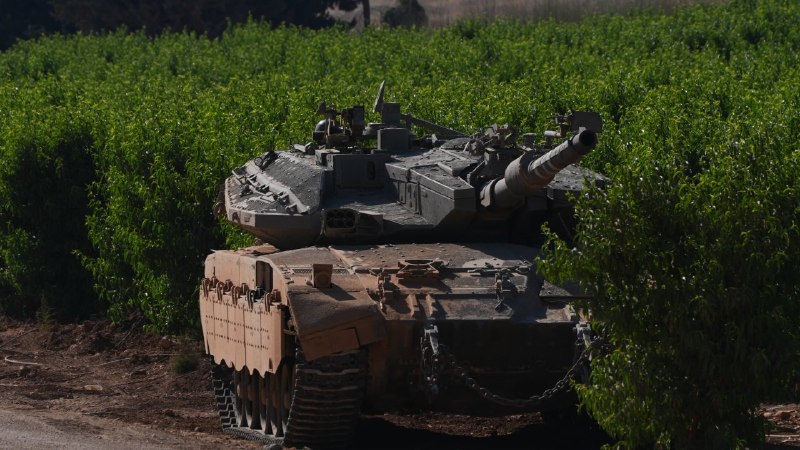
Israeli military officials have confirmed that the army has pulled a significant number of heavy vehicles back from positions in south Lebanon following a series of drone strikes that targeted armored assets. The retreat marks a rare operational admission that Hezbollah's first-person-view drone program has reached a level of effectiveness that is forcing adjustments to how Israel conducts its border operations. According to military sources cited by LBCI International, the decision reflects a growing consensus inside the Israeli command structure that the threat environment near the Lebanon frontier has fundamentally changed.
The shift has attracted attention from defense analysts who study asymmetric warfare. For more than a year, Hezbollah has been deploying FPV drones—small, inexpensive quadcopters fitted with explosives—against Israeli military positions along the border. Early versions were relatively easy to intercept and carried limited payloads. What concerns Israeli commanders now is the pace of improvement: the drones have become more reliable, more precise, and harder to counter using existing air defense setups designed for larger, faster-moving threats.
The Drone That Changed the Calculus
The incidents driving the reconfiguration began earlier this year, when Israeli media reported a series of strikes against vehicles operating near the fence line. Military officials speaking on condition of anonymity told The Cradle Media that the attacks demonstrated a qualitative leap in Hezbollah's targeting capability. The drones, sourced through a combination of commercial platforms and modified military-grade components, have been able to navigate the hilly, wooded terrain south of the Litani River with enough consistency to make vehicle movement in exposed positions significantly riskier.
Israeli air defenses were not designed primarily with small, low-flying drones in mind. The Iron Dome system intercepts rockets and artillery shells; David's Sling handles medium-range missiles; Arrow handles ballistic threats from range. The threat posed by an FPV drone—small, slow, and flying at tree-top height—is genuinely difficult to address with systems optimized for volume rocket barrages. Electronic warfare measures and anti-drone jammers exist, but deploying them across a long, porous border is operationally complex and resource-intensive.
Hezbollah has publicly acknowledged the strikes, framing them as a response to Israeli overflights and ground incursions. The framing matters: the group presents the drone attacks not as aggression but as defensive action against what it describes as Israeli violations of Lebanese sovereignty. That framing has domestic utility in Lebanon and broader resonance across the Shia political spectrum, but it also reflects a pragmatic assessment that drone warfare serves Hezbollah's strategic interest in keeping Israeli forces off-balance without triggering the kind of full-scale engagement that would invite overwhelming Israeli response.
What the Technology Actually Means
FPV drones are not new. They have been a fixture of the Ukraine conflict since 2022, where both Russian and Ukrainian forces have used them extensively for reconnaissance and direct strikes. The technology itself is commercial in origin—the same platforms used by hobbyists worldwide can be equipped with a warhead and a targeting system for a few hundred dollars in components. What the Ukraine experience demonstrated is that small, cheap drones can consistently defeat heavily armored vehicles when used correctly, and that their proliferation across conflict zones was inevitable.
Hezbollah has clearly studied the Ukrainian lessons. The group's drone operators have demonstrated improved navigation in complex terrain, better coordination with ground spotters, and a more systematic approach to identifying high-value targets. Israeli military observers note that Hezbollah's FPV pilots appear to be trained specifically for the border environment, with flight patterns calibrated to exploit gaps in coverage and strike when vehicles are stationary or moving through choke points.
The tactical implication is straightforward: a cheap drone worth a few hundred dollars can destroy a tank or APC worth several million. That cost-exchange ratio is unfavorable for any conventional force operating in contested airspace. Israel has some capability to jam or spoof drone signals, but Hezbollah has responded by increasing the autonomy of its platforms, reducing reliance on radio links that can be disrupted. The more sophisticated versions reportedly use pre-programmed routes combined with terminal-stage guidance from operators monitoring video feeds through relay networks. That combination is harder to counter than a simple radio-controlled device.
The Broader Strategic Signal
The decision to pull heavy vehicles back from forward positions carries a meaning beyond the tactical level. Israel has long maintained that its military superiority—including armor, air power, and precision-guided munitions—provides a deterrent capability that shapes Hezbollah's calculations. The drone threat does not eliminate that superiority, but it does complicate the deterrence calculus by introducing a factor that is not addressable through conventional firepower dominance.
Hezbollah has spent years building an arsenal of rockets and missiles capable of striking deep into Israeli territory. That arsenal remains intact and represents the primary deterrent against an Israeli ground offensive into Lebanon. The drone capability adds a lower-threshold option—a way to impose costs on Israeli forces without triggering the kind of escalation that would activate the full weight of the Lebanese rocket arsenal. In that sense, the drones are not simply a tactical weapon; they are a strategic instrument designed to shape the terms of engagement on terms that favor persistence and attrition over decisive exchanges.
Israeli military planners face a choice without clean options. Accepting the vulnerability of heavy vehicles means accepting a degraded ability to project force near the border. Investing in counter-drone systems means diverting resources from other priorities and accepting that the technology gap will continue to narrow as Hezbollah refines its approach. Launching a ground operation to eliminate the drone threat would risk the kind of escalation that the drone program itself is partly designed to prevent.
What Comes Next
For now, the Israeli army appears to be managing the problem through operational adjustment rather than technological or strategic solutions. Reducing the footprint of heavy vehicles in exposed positions is a pragmatic response that cuts risk but also reduces Israeli presence and influence along the border. Whether that adjustment holds depends partly on whether Hezbollah continues to improve its drones and partly on whether Israeli counter-drone technology can close the gap fast enough to restore a more forward posture.
The trajectory of drone warfare in conflicts from Ukraine to the Levant suggests that the gap will continue to narrow. Commercial drone technology is becoming more capable, more autonomous, and harder to counter with each passing year. Forces that adapt quickly will gain advantages; those that rely on conventional superiority alone will find that superiority less decisive than it once was. The Israeli army's quiet repositioning of its vehicles in south Lebanon is a concrete expression of that dynamic—one that neither side has much incentive to publicize.
The sources consulted for this article do not include Israeli Defense Forces official commentary on the specific incidents described. Military officials cited by LBCI International and The Cradle Media described the operational shift as a response to demonstrated drone capability rather than a precautionary measure, though the precise triggering incidents remain disputed. Hezbollah's own statements frame the strikes as defensive, consistent with the group's broader narrative about resisting Israeli encroachment. What is not in dispute is that the tactical reality has changed, and that both sides are now operating in a threat environment where the old assumptions about air superiority and armored dominance carry less weight than they once did.
This publication covered the drone threat story primarily through regional wire services and military analysis feeds. The dominant Western framing emphasized the tactical danger to Israeli forces; the regional framing, particularly in Lebanese and Lebanese-adjacent outlets, emphasized the defensive rationale and the success in forcing a visible operational adjustment. Monexus has sought to present both framings and to situate the specific incidents within the broader trajectory of drone proliferation across contemporary conflict zones.
Wire provenance
This editorial synthesis draws on the following public wire/social posts:
- https://t.me/TheCradleMedia/7823
- https://t.me/TheCradleMedia/7822
- https://t.me/wfwitness/11847