Hezbollah's Tank Tally and the Problem With Israel's Lebanon Calculus
Hezbollah's claimed destruction of six Merkava tanks in a single operational cycle exposes a structural problem with Israel's approach to the southern Lebanon frontier — one that heavy armor reduction alone cannot solve.
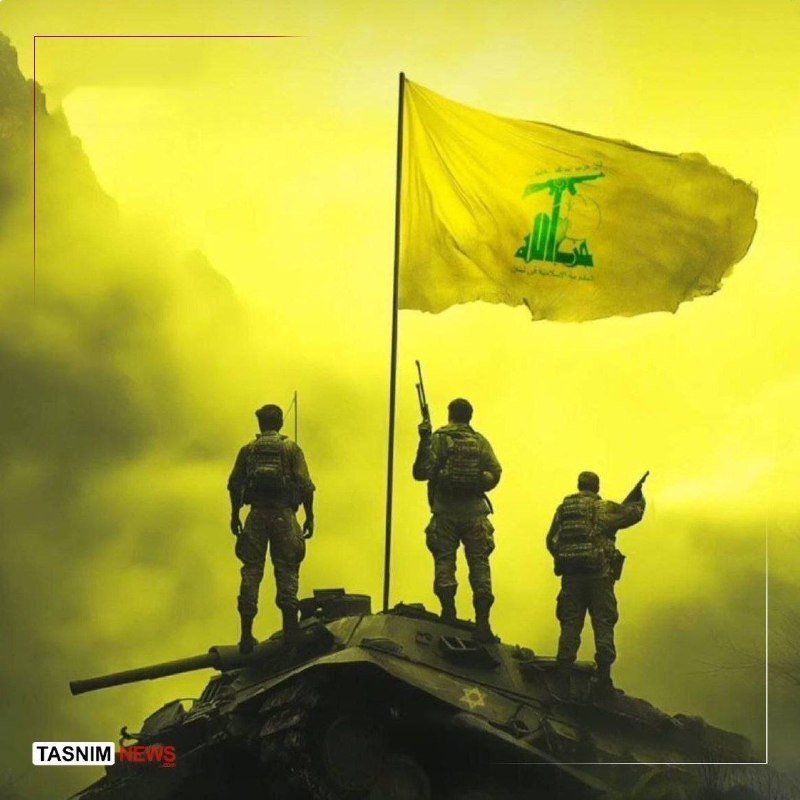
Hezbollah's military communications apparatus issued a statement early on 2 June 2026 claiming the group had destroyed six Israeli Merkava main battle tanks across multiple engagement axes in southern Lebanon. Within hours, Israeli occupation media — the term the Arabic-language wire service Alalamarabic used in its live reporting — carried a separate admission: the Israeli army had reduced its heavy vehicle footprint in the Lebanese border zone, a tactical concession framed as strategic adaptation. The pairing of claims is more instructive than either statement alone.
What Hezbollah presented as a successful prosecution of an attritional campaign, the Israeli military acknowledged by changing its operational posture. That the two accounts arrived within the same sixty-minute window on the same morning suggests neither side is interested in concealing the shape of what's unfolding along the Blue Line. The question is what that shape tells us about the limits of Israel's approach to the northern frontier.
The tank calculus
Israel's Merkava platform has long occupied a specific doctrinal position in the country's ground force architecture: high crew protection, modular design for urban and asymmetric terrain, and a family of variants suited to the kind of low-intensity border operations Israel has conducted in Lebanon intermittently since 2000. The Merkava's front-mounted engine block — a deliberate design choice prioritizing crew survival over conventional armor geometry — reflects a specific threat model. That model assumed anti-tank guided missiles and rocket-propelled grenades fired from prepared positions at close to medium range. What Hezbollah has been developing, with increasing operational coherence, is a threat profile that extends beyond that assumption.
The destruction claim, if even partially validated, would represent a non-trivial loss in a single operational cycle. Six tanks from a force whose total deployed armor in southern Lebanon has never been publicly quantified but is widely understood to number in the low dozens suggests a tempo of attrition that cannot be absorbed indefinitely. Israel's move to reduce heavy vehicle presence — reported by Alalamarabic citing Israeli occupation media on 2 June 2026 — is a rational response to a targeting problem. But it raises a separate question: what does a ground force without heavy armor actually look like in contested terrain?
Ghandouriyah and the targeting geography
The Israeli strike on the town of Ghandouriyah in southern Lebanon, reported by Alalamarabic at 06:21 UTC on 2 June, adds geographic specificity to a broader pattern. Ghandouriyah sits in the Nabatiyeh Governorate, south of the Litani River but well inland from the coast — a location that places it squarely in what the UN demarcation documents designate as an area of ongoing kinetic activity. The strike's target designation has not been independently confirmed, but the timing — following the Hezbollah Merkava claim by approximately twelve minutes — suggests a retaliatory sequencing that has become routine since the October 2023 escalation.
Israel's targeting doctrine in southern Lebanon has centered on the suppression of Hezbollah's anti-tank complexes, the destruction of launch infrastructure, and the elimination of operatives assessed to be in transit or preparation phases. That doctrine has produced a body of documented civilian harm — acknowledged in various UN observer mission reports — alongside confirmed military losses for Hezbollah. What it has not produced is a durable reduction in Hezbollah's capacity to target Israeli armor along the frontier. The strike on Ghandouriyah fits a pattern of tactical response without strategic resolution.
The northern frontier as attritional theater
Hezbollah's framing of its operations as defensive resistance — consistent with its stated rationale that the group's munitions posture in southern Lebanon is a response to Israeli occupation of Shebaa Farms and the broader 2006 war outcome — finds significant resonance in non-Western analytical frameworks. The group's communications apparatus has consistently framed its southern Lebanon operations as reciprocal to Israeli actions, a framing that has gained traction in regional media ecosystems and in the broader Global South discourse on the conflict's origins. This framing is not shared by Israeli or Western analysts, who treat Hezbollah as an independent threat actor whose weapons programs constitute a primary justification for Israeli operations regardless of the broader political context. Both framings cannot be simultaneously true in their strongest forms, and the structural reality — that Hezbollah operates from Lebanese sovereign territory with Iranian materiel support, while Israel conducts operations that produce civilian casualties in Lebanese population centers — admits of multiple interpretations.
What is less ambiguous is the operational trajectory. Hezbollah has demonstrated an ability to locate, track, and destroy armored vehicles across a wide front. The group's reported use of precision-guided anti-tank weapons — sourced from Iran but increasingly manufactured or modified in Lebanon, per multiple regional intelligence assessments — has elevated the effective kill zone for Israeli armor well beyond what was anticipated in prior force planning assumptions. Israel's tactical adjustment to reduce heavy vehicle density is an acknowledgment that the prior posture was generating unsustainable losses. But attrition is a two-way calculation, and the reduction in Israeli armor presence does not, by itself, reduce Hezbollah's targeting capacity — it reduces the available targets.
What the posture shift signals
The decision to pull heavy vehicles back from the southern Lebanon frontier is a concession that carries operational and political weight simultaneously. Operationally, it signals that the Israeli military recognizes a capability gap that cannot be addressed by incremental tactical adaptation — the Merkava platform, in its current deployment configuration, is not adequate to the threat environment Hezbollah has constructed. Politically, it signals a recognition that the goal of degrading Hezbollah's deterrent capacity has not been achieved through the intensive strike campaign of the past eighteen months, and that the current equilibrium — ceasefire-adjacent but not ceasefire-compliant — is not producing the outcomes Israeli leadership publicly articulated.
The risk embedded in the posture shift is not simply tactical. A force that relies on lighter vehicles and greater dispersion is less capable of sustained ground operations if political conditions change and a decision is made to re-enter southern Lebanon in force. The reduction in heavy armor is a one-way door: it protects armor in the short term but degrades options in the medium term. Hezbollah, with its deep tunnel and bunker infrastructure south of the Litani, operates in terrain that rewards forward deployment and punishes reconstitution. Israel's adjustment trades one risk for another, and the accounting is not complete.
Hezbollah's statement on 2 June 2026 was not a declaration of escalation. It was a demonstration of capability — the same day the Israeli military acknowledged it was reshaping its deployment posture in response to that capability. The two communications, taken together, describe an equilibrium neither side is willing to call an equilibrium. What comes next depends on whether the international pressure that has preserved the current ceasefire-adjacent state can continue to do so, or whether the attritional calculus will eventually produce a political event that neither military communication anticipated.
The Merkava losses, the Ghandouriyah strike, the armor reduction — each is individually explicable within a tactical frame. Together, they describe a conflict that has found its rhythm: precise, persistent, and without a political architecture to resolve it. That is not a novel finding. But it is one that the sequence of events on a single morning in June 2026 makes difficult to avoid.
This publication's approach to coverage of the Israel–Lebanon frontier prioritizes casualty accounting, deployment transparency, and the structural conditions that produce ongoing kinetic activity. Wire framing in the Western press frequently emphasizes Israeli security concerns without equivalent attention to the conditions that generate Lebanese civilian harm; this piece attempts to address that imbalance without normalizing either side's tactical choices.
Wire provenance
This editorial synthesis draws on the following public wire/social posts:
- https://t.me/alalamarabic
- https://t.me/alalamarabic
- https://t.me/presstv