Hungary Drops Veto Threat, Paving Way for Ukraine EU Membership Talks
Budapest's reversal on Kyiv's EU bid clears a procedural blockade that has stalled accession talks since 2022, potentially opening formal negotiations before summer's end.
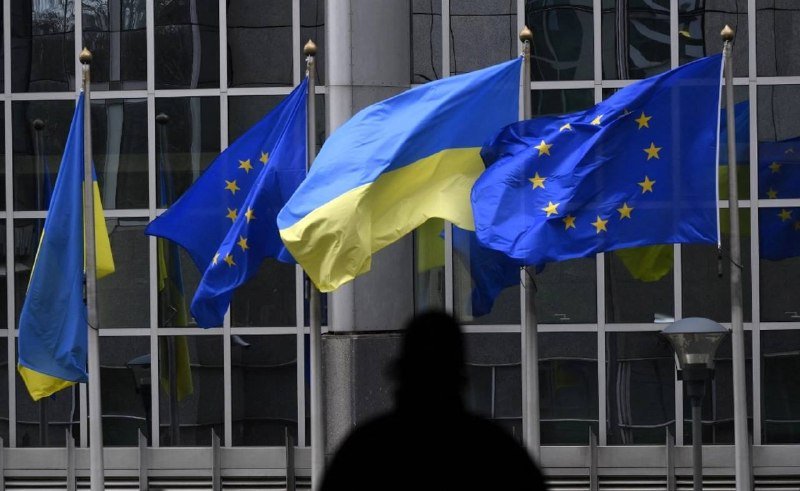
Hungary has signaled it will not obstruct Ukraine's European Union accession process, removing the last major procedural obstacle to formal membership negotiations that have been stalled since Kyiv submitted its application in February 2022. According to reporting confirmed by multiple outlets on June 2, 2026, Budapest communicated its decision to abandon opposition to Ukrainian and Moldovan EU bids, clearing the path for accession talks to formally open on June 15. The development marks a significant reversal for Hungarian Prime Minister Viktor Orbán, whose government has repeatedly used veto threats to extract concessions from Brussels over the past four years.
The timing matters. Ukraine's EU candidacy was granted with unusual speed in June 2022, a gesture of solidarity following Russia's full-scale invasion. But actual membership negotiations require unanimous approval from all 27 member states—a requirement that Hungary exploited to press Kyiv over bilateral disputes concerning minority rights, rule-of-law standards, and EU budget allocations. This week's announcement does not complete that process; it simply removes the immediate procedural blockade. A decade of subsequent negotiations, reforms, and intergovernmental review still lies ahead before any accession treaty can be ratified.
Budapest's Calculated Reversal
Hungary's position on Ukraine's EU bid has been among the most consistent veto threats within the bloc. Orbán publicly opposed fast-tracking Kyiv's candidacy in 2022, opposed opening preliminary screening clusters in 2023, and used procedural levers to delay formal negotiating frameworks throughout 2024 and 2025. The Hungarian government's grievances were substantive: disputes over Hungarian minority rights in western Ukraine, Kyiv's stance on Hungarian-language education, and what Budapest characterized as EU institutional overreach on rule-of-law benchmarks.
The shift reported on June 2 did not come with an explicit explanation from the Hungarian government. No formal statement from the Prime Minister's Office or the Ministry of Foreign Affairs was available as of publication. What changed between Budapest's sustained opposition and this week's accommodation remains unclear from publicly available sources. One plausible reading is transactional: Orbán has extracted what he needed from the EU on unrelated funding disputes and budget talks, and dropping the Ukraine veto became a negotiating chip worth trading. Another is structural: with ceasefire negotiations ongoing and the outlines of a potential settlement emerging, the cost of obstructing European integration for a wartime Ukraine shifted in Budapest's calculus.
Moldova's parallel candidacy, granted alongside Ukraine's in June 2022, faces fewer bilateral obstacles but has progressed at a similarly glacial pace. Chișinău has moved more deliberately on judicial reforms and anti-corruption measures, giving EU institutions less grounds for criticism than they have with Kyiv. Tuesday's announcement clears both tracks simultaneously.
The Wider European Calculus
For the European Commission, Hungary's apparent withdrawal of opposition is a procedural win without being a substantive one. Commission President Ursula von der Leyen welcomed Ukraine's candidacy with fanfare in 2022 and has repeatedly cited EU enlargement as a strategic imperative for a continent facing security pressures on multiple flanks. But the Commission has also been transparent that Ukrainian reforms remain incomplete—judicial independence, media freedom, and oligarchic influence over state institutions all remain flagged in annual progress reports.
The broader geopolitical context shapes the enlargement question in ways that pure accession criteria cannot fully capture. Russia's war against Ukraine has reframed EU membership from a technical governance exercise into a geopolitical instrument. The prospect of Ukraine inside the European club—economically the size of Poland, with a population of over 40 million and substantial agricultural and industrial capacity—would fundamentally alter the EU's demographic and economic centre of gravity. Eastern European member states, Poland in particular, have been among the most vocal advocates for rapid accession precisely because they view it as a strategic commitment to a country fighting to remain in the European orbit rather than drift toward Russian-aligned spheres.
The counterargument, sustained by several older EU member states, holds that formal accession negotiations while Ukraine remains at war create unresolvable legal and institutional complications. A country cannot ratify an accession treaty while its territorial status remains disputed. Several governments have quietly argued that the EU should focus on deepening existing association frameworks and financial support rather than pursue formal membership on a wartime timeline. This view has not prevailed at the political level, but it persists as a background condition shaping how enlargement debates unfold in Paris, Berlin, and The Hague.
Structural Stakes for European Architecture
The Hungarian veto reversal raises a structural question that extends beyond Ukraine: can the EU's enlargement process function as designed when one member state treats accession criteria as negotiating leverage rather than independent benchmarks?
The enlargement methodology requires consensus. Every new member must be approved unanimously by sitting members, and any government can extract bilateral concessions as the price of that approval. This design feature was intended as a safeguard against rushed expansion—a slow, deliberative process that ensures new members meet established standards. In practice, it has created an architecture where accession has functioned as a bargaining tool in disputes entirely unrelated to candidate countries' governance records. Hungary's prior use of the veto over EU budget disputes, rule-of-law proceedings, and migration policy suggests that procedural obstruction is not a bug in the system but a feature deployed strategically.
The EU has attempted reforms to address this vulnerability. Intergovernmental conferences can now proceed without a formal blockage declaration, and preliminary screening processes operate on timelines less susceptible to individual member state interference. But the unanimity requirement at the final accession stage remains, and Hungary's conduct over the past four years demonstrates how that requirement can be weaponized. Whether Tuesday's reversal represents a permanent change in Budapest's approach or a tactical pause remains to be seen. The structural incentive to extract future concessions has not been removed from the system; it has simply been set aside for now.
What Comes Next
Formal accession talks are expected to begin on June 15, with the first negotiating cluster—the section covering fundamentals such as democracy, fundamental rights, and the functioning of institutions—scheduled to open. This is the customary starting point for enlargement negotiations, not a substantive discussion of economic integration, agricultural policy, or structural funds. Those more contentious chapters will follow later, and typically take the most time to resolve.
The gap between opening talks and final accession is measured in years, often decades. Croatia took the shortest recent path, completing accession negotiations in 2011 and joining in 2013—eight years after submitting its application. For Ukraine, given the war, the incompleteness of reforms, and the scale of institutional adaptation required on both sides, the realistic timeline remains contested. Some EU officials have suggested a ten-year horizon; Ukrainian government officials have publicly advocated for faster tracks, arguing that the wartime context demands accelerated integration.
What Tuesday's announcement does is preserve the procedural pathway. Ukraine remains on the path toward membership. Moldova remains alongside it. The question of whether that path leads to a destination—rather than dissolving into another decade of negotiations punctuated by veto threats—will depend on factors that go well beyond Hungarian signals: the trajectory of the war, the durability of Western financial support, the pace of Ukrainian institutional reform, and the political will of EU member states to absorb a member whose territorial integrity they have pledged to defend.
The sources reporting this development consistently foreground the procedural dimension of Budapest's reversal—the opening of a door that remained technically accessible but practically blocked. Western wire coverage emphasized the diplomatic significance of Orbán's shift without dwelling on the bilateral grievances that preceded it. Monexus notes that the structural incentives underpinning Hungary's leverage remain intact, even as the immediate veto threat recedes.
Wire provenance
This editorial synthesis draws on the following public wire/social posts:
- https://t.me/noel_reports
- https://t.me/Kyivpost_official
- https://t.me/ukrpravda_news