Iran Opens Cairo Channel as Regional Diplomatic Map Redraws
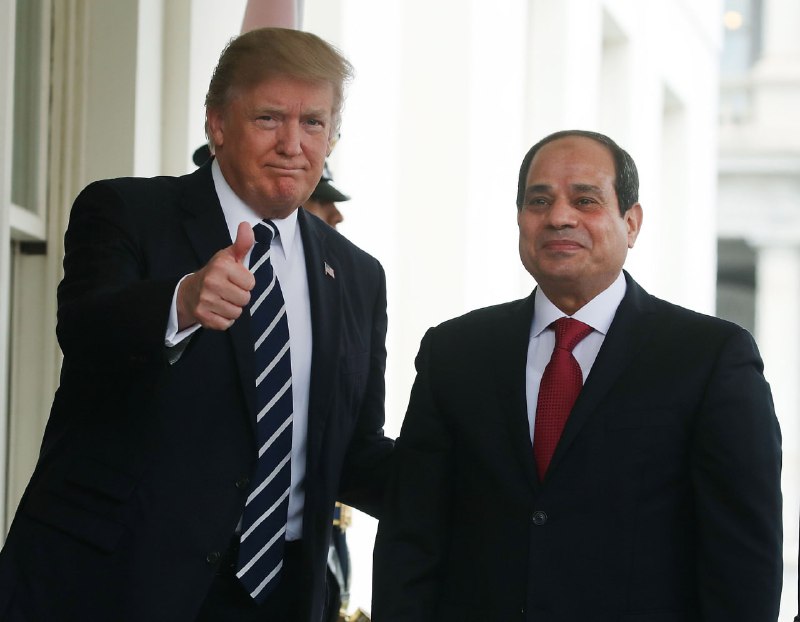
Foreign Minister Abbas Araghchi held talks with the head of Iran's Interests Section Office in Cairo on 2 June 2026, according to state reporting from the Islamic Republic of Iran News Agency, in what officials described as a focused discussion on expanding bilateral relations between the two countries.
The meeting is the latest signal that Tehran is actively pursuing normalised ties with Cairo after more than four decades of severed ambassador-level relations. The Interests Section that represents Iran in Egypt operates without the formal infrastructure of a full embassy — a vestige of the diplomatic rupture that followed the 1979 revolution and the subsequent peace treaty between Egypt and Israel. That arrangement has endured as a structural constraint on Tehran's regional diplomacy, even as Iran rebuilt bridges with other Arab capitals.
What makes this exchange notable is the timing and the personnel. Araghchi, who has made regional diplomatic outreach a central plank of his tenure since his appointment in 2024, has conducted a sustained series of bilateral consultations across the Gulf and the Levant. Egypt sits in a different category from those engagements — larger, more strategically complex, and more closely watched by Washington's Arab partners in the Gulf. A genuine opening with Cairo would represent a qualitatively different outcome than the normalisation agreements Iran has pursued with Saudi Arabia and the UAE since 2023.
The Architecture of a Forgotten Rupture
Iran and Egypt broke formal diplomatic relations in 1980, a year after the revolution that toppled the Shah. The severance came swiftly: Cairo extended recognition to Israel with the Camp David Accords in 1979, and revolutionary Tehran made that position a casus belli. The Interests Section that operates inside Egypt today was the improvised compromise that followed — a diplomatic minimum that preserved lines of communication without the gravity of ambassador-level representation.
For decades, the barrier held. Egyptian public opinion, shaped significantly by the Sunni-Shia divide that Tehran's competitors in the Gulf consistently reinforced, made any normalisation politically expensive for Cairo's leadership. The Mubarak era kept the relationship frozen precisely because opening it risked too much and delivered too little. Iran's own regional posture — supporting Assad in Syria, backing Hezbollah, maintaining a presence that Gulf states viewed as existential threat — gave Egypt's rulers no compelling reason to reverse that calculation.
What has changed is the regional environment. The Gaza war that erupted in October 2023 altered the working assumptions of every Arab government about the durability of the American-backed regional order. Egypt's leadership, watching the erosion of US influence levers across the region and the simultaneous weakening of the Hamas umbrella Iran supports, faces a recalculation that did not exist five years ago. Iran, for its part, has absorbed significant economic pressure from US sanctions but has maintained — and in some cases deepened — its regional position through the network of what analysts call its axis of resistance.
Competing Interests and the Saudi Question
The counter-read is straightforward: normalisation with Iran carries its own costs that Cairo cannot easily offset. Saudi Arabia, Egypt's principal Gulf patron only partially recovered from the 2023 financial assistance agreements, views Iran's regional expansion with suspicion that conventional diplomacy has not dissolved. A Cairo-Tehran rapprochement that appeared to come at Riyadh's expense would strain a relationship Egypt needs right now, particularly as it navigates a dollar liquidity crisis and IMF programme conditionality that leaves little room for diplomatic improvisation.
The United States, meanwhile, retains leverage through its aid relationship with Cairo and through the broader architecture of Gulf security cooperation that Egypt participates in. Any normalisation with Tehran would require Washington to signal tolerance, or at minimum, to refrain from treating it as a hostile act. The Araghchi meeting, if it is part of a deliberate-track process rather than a diplomatic courtesy, would need to navigate that constraint.
Gulf state reactions, reported across regional outlets over recent months, suggest a wait-and-see posture rather than active opposition. Several Emirati and Bahraini analysts have noted privately that a Cairo-Tehran normalisation, if it stabilises the Egyptian economy rather than destabilising it, is not uniformly bad for Gulf interests. That represents a meaningful shift from the unified front that characterised Gulf-Iran relations as recently as 2022.
What This Would Mean If It Holds
The diplomatic infrastructure between two countries is not symmetrical with cultural and economic ties, which have never fully collapsed despite the rupture. Trade figures sourced from Iranian customs data suggest bilateral commerce worth several hundred million dollars annually, conducted through intermediaries and third-country channels — a fraction of what possible direct trade would generate. Tourism, academic exchange, and航运 links between the two countries of 85 million and 105 million respectively would expand significantly under normalised conditions.
The more consequential dimension is regional signalling. Egypt at full diplomatic engagement with Iran would represent a structural shift in the balance between the GCC-aligned bloc and the Tehran axis. It would not constitute an alignment — Cairo's interests remain distinct from Tehran's, and the Interests Section meeting itself stops well short of formal normalisation — but it would alter the map that every regional actor uses to calculate the cost of confrontation.
The sources do not specify whether the current consultations are intended to lead to full ambassador-level exchanges or represent a more limited diplomatic confidence-building measure. What is clear from the IRNA reporting is that Araghchi framed the discussion in terms of expanding bilateral relations, a phrase that implies movement beyond the Interests Section's existing mandate.
Uncertainties and the Forward View
The gap between diplomatic contact and normalised relations has swallowed considerable political capital in the past. Iran and Egypt have found their way to the table before; each time, the structural constraints — Egyptian public opinion, Gulf partner pressure, the Israeli dimension, Washington's silence-has-assented posture — have reasserted themselves before the work could complete.
What is different this time is harder to specify. Araghchi's personal trajectory — a career diplomat who served as nuclear negotiator and who has explicitly prioritised Arab world normalisation as a strategic objective — gives the effort a consistency it may have lacked in previous cycles. The Arab regional environment, reshaped by the Gaza war and by the broader evidence of American retrenchment from the Middle East, creates conditions where Cairo's leadership may feel less exposed to criticism for engaging Tehran than at any point since 1980.
Whether that is sufficient to push through the remaining constraints remains genuinely open. A full normalisation — the exchange of ambassadors, the opening of embassies, the formal resumption of diplomatic relations — would require steps that the current conversation has not yet reached. But the Interests Section meeting on 2 June 2026 signals that the question is being asked seriously, for the first time in a generation, by officials on both sides.
Wire provenance
This editorial synthesis draws on the following public wire/social posts:
- https://t.me/Irna_en/9142
- https://en.wikipedia.org/wiki/Abbas_Araghchi
- https://en.wikipedia.org/wiki/Relations_between_Egypt_and_Iran
- https://en.wikipedia.org/wiki/Interests_Section_of_the_Islamic_Republic_of_Iran_in_Egypt