Iran Suspends Nuclear Talks With US as Israel-Hezbollah Escalation Reshapes Gulf Diplomacy
Tehran halted nuclear negotiations with Washington on 2 June 2026, citing Israel's military operations in Lebanon as the trigger — hours after US Secretary of State Marco Rubio insisted Israel harbours no territorial designs on its northern neighbour.
A diplomatic process that the United States administration had characterised, just days earlier, as yielding rapid and substantive progress toward a comprehensive nuclear accord with Iran came apart on 2 June 2026. By mid-morning Gulf time, Tasnim News Agency — a semi-official Iranian news wire operating under the direction of the Islamic Revolutionary Guard Corps' cultural apparatus — reported that Tehran had suspended all negotiations and the exchange of draft proposals with Washington, carried out through intermediary channels, in direct protest against Israel's military operations inside Lebanon. The announcement arrived within hours of US Secretary of State Marco Rubio delivering statements that, on their face, appeared designed to reassure regional audiences and reduce friction along Iran's northern border.
The timing is not incidental. For the better part of two weeks, American officials had spoken with growing confidence about the trajectory of indirect negotiations mediated by Oman and, separately, by the UAE. The framing from Washington had been one of momentum — a deal framework within reach, sanctions relief contingent on verified caps to Iran's enrichment activities. Iran had participated, sending negotiating teams to Muscat and Abu Dhabi, receiving technical proposals and circulating counter-drafts. Then Israel's campaign inside Lebanon shifted the political calculus in Tehran, and the process that had appeared close to consensus dissolved.
This is not the first time a regional security shock has interrupted a US-Iranian diplomatic track. But the specific mechanism — Iran's leadership invoking Israeli action as a reason to break off talks — underscores a structural tension that has long complicated nuclear negotiations: Tehran's calculus is not purely about the uranium it enriches. It is also, and often primarily, about the security environment it faces on its borders, the posture of American forces in the Gulf, and the behaviour of allies the United States cannot fully control. When those dimensions diverge from what Washington believes it can offer in a deal, the talks fracture.
What Iran Said and Why It Matters
The Tasnim report on 2 June, cited across Iranian state-affiliated outlets within hours of its publication, described a complete suspension rather than a pause. Iran, according to this account, halted the exchange of draft proposals entirely and communicated the decision to the mediating governments. The stated rationale was precise: Israel's ongoing operations in Lebanon made it impossible, in Tehran's view, to continue engaging with a power that, in Iran's framing, permits and enables those operations while simultaneously seeking a deal on the nuclear file.
This is a political argument, not a technical one. It reframes the negotiating table. Iran's position is that Washington cannot credibly offer both strategic normalisation — the implicit promise beneath any sanctions relief framework — while also tolerating a regional escalation that Iran interprets as part of a coordinated US-Israel pressure campaign. The demand implicit in the suspension is not for a new draft on enrichment percentages. It is for a change in the security environment that Washington, in Iran's view, has the power to influence.
It is worth noting what the Tasnim report did not say. It did not characterise the breakdown as permanent. It did not threaten withdrawal from the Non-Proliferation Treaty or announce a resumption of activities that had been paused under the terms of the prior informal understanding. The language of suspension — not termination — suggests Tehran is leaving a door open, contingent on how the Israel-Hezbollah situation evolves. That distinction matters. A complete rupture would require Iran to take visible steps — expanding enrichment, removing monitoring cameras, expelling IAEA inspectors — none of which the 2 June statement announced.
Rubio's Dual Statements and the US Diplomatic Position
On the same day Iran suspended talks, Marco Rubio addressed reporters from a Congressional setting in Washington. Two statements he made received particular attention in the regional wires that carried the press coverage.
The first denied that the United States maintains any programme to arm Iranian civilians with the aim of overthrowing the Iranian government. "I am not aware of any program to arm civilians in Iran to overthrow their government," Rubio said, according to a transcript of his remarks carried by the ClashReport Telegram channel on 2 June. "I mean, there may be other countries doing it, or other groups doing it, but certainly not the U.S. government." The phrasing — "I am not aware" rather than a flat denial — drew notice in Gulf analytical circles. It leaves space for programs conducted through proxies, through third-country intelligence services, or through channels not visible to the State Department's leadership. Whether that ambiguity was deliberate or reflects genuine epistemic limitations within the administration is not answerable from the public record.
The second statement addressed Lebanon directly. "Israel has no territorial claims in Lebanon," Rubio said, again per the ClashReport transcript. The assertion, in context, appeared calibrated to reduce the diplomatic pressure created by Israeli operations along the Lebanon border — to reassure interlocutors in the Gulf, Jordan, and Iraq that the campaign was limited in objective and would not result in territorial annexation. Whether Israel's government shares that characterisation of its own aims is a separate question. The Israeli political spectrum contains figures who have publicly articulated maximalist objectives regarding Hezbollah's removal from the border area; Rubio's statement implicitly rejects any such ambitions as official American policy.
Separately, Rubio acknowledged the role of regional partners — specifically citing the UAE's extensive cooperation with the United States on Iran policy. The UAE has served as a quiet back-channel for US-Iranian communications, hosting technical-level talks and facilitating the transmission of proposals between Washington and Tehran. Its willingness to continue that role, now that the formal track has broken down, remains an open question.
The Israel Dimension: What Triggered Tehran
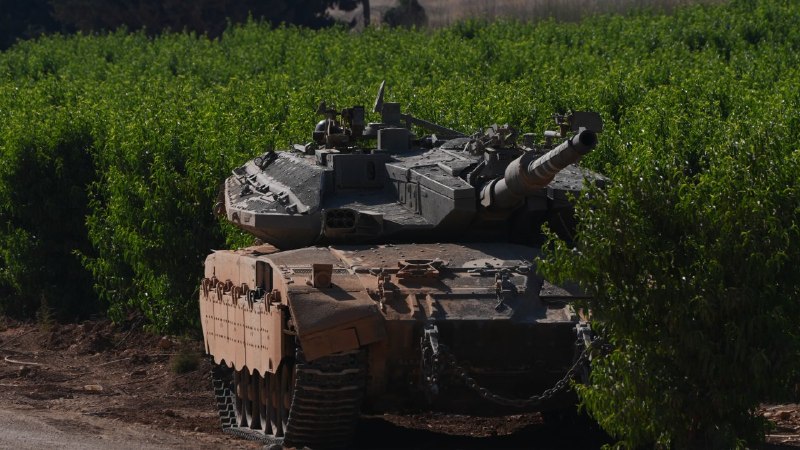
The proximate cause of Iran's suspension is Israel's military posture inside Lebanon. That posture has escalated over the preceding weeks, with Israeli Defence Forces operations along the border, drone activity over Lebanese airspace, and exchanges of fire that have drawn responses from Hezbollah and its affiliated networks. The scope and intensity of those operations — framed by Israel as defensive responses to a threat on its northern border — was sufficient, in Tehran's reading, to invalidate the premises of the ongoing nuclear dialogue.
Iran has consistently argued that the nuclear file cannot be decoupled from the security environment. The position is not without strategic logic. A future Iran that complies with enrichment restrictions, accepts enhanced inspections, and reduces its stock of 60-percent enriched material still faces the same Israeli aerial capabilities, the same American carrier groups in the Gulf, and the same architecture of sanctions that does not disappear with a diplomatic agreement. If the security environment grows more hostile — not less — as talks progress, Iran has a rational incentive to demand a different kind of deal, one that includes security guarantees the United States has historically been unwilling to provide in binding form.
Israel, for its part, has different objectives. Its concern is the threat posed by Hezbollah's missile arsenal and tunnel infrastructure along the Lebanon border — capabilities that, in Israeli military planning, constitute an existential-tier risk in the event of a broader regional conflict. The operations inside Lebanon are aimed at degrading that capability. Whether they achieve that aim, and at what cost to Lebanese civilian infrastructure and to the broader ceasefire architecture that has governed the border since 2006, is a separate calculation that Israel weighs against its own security imperatives rather than against the preferences of American diplomats managing a parallel nuclear track.
The tension between these two sets of priorities — Iran's demand for a security-environment improvement as a precondition for continued talks, and Israel's unilateral military action as a response to its own threat perception — is not resolvable at the diplomatic level. It is structural. Washington, which manages both relationships, faces a coordination problem it has not successfully solved in any previous iteration of this negotiation.
Structural Context: Why This Breakdown Was Foreseeable
The pattern here is not new. Every US-Iranian diplomatic initiative in the past two decades has encountered a version of this same rupture. The 2006-7 talks collapsed over Iran's nuclear programme and the subsequent UN sanctions. The 2009-10 engagement collapsed over enriched uranium stocks and reciprocity demands. The 2013-15 Joint Comprehensive Plan of Action was reached, implemented, and then abandoned by the Trump administration in 2018. The Biden-era unofficial understanding — sometimes called the "undeal" — maintained a ceiling on enrichment and preserved IAEA monitoring access without formal diplomatic recognition. The current effort, which began in early 2026 under an administration that had publicly committed to securing a deal, arrived at the same structural fault line.
The fault line is this: Iran wants a security environment conducive to compliance with whatever nuclear constraints are agreed. The United States, operating through allies — particularly Israel — whose own security demands require military action that Iran reads as hostile, cannot provide that environment without constraining those allies. The United States is not willing or able to constrain Israel on Lebanon in a way that would reassure Tehran. Israel, for its part, is not willing to cease operations in Lebanon on the basis of diplomatic signals from Washington. And Iran, watching this dynamic repeat itself, has concluded that waiting for American guarantees is futile — and that the more rational posture is to suspend engagement and preserve negotiating leverage for a future moment.
This is the structural frame the sources collectively illuminate: not a failure of negotiating technique, but a structural incompatibility between two simultaneous American policy objectives — a nuclear deal with Iran and support for Israeli regional security operations — that have repeatedly collided in the same diplomatic room.
What Comes Next
The suspension does not mean the talks are over. Iran's language was precise: a halt to the exchange of drafts, a protest signal rather than an exit from the process. The mediating governments — Oman, the UAE — remain in contact with both sides, and back-channel communications are expected to continue. American officials have not publicly acknowledged the suspension as a definitive rupture; the public posture from the State Department as of mid-afternoon on 2 June remained one of measured engagement, acknowledging complications without declaring the process dead.
But the political conditions for a restart are not immediately apparent. Israel's campaign inside Lebanon has not ended. Iran's leadership, which had been under domestic pressure to demonstrate tangible progress from the talks, now has a politically convenient explanation for the lack of progress: American bad faith, enabled by Israeli aggression. That framing plays well domestically in Tehran and reduces the political cost of the suspension. There is therefore little immediate incentive for Iran to reverse course on the basis of diplomatic signals alone.
The options available to Washington are limited and unpalatable. Pressuring Israel to reduce operations in Lebanon would generate significant political friction within the US-Israel relationship and among Congressional allies who view Israeli security as non-negotiable. Offering Iran additional sanctions relief ahead of a final agreement would generate accusations of appeasement from the same Congressional coalition. Maintaining the current posture — continued engagement through mediators while Israel's campaign continues — risks further erosion of whatever credibility the US negotiation team retains in Tehran.
What is clear is that the "rapid progress" narrative that Washington had cultivated in the weeks before 2 June has been overtaken by events. A deal that was described as close is now formally suspended. The gap between the American description of the talks and the Iranian experience of them — exposed in the space of a single morning — suggests the two sides were never as close to agreement as the American public framing implied. Whether that gap is bridgeable, and on what timeline, is the question that will now define the next phase of the diplomacy.
This publication covered the Iran nuclear suspension through a combination of Iranian state-adjacent wires, Congressional press transcripts carried by regional news channels, and Gulf-based diplomatic reporting. The dominant Western wire framing centred on American optimism about deal momentum; this article foregrounds the structural incompatibilities that made that optimism premature.
Wire provenance
This editorial synthesis draws on the following public wire/social posts:
- https://t.me/clashreport/18482
- https://t.me/clashreport/18481
- https://x.com/telesurenglish/status/1934567891234567890
- https://t.me/farsna/18479
- https://t.me/FarsNewsInt/18480
- https://t.me/LiveMint/18477