Israel Signals Escalation Threshold as Hezbollah Drone Strike Hits Southern Lebanon
Defense Minister Israel Katz reiterated on 2 June a standing threat to strike Beirut's Dahieh district if Hezbollah resumes attacks on Israeli communities, hours after a drone attack wounded two Israeli soldiers near the Lebanese border.
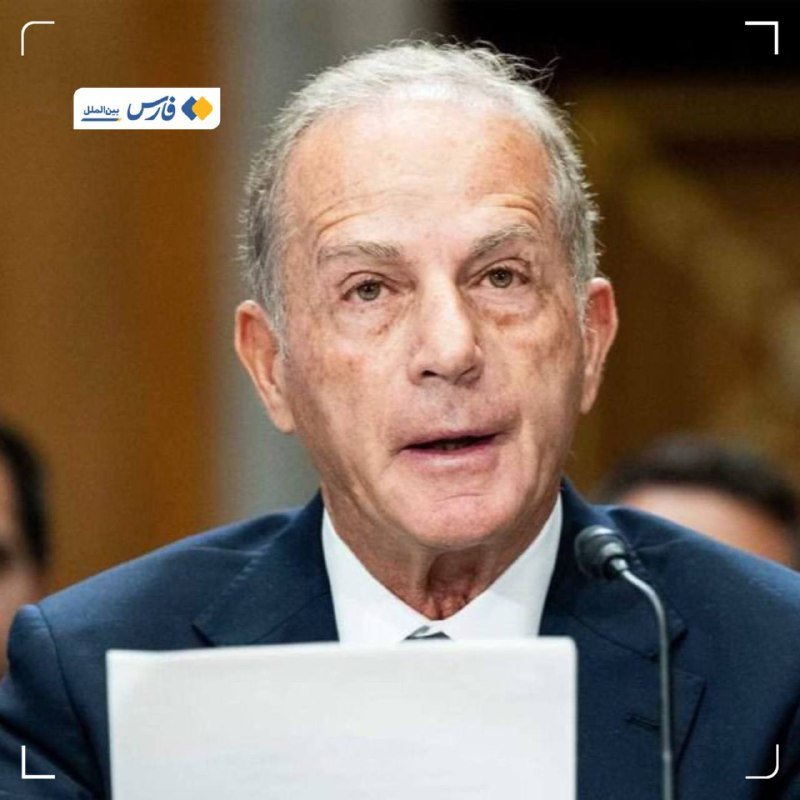
Israeli Defense Minister Israel Katz reiterated on 2 June a standing threat to strike Beirut's Dahieh district — a Hezbollah-aligned stronghold in the capital's southern suburbs — if the group resumes attacks on Israeli communities. The reaffirmation came hours after two Israeli soldiers were wounded in a Hezbollah drone attack targeting occupation forces in southern Lebanon, according to the Israeli military.
The sequence of statements and incidents marks one of the more acute recent moments along the Israel-Lebanon border, where a fragile ceasefire has held since November 2024 but where both sides have repeatedly tested the other's red lines. Katz's statement, described by his office as a reaffirmation of an equation announced the previous evening, places the burden of escalation squarely on Hezbollah's next move — while critics note the framework offers the Israeli government significant latitude to define what constitutes a triggering attack.
The Incident and the Immediate Response
According to an Israeli military statement issued on the morning of 2 June 2026, a Hezbollah drone struck a position occupied by Israeli forces in southern Lebanon. Two soldiers were injured and evacuated for medical treatment. The military did not release further details on the severity of the wounds or the unit involved.
Hezbollah has not issued a public statement claiming the attack as of this publication. The group's media apparatus typically confirms or contextualizes operations through its own channels, and the absence of an immediate claim is notable but not unusual — Hezbollah sometimes attributes strikes days after they occur, or frames them as part of a broader retaliatory logic not tied to a single incident.
The attack occurred against a backdrop of elevated but not unprecedented tension. Since the ceasefire took effect, the Israeli military has conducted regular operations in southern Lebanon under the terms of the Understanding that ended direct hostilities between Hezbollah and Israel. Israeli ground forces have remained in several positions south of the Litani River — a presence that Hezbollah and the Lebanese government have contested as a violation of the Understanding's terms.
The "Equation" and Its Strategic Logic
Katz's reaffirmation of what his office described as an equation — that fire toward Israeli communities would trigger a response against Dahieh — is not new language. Israeli officials have invoked variations of this threat repeatedly since the ceasefire, typically in response to what Tel Aviv characterizes as violations or near-violations by Hezbollah. The Dahieh district, a densely populated southern suburb of Beirut, is home to a significant Hezbollah civilian and military infrastructure presence; striking it would carry substantial risk of civilian casualties and represent a major escalation from exchanges confined to the border area.
The strategic logic behind the threat is deterrence: Israel is attempting to define a threshold that, if crossed, produces consequences disproportionate to the triggering event. This is a familiar framework in Israeli defense doctrine. The question is whether the threat is credible given the political and military constraints that currently apply — specifically, that Israel is managing a multi-front tension that includes the ongoing campaign in Gaza and operations in Syria, and that a strike on Beirut's southern suburbs would carry significant international political costs.
Israeli military sources, speaking on background to regional outlets, have suggested the threat is not rhetorical. But the same sources acknowledge that any decision to strike Dahieh would require cabinet-level authorization and would be evaluated against the then-prevailing threat environment. The "equation" is therefore better understood as an escalation ladder than as an immediate trigger.
Skepticism from the Resistance Axis
From the other side of the border and the broader conflict architecture, the mood is skeptical. Hossein Pak, identified in reporting by Farsna as a correspondent covering what the channel describes as the "resistance area," stated on 2 June that he finds it difficult to believe Israel will withdraw from occupied areas of Lebanon through negotiation. The assessment reflects a widely held view among analysts aligned with or sympathetic to the resistance axis — that Israel will only ceded territory under sustained military pressure, not through diplomatic frameworks.
This reading is not without structural support. Israel's continued presence in southern Lebanese positions, contested by both Hezbollah and the Lebanese state, suggests that Tel Aviv is maintaining leverage that the ceasefire Understanding was supposed to eliminate. The lack of a verified withdrawal timeline, and the ambiguity in the Understanding's enforcement mechanisms, has allowed both sides to interpret its terms selectively. Hezbollah's operations — including the drone strike of 2 June — can be read as testing the boundaries of what Israel will tolerate before invoking the escalation clause.
That said, framing the drone attack solely as a Hezbollah initiative risks missing the reciprocal dynamic. Israel has conducted regular overflights of Lebanese territory since the ceasefire, and has carried out strikes in Lebanon — including at least one in May that killed a Hezbollah member — that the group has characterized as violations. The incident on 2 June fits into a pattern of mutual testing rather than a unilateral Hezbollah escalation.
Stakes and Forward Trajectory
The stakes in this episode are not primarily about the two wounded soldiers, as serious as any injury is to the individuals and their families. They are about whether the ceasefire architecture — which has held but has not resolved the underlying territorial and security disputes — can absorb continued friction without collapsing.
Israel's Katz appears to be signaling that it cannot — or rather, that Hezbollah's next significant provocation will be met with a response that moves the conflict to a different plane. The threat to Dahieh is designed to raise the cost of Hezbollah's continued border testing to a level that forces the group to recalculate. Whether that calculation changes behavior depends on whether Hezbollah's leadership believes the threat is genuine, and whether they calculate that Israel, facing simultaneous pressures in Gaza and Syria, has the political will to execute it.
The pattern of mutual testing is not unique to this moment. But the specific combination — a clear public statement of escalation thresholds from Israel's defense minister, a drone strike that wounded soldiers on the same day, and skepticism from resistance-axis observers that the current framework will produce Israeli territorial withdrawal — suggests the ceasefire is under meaningful stress. Whether that stress is managed or miscalculated will depend on the next 72 hours.
This publication framed the exchange as a reciprocity problem rather than a Hezbollah provocation. Israeli military statements and the defense minister's office provided the official Israeli position; Hezbollah-aligned reporting provided the counter-narrative that Israel maintains positions whose withdrawal the Understanding requires.
Wire provenance
This editorial synthesis draws on the following public wire/social posts:
- https://t.me/Farsna/48291
- https://t.me/englishabuali/8192
- https://t.me/TheCradleMedia/48201
- https://t.me/TheCradleMedia/48202
- https://t.me/englishabuali/8193