Israeli Forces Adapt to Hezbollah Drone Threat as Civilian Casualties Mount in Southern Lebanon
The Israeli army has pulled back heavy armored vehicles from southern Lebanon after they became targets for Hezbollah drone attacks, while a civilian strike killed four members of a family in an apparent pause in hostilities.
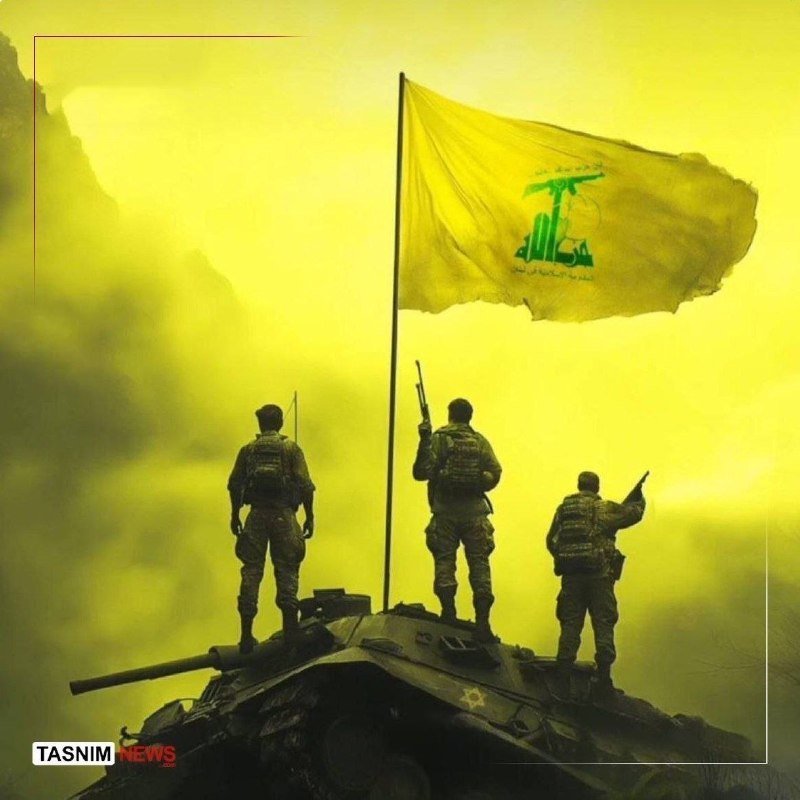
The Israeli army has withdrawn a significant number of heavy armored vehicles from southern Lebanon after they proved vulnerable to Hezbollah drone attacks, according to military officials cited by Lebanese channel LBCI on 2 June 2026. The same channel, drawing on Israeli military reporting, noted that the operational adjustment came after convoys of heavier equipment became priority targets for the drone wing of the Iranian-backed force. Military officials speaking to Israeli media did not specify how many vehicles had been pulled back, or over what timeframe the reduction occurred, beyond placing it in the context of recent days.
Hezbollah later launched a drone attack against Israeli forces operating near the Lebanese border, prompting an IDF interceptor response. The Israeli military confirmed the engagement on 2 June but did not state whether the interception succeeded. IDF spokespersons acknowledged the drone had been tracking forces in southern Lebanon, a pattern that Israeli commanders have described as a deliberate shift by Hezbollah toward precision targeting of ground formations rather than random rocket barrages into Israeli territory.
The tactical adjustment by Israeli forces reflects a broader dynamic that has reshaped the border contest over several months of exchanges. Heavy armor, designed for mechanized ground operations, presents a relatively slow-moving and identifiable target from the air. Hezbollah has invested heavily in drone technology — both in imported systems and in indigenous manufacturing — that allows its operators to loiter, identify, and strike point targets with growing accuracy. Israeli forces have adapted by relying more heavily on lighter vehicles, improved electronic warfare systems, and stepped-up counter-drone operations, but the evolving threat has outpaced some defensive postures.
Meanwhile, a civilian strike on 2 June underlined the human cost running beneath the tactical calculus. A Lebanese dentist was killed alongside three members of his family when an Israeli airstrike struck their vehicle in southern Lebanon, according to reporting by the Iranian state-affiliated network PressTV. The victims were identified as Hassan Mostafa and three relatives; the targeting rationale was not immediately specified by Israeli officials. Civilian vehicles traveling on roads in southern Lebanon — many of them displaced families moving between towns — have been caught in strikes repeatedly over the course of exchanges that show no sign of permanent de-escalation.
The lull that followed those strikes was itself notable. For the first time in several days, southern Lebanon experienced hours of relative quiet on 2 June, with the most recent Israeli strike occurring around three hours before the last Hezbollah attack registered by monitoring feeds. The gap was brief; neither side observed a formal ceasefire, and both military statements continued to frame operations as ongoing. A temporary cessation of exchanges of this kind has preceded escalations before — a pause intended to calibrate responses rather than resolve the underlying contest. Whether this marks a brief operational assessment by both sides or a structurally significant turn toward de-escalation cannot be determined from available military reporting.
The structural logic of the border contest is not primarily about territory in the conventional sense. Both sides understand that a full-scale Israeli ground offensive into southern Lebanon would be costly in casualties and would carry significant political risk. Hezbollah, for its part, understands that provoking a widened conflict against a technologically superior adversary carries existential risk. The contest, therefore, operates within a narrow corridor of escalation below the threshold that would trigger a broader war — using precision drone strikes, anti-tank guided missiles, and overnight rocket fire to impose costs and demonstrate relevance without triggering a decisive Israeli response. What changes is the ceiling of that corridor: when drone technology makes Israeli armor untenable in certain sectors, or when civilian casualties generate sufficient domestic or international pressure to alter Israeli operational calculus, the contest shifts. The most recent days suggest both mechanisms are in motion simultaneously.
The forward view is defined by a simple asymmetry. Hezbollah will not voluntarily disarm; Israel cannot permanently absorb precision attacks on its forces without a response that escalates beyond the current threshold. The drone adaptation by Israeli forces is a tactical response to a strategic constraint — one that buys time but does not resolve the underlying tension. What remains absent from either side's public framing is an off-ramp that does not require one party to capitulate. Until that changes, each tactical adjustment — the heavier vehicles pulled back, the interceptor missiles launched, the gap between strikes — will continue to be read as both a response to the immediate day and as a signal of willingness to continue the contest.
This publication's coverage of exchanges along the Israel–Lebanon border foregrounds tactical adaptation and civilian harm in roughly equal measure. Wire-service frames tend to treat individual strikes as discrete events rather than as signals within a sustained operational pattern; this piece attempts to give the pattern its proper analytical weight.
Wire provenance
This editorial synthesis draws on the following public wire/social posts:
- https://t.me/wfwitness/8942
- https://t.me/AMK_Mapping/11207
- https://t.me/presstv/4561
- https://t.me/wfwitness/8931
- https://en.wikipedia.org/wiki/Hezbollah_armed_strength