Israeli Strikes on Southern Lebanon Escalate Tensions Along the Blue Line
Israeli airstrikes targeted multiple towns in southern Lebanon on 2 June, drawing attention to the fragile equilibrium along the Blue Line separating Israeli and Lebanese forces and raising questions about whether the latest flare-up signals a broader shift in the rules of engagement.
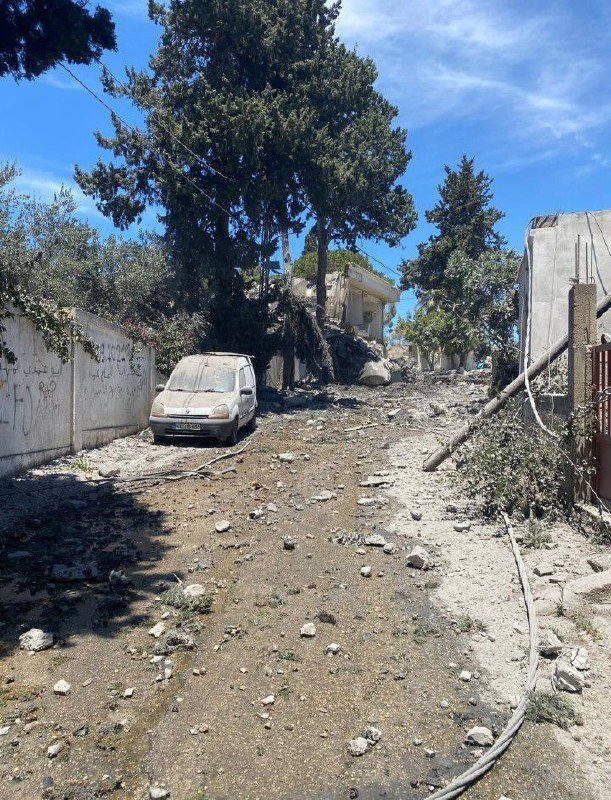
The Israeli Air Force struck targets in southern Lebanon on the morning of 2 June 2026, striking the town of al-Ghandurieh in the Bent Jbeil district and simultaneously launching attacks on al-Nabatieh al-Fouqa, Shokin, and Kafrtbanit, according to reporting by Al Jazeera that was picked up and relayed by Iranian state-linked channels. The strikes, which followed a period of heightened cross-border exchanges, represent the most significant single-day concentration of Israeli air activity over Lebanese territory in recent months.
What makes the episode significant is not the strikes themselves — these are familiar instruments of a conflict that never formally ended — but the timing and the pattern it reinforces. Over the past year, Israeli precision strikes have become more frequent and more surgically targeted. The shift from massed artillery to targeted aircraft payloads changes the calculus of risk for both sides.
The arithmetic of escalation
For Israel, the logic is straightforward: precision is cheaper in diplomatic capital than the alternative. A targeted strike on a specific building carries a different political price than a barrage that levels a village. The question is whether the Lebanese Theatre — and Hezbollah's response doctrine — processes the difference in kind or merely in degree. Hezbollah has historically interpreted Israeli restraint as permission to probe the next threshold. That interpretive framework is what makes the current sequence dangerous rather than routine.
For Lebanon, the strikes landed in an area still recovering from previous rounds of hostilities. Southern Lebanon's population has cycled through displacement, partial return, and renewed displacement with a weariness that international coverage rarely captures. The towns named — al-Ghandurieh, al-Nabatieh al-Fouqa, Shokin, Kafrtbanit — are not strategic assets in any conventional military sense. They are communities. The question the international system should be asking is what it is trying to prevent, and whether targeted strikes in civilian-adjacent areas advance that goal or erode it.
What Hezbollah's posture tells us
The silence from Hezbollah's media apparatus in the hours following the strikes was notable. Not absent — the group's communications are calibrated, not reactive — but notably measured. This is not weakness. It reflects a strategic calculation that escalation is politically expensive for the group at a moment when Lebanon's political class is attempting to elect a president for the first time in two years, and when the Shiite coalition's domestic position is under pressure from multiple directions simultaneously.
Hezbollah can absorb a limited Israeli strike without responding in kind. The group did so in the aftermath of the October 2023 conflict opening, absorbing significant pressure before calibrating its own retaliation. That patience was strategic then, and may be strategic now. But patience is not the same as passivity, and the gap between a tolerated strike and a triggering one is defined by factors not visible from the outside.
The UNIFIL question
The Blue Line — the UN-drawn boundary between Israeli and Lebanese forces — exists because the international community decided in 2000 that a buffer was necessary but could not agree on the terms of a permanent resolution. UN peacekeepers from UNIFIL patrol that line with rules of engagement that have never fully kept pace with the threat environment they operate in. Their position — mandated to observe and report, constrained from acting — is increasingly an anachronism in a conflict where the rules of engagement have become more permissive on both sides.
The strikes on 2 June occurred in areas where UNIFIL observers maintain a presence. The gap between observation and prevention is where the risk of miscalculation lives. When one side strikes and the other responds based on incomplete information about intent, the Blue Line becomes a line drawn in sand.
The regional framing
Iranian state media framed the strikes as part of an ongoing Israeli pattern, a narrative the Iranian government has an interest in amplifying. That framing has a structural audience: it serves Tehran's position that regional resistance to Israel is coordinated and purposeful, even when the reality on the ground is more fragmented. The Iranian interest in this narrative does not make it wrong, but it should prompt scrutiny of the specific claim-making rather than acceptance of the framing wholesale.
Similarly, Western coverage of the strikes will almost certainly centre on Israeli security rationale — the threat picture, the intelligence basis for targeting. That framing has its own structural interest and should be held to the same standard. The reality of what happened on 2 June is specific enough: Israeli aircraft, multiple towns in southern Lebanon, no reported casualties in the immediate coverage. The interpretive frames applied to those facts are the product of competing interests, not neutral observation.
What remains unclear is whether the strikes represent a tactical adjustment — a recalibration of Israeli targeting doctrine in response to evolving intelligence — or a signal to a broader audience about where the red lines sit. Either reading is consistent with the available information. The evidence does not resolve it, and the parties with agency in the situation have strong incentives to keep it unresolved.
This publication covered the strikes through the lens of escalation risk and the structural fragility of the Blue Line framework rather than through either the Israeli security frame or the resistance-narrative frame dominant in regional state media.
Wire provenance
This editorial synthesis draws on the following public wire/social posts:
- https://t.me/JahanTasnim/28423
- https://t.me/JahanTasnim/28426
- https://t.me/tasnimnews_en/28591