Kyiv's Dead Are Not a Message. They Are Evidence of a Strategy That Failed.
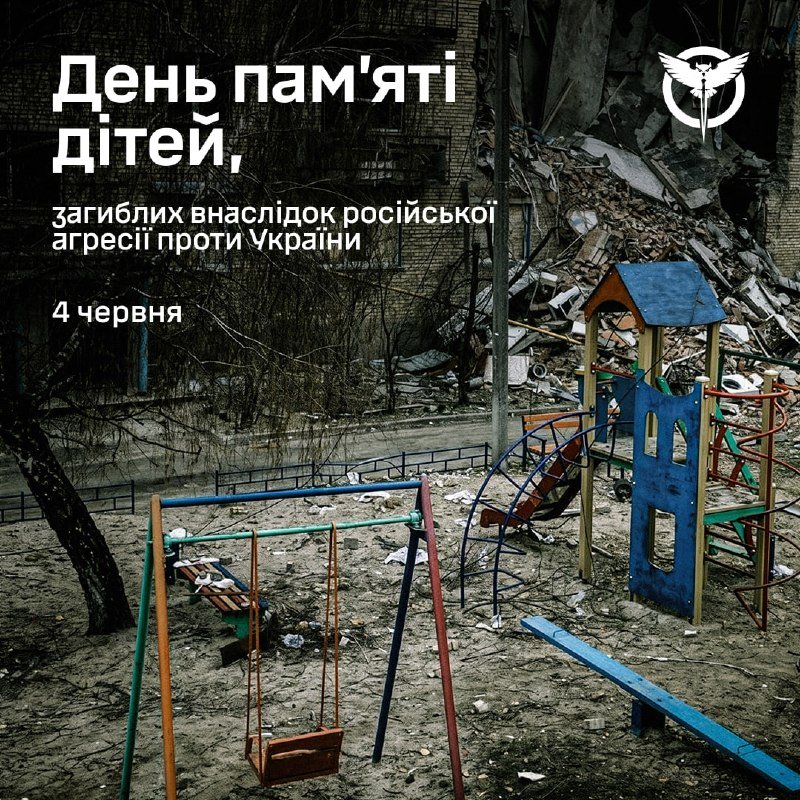
Four people are dead in Kyiv. More than fifty are injured. Residential buildings, a polyclinic, and at least one kindergarten took direct hits when Russia's armed forces launched a combined cruise and ballistic missile attack on the capital in the early hours of June 2, 2026. Kharkiv, meanwhile, sustained a separate combined strike with ten injuries reported. The imagery circulating from Ukrainian news wire TSN and open-source monitoring channel AMK Mapping shows the moment of impact — smoke rising from city blocks, emergency services responding in pre-dawn streets.
The story will be written the way these stories are always written. Russia sends a message. Russia demonstrates reach. Russia tests air defences and reads the response. The casualties are contextualised as noise around a signal.
That framing is not wrong. It is simply insufficient.
What the strikes actually demonstrate is a strategy running out of runway. After more than two years of sustained bombardment, Russia's targeting of Ukrainian urban centres no longer functions as coercion. It functions as theatre — the repetition of a tactic whose premise has collapsed but whose habit persists.
The Coercion Theory Has Collapsed
The logic of targeting civilian infrastructure is simple in theory: degrade the adversary's will to fight by making daily life unbearable. Destroy power grids, strand commuters, freeze pensioners. The shock compounds over time until the political cost of continuing the war exceeds the cost of capitulation.
Ukraine has not capitulated. The infrastructure campaign — from the October 2022 blackouts through the winter strikes of 2023-24 and into the sustained bombardment of 2025 — has not produced the political rupture that Russian planners apparently expected. Public polling inside Ukraine has remained consistently resistant; Western support has continued, albeit with the rhythms of domestic politics in Washington and Brussels creating friction. The coercion theory assumed a brittle society. The society has proven unyielding.
When a strategy fails, rational actors revise. Russia's response has been to repeat the strategy and escalate the means — longer-range weapons, denser strike packages, higher tempo. That is not a sign of strategic sophistication. It is a sign of path dependency in a military culture that has invested heavily in stand-off strike capability and has few credible alternatives for influencing the Ukrainian front.
The Media Frame Perpetuates the Myth
Coverage of urban strikes tends to treat them as isolated incidents — bad events with proximate causes — rather than as the output of a failed doctrine. The language defaults to military vocabulary: capability demonstration, message-sending, force projection. The human consequences — the dead in Kyiv, the injured in Kharkiv, the children in the kindergarten that took a direct hit — are reported but rarely integrated into the analytical frame.
This is not unique to Russia coverage. Coverage of air campaigns across conflicts tends to abstract the strike from its purpose and the purpose from its failure. But the result is a systematic undercounting of what these attacks actually signify: not strength, but the absence of a better option.
The open-source verification community — channels like AMK Mapping that document strike patterns with geolocated footage — offers a more granular picture than the official wire framing typically allows. That granularity tends to show repetition, pattern, and diminishing returns. The strikes keep happening because the infrastructure for launching them exists, not because they are achieving their stated objective.
Financial Architecture and the Perpetual Strike Budget
One structural question the coverage rarely foregrounds: what enables Russia to sustain this strike tempo three years into a war that has exhausted much of its precision weapons stockpile? The answer runs through the financial architecture of the conflict — the oil and gas revenue streams that have proven more durable than Western sanctions architects anticipated, the parallel import networks for components, the domestic production programmes for cruise missiles that have partially compensated for sanctions-induced shortages.
The oil price cap regime, which Western planners designed to crimp the revenue funding the strike programme, has constrained but not collapsed the flow. Russia's oil export volume has proven resilient; the discount to Brent has narrowed as India and other buyers maintain purchasing patterns. Every barrel sold at a workable margin contributes to the next strike package on Kyiv.
That connection is not speculative. It is the financial substrate of the strikes that editorial coverage treats as purely military events. To report the attack on June 2 without reference to the revenue architecture that makes it sustainable is to tell half a story and call it news.
What Persisting Means
The stakes of continued urban bombardment are not abstract. They are measured in the emergency rooms that handle the wounded, the reconstruction costs that pile onto a country with a GDP smaller than Belgium's, the psychological toll on a population that has absorbed years of periodic shock. Each strike that misses military infrastructure and hits a polyclinic compounds the case that Russian targeting has become indiscriminate by effect if not by design.
International humanitarian law is not a robust enforcement mechanism. The ICC has issued warrants that Russia treats as background noise. The mechanism that might change behaviour — genuine strategic cost, not the performative sanction packages that leave the oil revenue intact — remains unbuilt. Until it is, the strikes will continue. Not because they work. Because they are what Russia has.
The four people killed in Kyiv on June 2, 2026, are not a message. They are the residue of a strategy that has outlived its rationale and shows no sign of revision. The rest is spectacle.
Wire provenance
This editorial synthesis draws on the following public wire/social posts:
- https://t.me/TSN_ua/28432
- https://t.me/AMK_Mapping/18917
- https://t.me/AMK_Mapping/18916
- https://t.me/TSN_ua/28430