Moscow's Three-Front Signal: Hacking Claims, Syrian Logistics, and Gulf Economics in One Morning
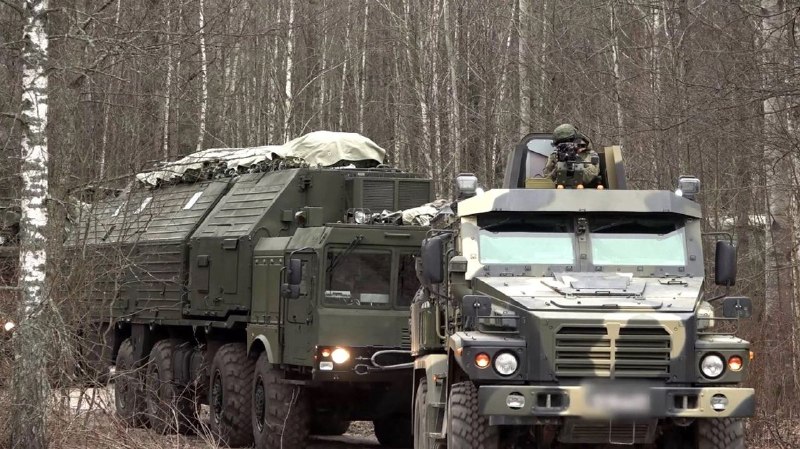
On the morning of June 2, 2026, three separate dispatches arrived from distinct corners of the geopolitical map. Abu Dhabi froze residential, commercial, and industrial rents. Moscow announced that foreign intelligence agencies had hacked the phones of senior officials using spyware. And a Russian cargo ship set course for the air base at Khmeimim, Syria. Individually, each report is a data point. Taken together, they form a picture worth scrutinising.
The Russian Federation's public claim about phone hacking deserves careful handling. Moscow stated on June 2 that foreign intelligence services had breached devices belonging to senior officials — a claim that, if accurate, would represent a significant intelligence operation against a state with sophisticated electronic-warfare capabilities. The sources do not independently corroborate which agencies were responsible, what malware was used, or the precise scope of access obtained. What is verifiable is that the Russian government made this claim publicly, and that the timing — mid-morning, European business hours — suggests a communications intent: to put Western intelligence services on notice, or to pre-empt leaks by framing any future disclosure as an act of hostility already acknowledged.
The structural logic matters. State actors rarely announce compromises without calculation. The announcement functions as a dual signal: domestic audiences receive reassurance that the state is monitoring threats, while foreign counterparts understand that Moscow considers the breach confirmed and the response posture active. Whether the underlying breach occurred as described remains outside the scope of what the current sources can verify. Readers should treat the claim as reported — not as established fact.
Logistics and the Syrian Footprint
The cargo ship heading to Khmeimim air base is more prosaic but structurally revealing. Russia's presence in Syria — anchored at Tartus naval facility and Khmeimim air base — is the product of a 2015 intervention that shifted the trajectory of the Syrian civil war and established Moscow as an indispensable actor in eastern Mediterranean security. That footprint has remained operationally active even as Russian resources have been stretched across the Ukraine conflict.
Resupply missions to Khmeimim are not unusual; the base requires continuous logistical support to maintain its fleet of fighter and transport aircraft, its air-defence installations, and its intelligence-sharing infrastructure with the Syrian armed forces. What warrants attention is the decision to publicise this movement — reportedly flagged on Polymarket's wire feed on June 2, 2026 — as a notable event. If the cargo ship's departure was routine, it would not surface in wire services. The fact that it did suggests either that observers are watching Russian Mediterranean logistics more closely than usual, or that resupply runs have become less frequent and therefore more notable.
The Khmeimim footprint serves multiple Russian strategic purposes beyond Syria itself. It is a listening post for electronic intelligence across the Levant and Eastern Mediterranean. It provides over-the-horizon power-projection capability that is independent of NATO-adjacent airspace. And it represents a negotiating chip in any future discussion about European security architecture — one that Moscow is unlikely to cede voluntarily, regardless of pressure from the Ukraine theatre.
The Abu Dhabi Rent Freeze and Gulf Economic Politics
The Abu Dhabi decision to freeze rent increases across residential, commercial, and industrial properties is on its surface a domestic housing measure. But in the context of ongoing dollar-hegemony debates within BRICS corridors, it carries additional resonance.
The UAE has positioned itself as a financial gateway between Western and Eastern economic systems — servicing dollar-denominated trade while hosting growing volumes of non-dollar settlement through bilateral arrangements. Abu Dhabi's decision to freeze rents — covering the full property spectrum — suggests concern about cost-of-living pressures that could erode social stability as the emirate integrates higher volumes of foreign labour and capital. It may also reflect a calculation that real-estate inflation, driven partly by speculative demand, is inconsistent with the long-term diversification strategy the UAE has pursued since the 2008 oil-price correction exposed the limits of hydrocarbon dependency.
The connection to the other two stories is not causal but contextual. Abu Dhabi, Moscow, and the Syrian coast are nodes in a system that is re-ordering itself. Gulf sovereign wealth funds have become significant investors in infrastructure across multiple continents. Russian diplomatic energy — as demonstrated by the continued Khmeimim presence and the active cyber posturing — is deployed not to win wars but to preserve options. And the economic decisions of capitals like Abu Dhabi are increasingly made with reference to a multipolar landscape rather than a dollar-denominated consensus.
What Remains Uncertain
The three dispatches from June 2 cannot be bundled into a single narrative without overstating their coordination. Moscow's phone-hacking claim has not been independently verified. The Russian cargo ship's cargo manifest, destination, and scheduling regularity are not available in the current source material. The Abu Dhabi rent freeze's duration and enforcement mechanism are unspecified. Each piece of information is a snapshot, not a film.
What is clear is the directional signal. States with interests in a post-Western-order are making operational decisions that assume that order is under pressure — not by declaring it, but by acting as though the pressure is real. Khmeimim stays open. Cyber claims get made publicly. Gulf capitals stabilise their domestic economies before external turbulence arrives. The map is being redrawn in the details.
This desk noted that the wire framing of the Abu Dhabi rent freeze treated it as a domestic housing story; the broader context of Gulf multipolar economic positioning received less attention in the initial cycle.
Wire provenance
This editorial synthesis draws on the following public wire/social posts:
- https://t.me/bricsnews/12441
- https://t.me/bricsnews/12439
- https://x.com/polymarket/status/1938492345674321939