Nacho and Trixie: New Zealand's Most Valuable Bird Couple Faces an Existential存亡 Lottery
With fewer than 450 orange-fronted parakeets surviving in the wild, a pair called Nacho and Trixie have become the unlikely linchpin of a captive-breeding programme that New Zealand's Department of Conservation is betting its entire recovery strategy on. The question is whether two birds can carry an entire species.
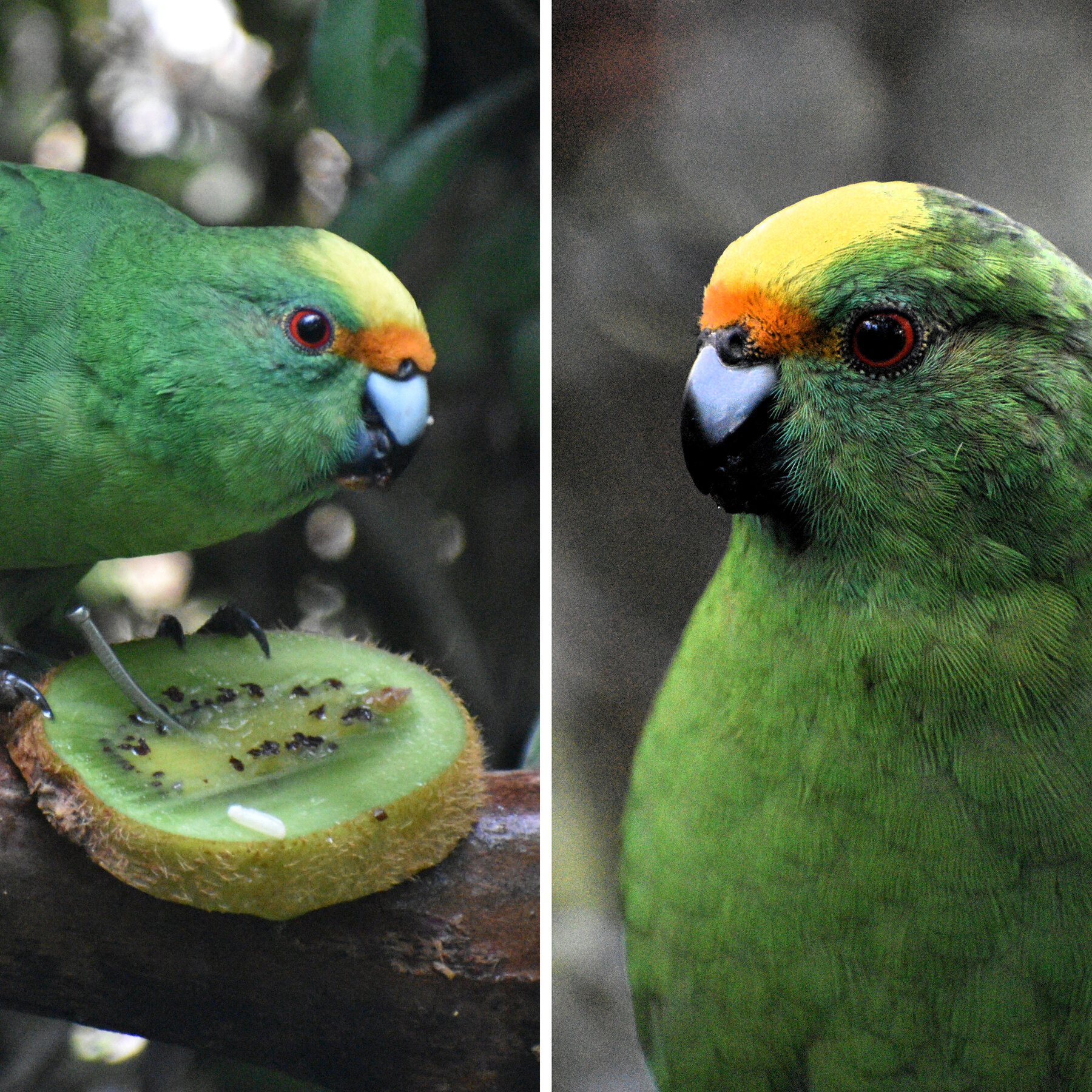
Fewer than 450 orange-fronted parakeets remain in the wild. One pair, named Nacho and Trixie by the conservation teams monitoring them, has become the centrepiece of New Zealand's last viable breeding programme — and the pressure on their offspring is enormous.
The orange-fronted parakeet, a small green bird native to the South Island's beech forests, has been in systematic decline since the 1970s. Predation by introduced mammals — rats, stoats, and possums — has kept reproductive success just below replacement rate for decades. The Department of Conservation, which has run intermittent intervention programmes since the 1990s, shifted strategy in the mid-2010s toward a captive-breeding model that concentrates breeding pairs in predator-proof sanctuaries. Nacho and Trixie, identified as "super breeders" by the programme's ecologists, have produced more viable fledglings per season than any other pair in the network. Their offspring are then subject to a release protocol involving pre-release predator-aversion training and post-release monitoring via radio telemetry.
The logic is straightforward: when a species' population falls below a critical threshold, genetic diversity contracts, inbreeding depression accelerates, and stochastic environmental events can trigger rapid collapse. At 450 individuals distributed across fragmented forest patches, the orange-fronted parakeet sits firmly in that danger zone. Captive breeding — even from a single productive pair — buys time and preserves options. But it does not solve the underlying problem, which is that the wild habitat remains accessible to predators the programme has no power to eliminate at scale.
What Nacho and Trixie represent, then, is not a conservation triumph but a conservation workaround — a successful workaround, but one whose replicability depends on conditions the programme cannot guarantee. The pair was selected for breeding based on observed reproductive output and genetic markers indicating low relatedness to other candidate pairs. Neither bird was chosen for personality or adaptability; they were chosen for fecundity. That is a rational triage decision, but it reflects the depth of the species' predicament rather than the robustness of its recovery plan.
The counter-narrative worth examining is the one that treats individual hero birds as symbols of hope rather than data points in a stochastic survival model. Headlines about "super breeders" perform a genuine function: they generate public engagement, donations, and volunteer hours that the Department of Conservation's budget cannot sustain through government allocation alone. The captive-breeding programme receives funding from a combination of departmental budgets, charitable trusts, and iwi (Māori tribal) conservation partnerships. The narrative around Nacho and Trixie has helped keep that funding pipeline intact. That is not a small thing. Conservation programmes routinely fail not because the biology is wrong but because political attention spans are short and fiscal cycles are unforgiving.
The structural frame here is not unusual in island conservation. New Zealand has, over the past forty years, developed one of the world's most sophisticated approaches to managing human-introduced predator populations — notably through the use of aerial 1080 (sodium fluoroacetate) drops in beech forest regions, which have demonstrably reduced stoat populations during the breeding seasons of ground-nesting birds. The orange-fronted parakeet sits inside a broader ecosystem management strategy that includes extensive predator control across large landscape blocks. What distinguishes the parakeet programme is the degree to which it has had to rely on captive breeding as a complement to, rather than a substitute for, in-situ predator control. Most other New Zealand birds — kākāpo, takahe, kārearea (New Zealand falcon) — have benefited from the same landscape-level interventions; the parakeet's breeding biology appears to make it more vulnerable to gap-period predation than those species.
The stakes are concrete. If the captive-breeding programme fails to establish a self-sustaining population in predator-proof sanctuaries within the next decade, the species will likely enter a terminal decline with no remaining management options. The genetic bottleneck facing the remaining wild population means that even successful release programmes face a founder-effect problem: birds raised in captivity and released into wild contexts carry different microbiomes, foraging knowledge, and predator-avoidance instincts than wild-hatched birds. The programme has addressed this through gradually increasing "soft-release" periods, where captive-bred birds spend time in pre-release aviaries within the target habitat before full release — a method borrowed from the kākāpo recovery programme and adapted for the parakeet's different social structure.
What remains genuinely uncertain is whether the programme's genetic management can outpace the habitat fragmentation that continues to isolate the remaining wild sub-populations. The sources consulted do not indicate whether the Department of Conservation has secured ongoing predator-control coverage across all active parakeet territories, or whether the programme depends on a handful of well-protected sites that could be compromised by a single plague event or a shift in 1080 drop logistics. That is the critical unknown. Nacho and Trixie are doing their job. Whether the institutional and ecological infrastructure around them is doing its job is a separate question that the available reporting does not yet resolve.
This publication's coverage of New Zealand conservation has historically emphasised the gap between headline species recovery and the structural conditions that determine long-term viability.