Nadiem Makarim Calls Indonesia Chromebook Graft Charges an 'Illusion' of Law
Former Indonesian education minister and GoTo cofounder Nadiem Makarim has dismissed graft charges tied to a government laptop program as a legal fiction. The case exposes fault lines between Jakarta's anti-corruption apparatus and the country's strategic ambitions for its tech sector.
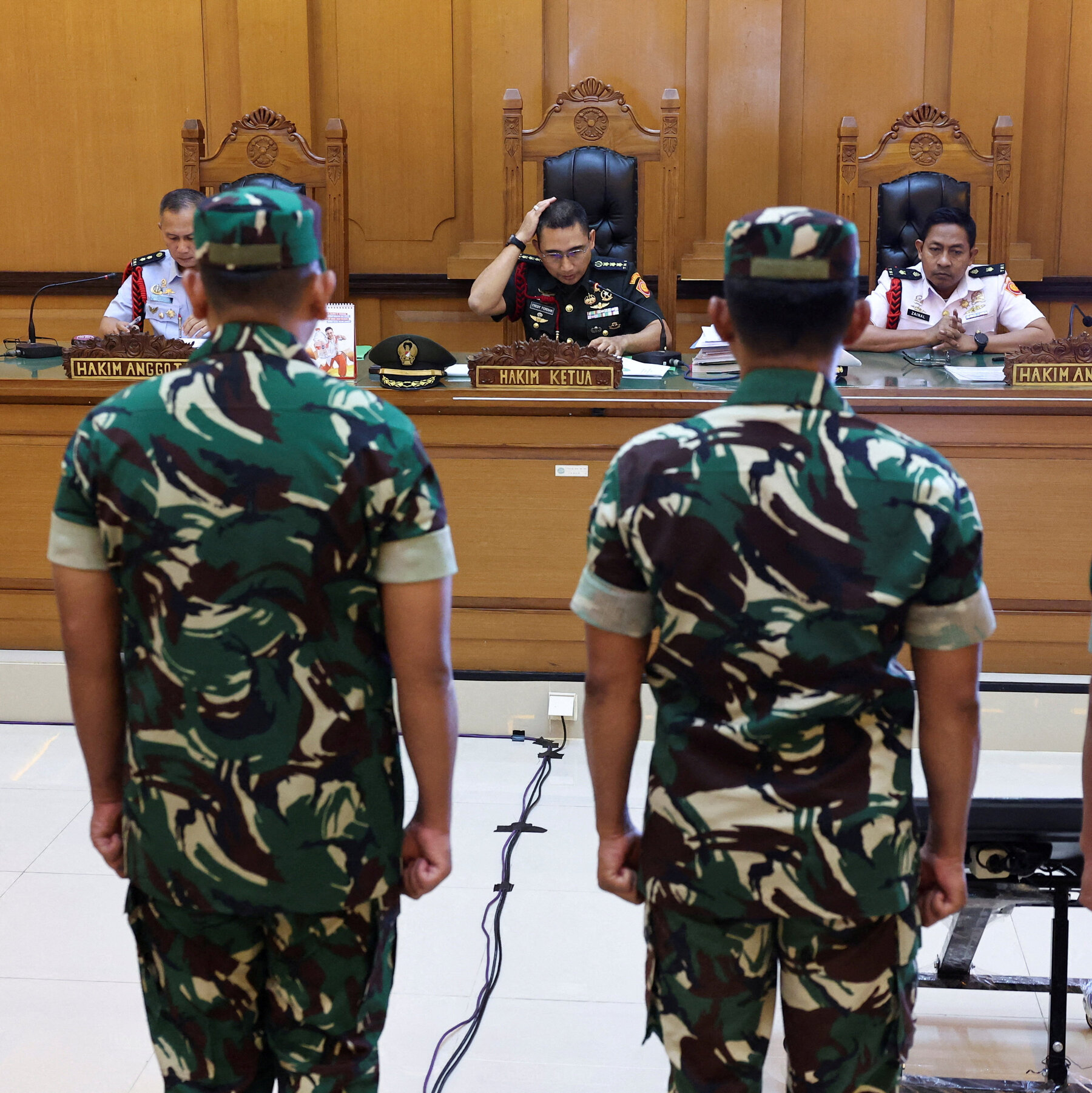
Nadiem Makarim, the former education minister who built Gojek into Indonesia's most valuable tech company before returning to government, appeared at the Jakarta Corruption Court on June 2, 2026, to face accusations that his ministry overpriced Chromebooks in a national schools program. His response to the charges was not a legal defense in the conventional sense. It was, in his own framing, a repudiation of the charges themselves as a category — an "illusion" conjured by prosecutors who, he suggested, misunderstand how government procurement at scale actually works.
The case has been building since 2023, when Indonesia's Corruption Eradication Commission, known as KPK, opened an investigation into a Ministry of Education program that distributed hundreds of thousands of Chromebooks to public schools. Prosecutors allege the per-unit cost was inflated by approximately 20 percent above market rates, resulting in a state loss they quantify in the hundreds of billions of rupiah. Makarim, who served as education minister from 2019 to 2021 under President Joko Widodo, is accused of having approved the procurement framework. His lawyers argue he signed off on ministerial regulations, not specific contracts, and that pricing decisions were made downstream by civil servants and vendors.
What the Procurement Program Actually Was
The One Laptop Per Child-adjacent initiative — branded as a digital equity push — was one of the flagship social programs of the Widodo administration's second term. Indonesia's public school system, serving more than 50 million students across a geographically fragmented archipelago, had long suffered from infrastructure deficits that the pandemic laid bare when school closures forced remote learning. The Chromebook program was a direct response: a bulk procurement of Chrome OS devices, mostly from a small number of vendors, for distribution to secondary schools in underserved provinces.
The program was not without merit in its ambition. By 2022, Indonesia had roughly 12 million secondary school students without home internet access, according to World Bank data. Getting devices into hands that otherwise would have gone without was a legitimate policy objective. But procurement at that scale, under compressed timelines, in a country where bureaucratic oversight mechanisms are inconsistent across regions, creates structural conditions that anti-corruption investigators are trained to exploit. The question in this case is not whether the goal was sound but whether the execution involved criminal overreach or merely administrative sloppiness.
The Prosecution's Case and Its Limits
KPK investigators have built their case around contract-level pricing data they obtained through document subpoenas. Their position is that a ministry with Makarim's profile and influence effectively set the price ceiling through ministerial decree, removing competitive pressure and enabling vendors to charge above what a properly tendered procurement would have yielded. The prosecutors have also cited communications they claim show ministry officials coordinating with a preferred vendor. Makarim's defense team disputes the authenticity and interpretation of those communications.
What the sources reviewed for this article do not establish is whether Makarim personally profited from the alleged overpricing. The indictment, as reported by Nikkei Asia, focuses on abuse of authority rather than direct bribery — a distinction that matters for sentencing but also for how the political economy of the case is read in Jakarta. Several former anti-corruption officials quoted in Indonesian wire reporting have noted that abuse of authority charges in procurement cases often reflect institutional rivalry as much as criminal conduct — ministries pushed back on by the KPK tend to frame themselves as reformers caught in bureaucratic crossfire.
The GoTo Complication
GoTo Group, formed from the merger of Gojek and Tokopedia in 2021, is Southeast Asia's largest homegrown tech platform by combined transaction volume. Makarim was a cofounder of Gojek and served briefly as minister before stepping back from active corporate roles. But the company's current entanglement with government contracts — including a state-backed e-procurement platform and a digital payment system integrated with social assistance disbursements — means the Chromebook case is not read in isolation by investors or Jakarta insiders.
A conviction, particularly one involving imprisonment, would create legal complications for any future executive role Makarim might hold in a company that maintains government-facing businesses. It would also, arguably, complicate the narrative Indonesia's government has promoted about homegrown tech champions. Jakarta has consistently framed companies like GoTo as national assets — platforms that keep data, jobs, and capital inside an economy that competes with Chinese and American super-apps for regional influence. Treating one of those companies' founders as a criminal fraudster cuts against that framing in ways that go beyond one man's legal troubles.
What Comes Next
The Jakarta Corruption Court is expected to hear testimony from civil servants who managed the procurement queue and from pricing experts retained by both sides. Makarim's legal team has filed a pre-trial motion arguing the charges should be dismissed; a ruling on that motion is anticipated before the end of June 2026. Whether that motion succeeds or not, the case will almost certainly be read as a signal — about the depth of Indonesia's commitment to prosecuting public corruption regardless of the accused's political profile, and about the boundaries of prosecutorial ambition when the accused is a figure of Makarim's standing in Jakarta's tech-industrial establishment.
What remains genuinely uncertain from the publicly available record is whether the alleged overpricing was the product of deliberate coordination or the predictable outcome of a ministry under pressure to deliver hardware quickly in a market where supply chains were tight. Those are legally distinct scenarios. The evidence currently available does not clearly resolve between them. That ambiguity is itself significant: it means the case will turn on documentation and testimony that has not yet entered the public record, and the outcome will tell Indonesia's business community something concrete about how far the KPK is willing to extend prosecutorial theory in complex procurement cases.
Monexus coverage of this case focuses on institutional accountability and the interaction between government procurement and the domestic tech sector — a lens that differs from Indonesian wire reporting, which has emphasized the political biography of the accused.
Wire provenance
This editorial synthesis draws on the following public wire/social posts:
- https://t.me/nikkeiasia/12438
- https://t.me/nikkeiasia/12438