A Housing Regulator in the Intelligence Chair: The Pulte Appointment and What It Reveals
President Trump installed Bill Pulte — a federal housing regulator with no national security background — as acting director of national intelligence on 2 June. The appointment, brief and unceremonious, was a signal: not of transition, but of a deeper rearrangement of who gets to govern the machinery of US intelligence.
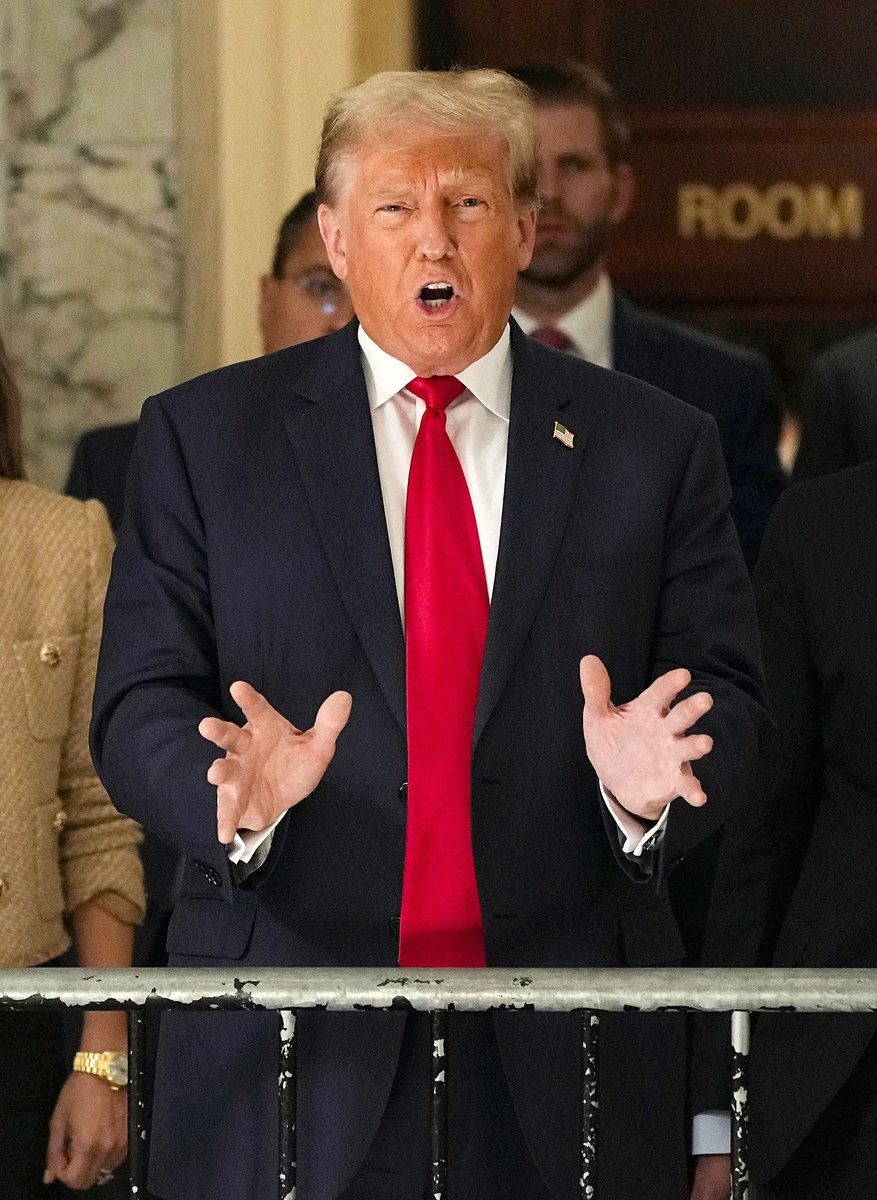
President Donald Trump appointed Bill Pulte, a federal housing regulator and political loyalist, as acting director of national intelligence on 2 June 2026. The appointment was reported by Reuters at 20:15 UTC that day. Pulte had no prior national security or intelligence experience. He had served as head of the Federal Housing Finance Agency since January 2025 and previously held senior roles at the Small Business Administration. He was not a career intelligence official. He was not a former military commander. He was not a former senior diplomat. The announcement was terse, the rationale thinner.
That brevity carried its own message. When an administration installs someone with no background in signals intelligence, covert operations, or foreign policy at the apex of seventeen American spy agencies, the explanation tends to be in what the appointment does not say.
The ODNI position has historically gone to people with deep roots in the intelligence community or its adjacent institutions. James Clapper, who held the role under Obama, spent five decades in military and intelligence service. John Ratcliffe, Trump's first-term appointee, was a former congressman with a background on the House Intelligence Committee. Avril Haines, who served in the early Biden administration, was a former CIA deputy director and White House deputy national security adviser. Even acting directors in prior administrations have typically come from within the community — people who understood the institutional gravity of the role, who could credibly receive a briefing from a station chief and walk into a Senate hearing without fumbling the basic vocabulary.
Pulte's résumé contains none of that scaffolding. His professional identity is housing finance, mortgage markets, and the regulated ecosystems around Fannie Mae and Freddie Mac. Those are consequential domains. The FHFA manages entities that together hold or guarantee roughly six trillion dollars in American mortgage debt. Running that operation requires regulatory sophistication, political resilience, and an ability to navigate congressional pressure. None of those skills translate directly to the ODNI role — and the intelligence community knows it.
The structural question here is not whether Pulte is personally capable. It is what his appointment says about how the executive branch now intends to handle intelligence as a function. The ODNI director's primary mandate is to coordinate the seventeen agencies that make up the US intelligence community, to deliver objective assessments to the president, and to speak for the community before Congress. That last function is especially demanding: the director must be credible enough that elected officials in both parties trust the information flowing through the office. A housing regulator with no national security record cannot credibly perform that function — not in the eyes of the Senate Intelligence Committee, and not in the eyes of career officers inside the agencies who have spent decades building domain expertise.
The precedent argument cuts both ways. Intelligence has always been a political role; the director is appointed by the president and serves at his pleasure. But the community was not designed to be run as a subsidiary of the White House political operation. Its value, in theory, is that it can deliver inconvenient assessments — that a adversary is behaving differently than the president prefers, that a policy is failing, that a friendly government is less stable than claimed. Career officers are supposed to feel protected when relaying those assessments. When an acting director arrives from outside with explicit political loyalist credentials, the signal to analysts is legible: the assessments that survive are the ones that fit the administration's frame. The ODNI becomes a postbox for preferred narratives rather than a check on executive wishful thinking.
This is not a hypothetical concern. It is the same dynamic that played out during the first Trump administration, when Ratcliffe and then acting director John Ratcliffe reshaped the office's public posture around politically convenient framings of foreign threats. The difference now is the speed and the breadth: across the national security apparatus, career officials are being replaced or bypassed in ways that would have been unthinkable even four years ago. The appointment of Pulte slots into that pattern. It is not an outlier. It is the latest data point in a systematic rearrangement of who governs American intelligence.
The administration will likely describe the appointment as a temporary measure pending a permanent nominee. That framing is familiar. It creates a buffer zone — an acting director who can be used and discarded, who does not require Senate confirmation, who holds the seat while political negotiations play out behind the scenes. But temporary arrangements have a way of becoming permanent when the political will to confirm a more conventional nominee does not materialize. Ratcliffe himself served in an acting capacity for months before the Senate relented. The acting period is not neutral. It is a governance tool.
What the sources do not specify is what Pulte's specific mandate within the ODNI will be. Reuters reported the appointment without detailing any policy portfolio, intelligence priority, or strategic direction that the new acting director intends to pursue. That absence is notable. An acting ODNI director with a clear agenda would have it described. The bare announcement suggests either that no agenda has been articulated yet or that the agenda is being kept deliberately quiet. Either interpretation is consistent with the broader pattern of the administration treating intelligence as an operational arm of the White House rather than an independent assessment function.
The stakes, in plain terms, are these: the ODNI's credibility rests on the perception that it tells the truth to power. When the person occupying that seat has no independent standing with the intelligence community, and no record that would allow them to push back against White House pressure on sensitive assessments, that credibility erodes. Not overnight — intelligence bureaucracies are slow-moving — but systematically, across every briefing document, every congressional hearing, every diplomatic intelligence-sharing arrangement where partners are wondering whether they are dealing with an honest broker or a political functionary. The appointment of Bill Pulte is not the end of American intelligence. It is a signal about who the current administration believes intelligence is ultimately for.
This publication covered the appointment primarily through the Reuters wire on 2 June, framing it as an unusual and politically significant act of elevation. Other outlets largely followed the same sourcing; the structural implications — what it means for intelligence governance as an institution — received less attention than the headline novelty.