Rubio Confirms Khamenei Alive, But Iran's Leadership Vacuum Deepens
US Secretary of State Marco Rubio confirmed on 2 June 2026 that Iran's Supreme Leader Mojtaba Khamenei survived the US-Israeli strikes of April, despite weeks of public silence that has unsettled regional and international observers alike.
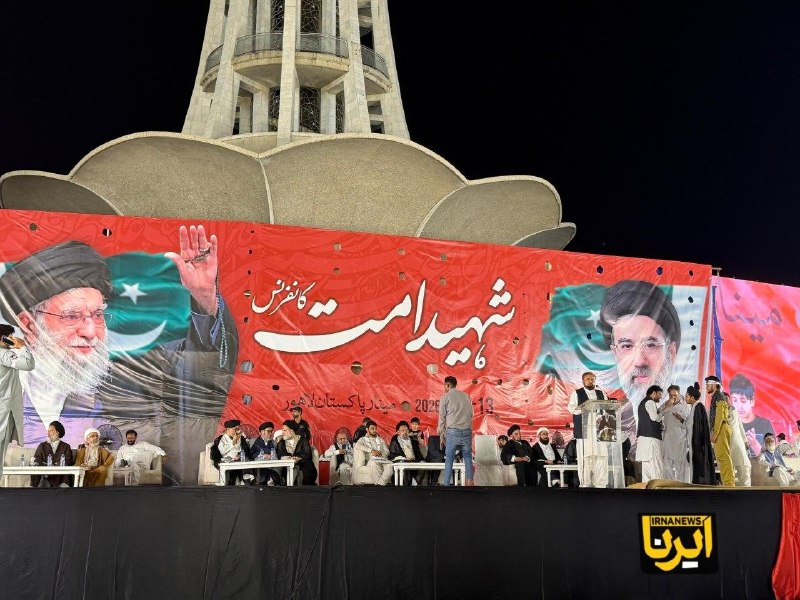
US Secretary of State Marco Rubio told reporters on 2 June 2026 that Iran's Supreme Leader Mojtaba Khamenei survived the US-Israeli strikes of April and remains alive — the first official confirmation from Washington that the Islamic Republic's top authority weathered the strikes that shook the region five weeks ago. Khamenei has not been seen in public since the attacks. Iranian state media has offered no statement attributing the silence to a specific cause. The public-relations operation around Khamenei's condition has been, by any measure, a managed information vacuum — one that has done nothing to steady the region's nerves.
The confirmation arrives after weeks of contradictory signals from Tehran, where the silence around the supreme leader's health and location has become a geopolitical open question. Khamenei's absence has compounded uncertainty about who inside Iran's decision-making apparatus holds real authority — and what that means for the trajectory of the nuclear programme, regional proxy networks, and international diplomacy.
What the Silence Tells Us
The April strikes — widely attributed to a US-Israeli operation — targeted facilities associated with Iran's nuclear programme and command infrastructure. US officials initially declined to specify Khamenei's status. The question of whether Iran would descend into a succession crisis, or rally around a wounded but functional supreme leader, remained unresolved publicly until Rubio's 2 June remarks.
The immediate aftermath of the strikes saw Iranian state media publish controlled imagery — apparently of air defence systems still operational, and of senior officials conducting meetings — designed to project resilience. Khamenei himself did not appear. That absence is notable in a system where the supreme leader's visibility functions as an institutional anchor. When it disappears without explanation, it generates uncertainty that is then amplified by every regional and international actor with a stake in the outcome.
The Diplomatic and Strategic Dimensions
Rubio's framing at Tuesday's press availability was unambiguous in its severity. He placed Khamenei's Iran in a category worse than North Korea — a state that, in his words, would use a nuclear capability to destroy the State of Israel and leave the United States with no effective deterrent. The characterisation is a deliberately maximalist formulation: not merely that Iran seeks nuclear weapons, but that its acquisition of them would represent an immediate and catastrophic threat to a key US ally.
This language serves a dual purpose. Operationally, it signals to Tehran that the pressure campaign will continue regardless of Khamenei's physical condition. Diplomatically, it is also a message to European and Asian partners who have been exploring off-ramps toward a revived nuclear agreement — Rubio's framing forecloses normalisation arguments that depend on Iran's restraint being calculable and benign.
Iran's regional architecture, however, does not depend solely on Khamenei's direct command. Hezbollah, the Houthis, Hamas, and Iraqi militia networks operate with a degree of autonomous capacity. Khamenei's incapacitation — or even partial incapacitation — does not automatically dissolve these networks. What it does is introduce ambiguity about authorisation chains: who can order escalation, who can negotiate, who speaks with the supreme leader's authority on matters of war and peace.
The Structural Reality Beneath the Headlines
The silence around Khamenei has illuminated something structural about how Iran has governed itself under his leadership. The supreme leader has always relied on a layered system — the Islamic Revolutionary Guard Corps, the Quds Force, the Supreme National Security Council — to translate decisions into operational reality. That system was designed, in part, to survive leadership gaps.
Whether it is currently functioning in that capacity, or whether the silence itself is the product of internal disagreements about what to communicate and to whom, is not something outside observers can determine from available evidence. The ambiguity is not accidental. Iranian state communications strategy has historically exploited information vacuums as a tool of deterrence — the idea being that uncertainty about capability and willingness can be more powerful than clarity.
What is different this time is that the vacuum has lasted five weeks, and it concerns the health of a single individual whose survival is central to the regime's ideological and constitutional legitimacy. That is not a manageable ambiguity; it is a structural vulnerability. And it is a vulnerability that Iran-watchers in Riyadh, Jerusalem, Moscow, and Beijing are all currently mapping for their own purposes.
Stakes and Forward View
The immediate stakes concern succession. Iran has constitutional provisions for a deputy supreme leader, and a Guardian Council empowered to identify a successor. But Khamenei held the office for 35 years in part because no obvious replacement commands equivalent institutional legitimacy across the security apparatus, the clerics, and the political class simultaneously. A contested succession — or even a prolonged period of unclear authority — would destabilise decision-making at precisely the moment when Iran faces maximum external pressure.
For Washington, the confirmation that Khamenei is alive offers a window: the question of what Tehran wants to do with that fact remains open. The regime could use Khamenei's survival to project strength and resist concessions. Or it could seek a backchannel, using the near-death experience as justification for internal retrenchment and a diplomatic pause. Rubio's bluntness may be designed to foreclose the latter interpretation, or to force a response that reveals Tehran's intentions.
The regional actors most exposed to this uncertainty — Saudi Arabia and the UAE, whose normalisation with Iran remains tentative and whose security architectures depend on US deterrence guarantees — are watching closely. So are the Europeans, who have the most to lose from a further escalation and the least leverage to prevent it.
What the sources do not address is whether Khamenei is functionally capable of governing, or whether the silence reflects a regime managing a leader who survived but cannot easily resume public duties. That distinction matters enormously, and it is not one the available evidence resolves. The confirmation that he is alive is a fact. What it means for Iran's trajectory remains an open question — one that will be answered not by statements from Washington, but by what emerges from Tehran in the coming weeks.
This publication approached the Khamenei confirmation story with a focus on the institutional and succession dimensions — what the silence means for Iran's governance structure — rather than leading with the Washington framing of existential threat. The dominant wire coverage prioritised Rubio's direct quotes and the nuclear timeline; we sought to contextualise the operational and political vacuum that makes both the threat assessment and any potential diplomatic off-ramp genuinely uncertain.
Wire provenance
This editorial synthesis draws on the following public wire/social posts:
- https://x.com/middleeasteye/status/1938647223849263104
- https://t.me/clashreport/2854