Rubio's 'No Iranian Navy' Line Is Either Bluster or a Prelude to Something Worse
Secretary of State Marco Rubio's claim that Iran has no navy is either rhetorical flourish designed to delegitimize Tehran before a deal — or a signal that the administration is preparing legal and military cover for a more confrontational posture in the Gulf.
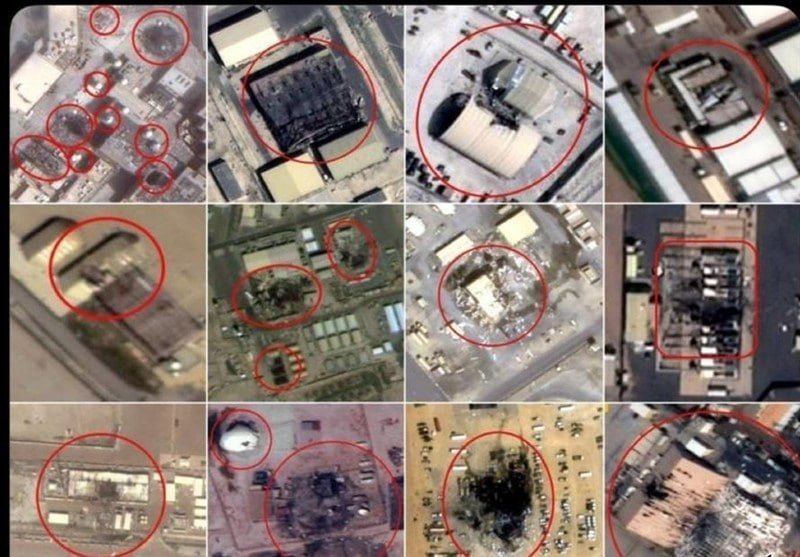
The Secretary of State said it flatly, on the record, without caveat: there is no Iranian navy. He said it twice. Marco Rubio, speaking publicly on the US posture toward Tehran on 2 June 2026, appeared to dismiss the Islamic Republic's maritime forces entirely — then pivoted immediately to framing the Hormuz Strait as a domain where the US would act to keep Iranian vessels from operating freely. "We can't have a world in which only Iranian ships get through the straits. If they are going to shut down the straits for everybody, we are going to shut down the straits for them," Rubio said, according to remarks posted by the ClashReport wire service. That is not diplomatic language. That is not the vocabulary of sanctions-and-negotiate. That is the vocabulary of a country that has decided the other side is not a legitimate participant in a shared space and is preparing the public — and presumably US military commanders — for something harder.
What makes the statement remarkable is not just its aggression but its factual posture. Iran does have a navy. It has the Islamic Republic of Iran Navy, or IRIN, headquartered in Bandar Abbas, operating a mix of domestically produced small craft, vintage frigates, and an expanding portfolio of coastal defense missiles, unmanned surface vessels, and drone technology. The IRIN's capacity is modest by any measure of blue-water competition. It cannot challenge a US carrier strike group in open water. It cannot project power beyond the Persian Gulf and the eastern Arabian Sea with any reliability. But it exists, it operates, and it has been a persistent thorn in the side of Gulf security planners since the 1980s tanker war. To say it does not exist is a rhetorical act, not a factual one. It is a way of declaring that Tehran's institutional presence in the maritime commons is illegitimate — and that the US reserves the right to treat it accordingly.
The Strategic Logic of Erasure
There are two plausible readings of what Rubio was doing. The first is that he was performing domestic signal-boosting for an administration that has consistently framed Iran as a non-state actor rather than a negotiating counterparty. The Trump administration's approach to Tehran across its second term has oscillated between maximum-pressure campaign and sporadic back-channel feelers. Calling Iran's navy a fiction is consistent with treating Iran as an ongoing revolutionary project rather than a government with predictable interests — and therefore as something that does not deserve the institutional courtesies extended to recognized states. If this is the reading, the comment is bluster: part of the ongoing verbal campaign to keep Iran off-balance, to signal to Gulf allies that Washington is not softening, to keep the pressure domestic coalition satisfied while negotiations proceed in the background.
The second reading is more alarming. Declaring that a country's navy does not exist is a step in the direction of constructing legal and political cover for aggressive action against it. International law — such as it applies in contested maritime zones — is partly a matter of factual claims about who operates where and under what authority. If the US position is that Iran has no legitimate navy, then Iranian naval activity in the Gulf becomes piracy rather than state action. Iranian vessels become targets rather than counterparts. This framing could matter if the administration is contemplating either direct kinetic action against Iranian maritime assets or a more permissive posture for allied partners who have long wanted to push Iranian forces further from the straits. Operation Epic Fury — which Rubio described on the same occasion as "highly successful in achieving its military objectives" — may already have been the opening chapter of that harder posture.
Operation Epic Fury and the New Rules of Engagement
Rubio referenced the operation directly, describing it as successful in its stated military aims while noting that Iran "still has a lot of drones." This is the first time a senior US official has publicly confirmed and endorsed the operation, which appears to have been a strike campaign against Iranian naval or drone-related infrastructure. If Epic Fury was a limited demonstration of capability — a signal that the US can reach Iranian military assets with precision and without significant escalation — Rubio's framing as "highly successful" suggests the administration wants that outcome to be understood as the new baseline, not an anomaly. The follow-on observation about drones is telling: it acknowledges that Iran retains capacity to threaten US or allied assets in the region, which means the operation has not resolved the underlying threat but has shifted the terrain. The US has demonstrated it can strike; Iran has demonstrated it can still build.
The drone point matters for another reason. It is precisely in the unmanned systems domain that Iranian naval capacity has evolved most significantly over the past three years. Iran's Islamic Revolutionary Guard Corps Navy has developed and deployed a range of loitering munitions and unmanned surface vessels that US planners have described, in background briefings to defense reporters, as the most plausible asymmetric threat to Gulf shipping and to US naval operations near the Strait of Hormuz. These are not the weapons of a navy in the classical sense. They do not require crews, they are difficult to interdict at scale, and they exploit the geometric constraints of the strait itself — a chokepoint where a relatively small number of platforms can present a disproportionate challenge to much larger naval forces. Calling this a "no navy" situation misses the point entirely. Iran's maritime threat in 2026 is not a surface fleet. It is a distributed, low-profile, hard-to-target drone and missile architecture that operates from a coastline and a doctrine designed specifically to exploit the strait's geography.
The Hormuz Gambit
The core threat in Rubio's statement is the strait itself. "If they are going to shut down the straits for everybody, we are going to shut down the straits for them." This framing treats the Hormuz Strait as a domain where the US has preemptive rights — where any Iranian move toward restricting transit is met not with legal pushback or diplomatic escalation but with reciprocal closure against Iranian vessels. This is not a defensive posture. It is an offensive one, and it treats the strait as a US-controlled asset rather than an international waterway subject to customary international law. The Hormuz Strait is among the most consequential chokepoints in the global economy: roughly 20 percent of global oil production passes through it, and roughly $1.7 trillion in trade annually. Any serious disruption — even a temporary one — reverberates through commodity markets globally. Rubio's language treats this as a lever, not a line to be protected.
What is unclear from the available reporting is whether this represents a new formal policy or an off-the-cuff articulation of existing contingency planning. Secretary of State statements carry weight, but the gap between what a cabinet official says in a press availability and what the National Security Council has actually authorized can be substantial. It is possible that Rubio was speaking to an internal planning debate — signalling to allied Gulf states that Washington remains committed to freedom of navigation while also demonstrating to the domestic audience that the administration is not soft on Iran. It is also possible that the strait threat is real and that the administration is laying the groundwork for something more direct. The sources do not specify which interpretation is accurate. That ambiguity is worth holding.
What Remains Unclear — and Why It Matters
The sources available do not establish whether Operation Epic Fury was a one-time strike or the opening phase of an ongoing campaign. They do not clarify whether the "no Iranian navy" framing reflects a consensus position across the National Security Council or a rhetorical preference of the Secretary of State's communications operation. They do not indicate whether the strait closure threat is a contingency plan or a policy that has been briefed to allied governments. They do, however, confirm that a senior US official publicly described Iran's maritime forces as non-existent, endorsed a recent military operation as successful, and threatened reciprocal closure of a global chokepoint. Taken together, those three elements constitute a significant shift in the official US posture toward Iran — even if the underlying facts of Iranian naval capacity have not changed. That gap between rhetoric and reality is the story. And if the administration acts on its own framing, it may not stay a story for long.
—
Desk note: Western wire outlets framed Rubio's statements as a strongman posture aimed at domestic political audiences. Monexus focused instead on the operational and legal implications of declaring an adversary's navy non-existent — a framing choice that surfaces the escalation logic the domestic framing obscures.
Wire provenance
This editorial synthesis draws on the following public wire/social posts:
- https://t.me/ClashReport/3842
- https://t.me/ClashReport/3841
- https://t.me/ClashReport/3840