Russia Launches One of Kyiv's Largest Missile Barrages Since Full-Scale Invasion
Ukrainian air defenses intercepted at least one Russian Iskander ballistic missile over Kyiv during a sustained overnight assault that saw more than 70 weapons of multiple types fired at the capital — one of the most intense single-night barrages documented since the 2022 invasion.
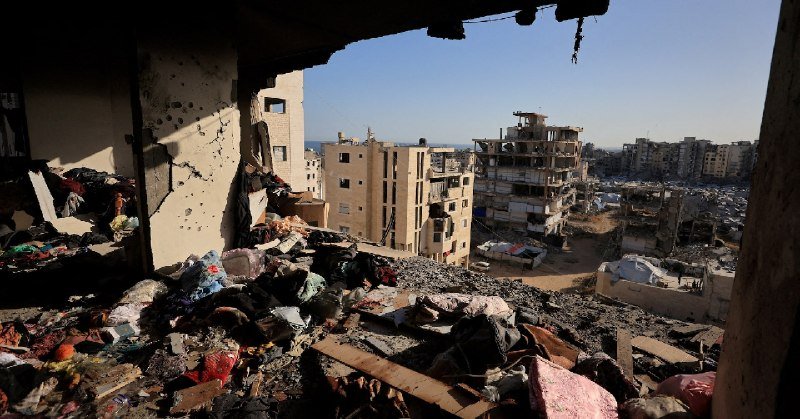
On the night of 2 June 2026, Russian forces launched one of the most sustained missile assaults on Kyiv since the full-scale invasion began in February 2022. OSINTtechnical, Middle East Spectator, and AMK Mapping all documented a barrage involving more than 70 missiles of various types — including Kh-101 cruise missiles, Zircons, Iskander-Ks, and Iskander-Ms — with more than 20 targeting the capital itself. Social media footage verified by open-source analysts showed multiple consecutive Iskander-M strikes striking the city in quick succession. Several fires were reported across Kyiv, and residents sheltered in the underground metro as the assault continued.
The attack underscored both the persistent vulnerability of urban centers to ballistic strikes and the continuing dependence of Ukraine's air defense architecture on Western-supplied systems. A PATRIOT battery operating in the city was recorded successfully intercepting an Iskander-M seconds before impact — a narrow margin that analysts said illustrated both the system's effectiveness and the precision timing required when facing salvo attacks of this magnitude.
The Scale and Composition of the Barrage
The Kh-101, Russia's primary long-range cruise missile, has been a staple of strikes against Ukrainian infrastructure since 2022. Carrying a 450-kilogram warhead, the subsonic missile flies at low altitude to evade radar, making it difficult but not impossible to intercept. The Iskander-M, by contrast, is a short-range ballistic missile that enters the atmosphere at hypersonic speed before executing unpredictable terminal maneuvers — characteristics that make it among the hardest Russian weapons to intercept. The Iskander-K variant launches the same mobile system but fires a cruise missile payload, offering different radar signatures and flight profiles within the same launch infrastructure.
The inclusion of Zircons — hypersonic sea-launched missiles adapted for land-attack roles — signals a deliberate effort to test layered air defenses across multiple engagement windows. Sources on the ground reported that the attack was not concentrated on a single sector but distributed across the city, suggesting planning that sought to overwhelm point-defense coverage rather than punch through it at a single location.
The PATRIOT Intercept: Technical Limits and Operational Reality
Video verified by ClashReport and BellumActaNews showed a PATRIOT battery's interceptor leaving its launcher and streaking toward an incoming Iskander-M. The engagement appeared to occur at low altitude — seconds before the missile would have struck a populated area. Military analysts noted that the footage's clarity made it one of the most documented intercepts of a ballistic missile over a European capital in recent memory.
The United States, Germany, and the Netherlands have supplied Ukraine with PATRIOT batteries and associated interceptors since 2023. Each battery can engage a limited number of simultaneous threats, and interceptors are a finite resource. Russia's practice of launching dozens of missiles in a single wave — some as decoys, some as penetration weapons — is designed to exhaust those magazines. The footage of the intercept, while encouraging for Ukraine's defenders, does not alter the arithmetic of a sustained attritional campaign against air defense stockpiles.
What the Barrage Signals About Russian Strategy
The selection of Kyiv for a high-volume strike on the night of 2 June carries political as well as military signal. It follows months of incremental Russian advances along the eastern front and comes as discussions about the trajectory of Western military support for Ukraine continue in Washington, Berlin, and other capitals. Massed missile attacks on the Ukrainian capital have historically been timed to coincide with moments of diplomatic uncertainty in Western capitals — a pattern this publication and others tracking the conflict have documented.
The sources do not indicate whether this particular strike followed any specific diplomatic development, and speculation about intentional timing should be treated with caution. What the attack does demonstrate is Russia's continued ability to manufacture and deploy large numbers of precision weapons despite sanctions and export controls designed to constrain the defence industrial base. Production rates for Kh-101s and Iskander systems have been sustained at levels that Western intelligence assessments have periodically underestimated.
The Trajectory Ahead
Ukraine's air defense network remains functional but under sustained pressure. The PATRIOT system's ability to intercept an Iskander-M over a dense urban environment is a significant operational data point — one that Ukrainian commanders will study closely as they plan future force disposition. For Russian planners, the attack represents an opportunity to assess how quickly Ukrainian air defense assets reposition between waves and whether western ammunition deliveries are arriving at a pace that allows sustained operations.
The immediate human consequence in Kyiv — the fires, the sheltering in metro stations, the second-by-second uncertainty for residents — is the floor of what this kind of attack represents. The structural question, left open by the sources available at time of publication, is whether this night's barrage marks an intensification of a long-running campaign or the opening phase of a new operational approach. Both readings are plausible. The pattern of Russian air campaigns over the past two years suggests the latter possibility deserves serious attention.
The Monexus desk prioritized Ukrainian and OSINT-source footage over Russian state-adjacent channels for this report. Where Russian-aligned sources provided corroborating technical detail on weapons types, that information was cross-referenced against open-source imagery before inclusion.
Wire provenance
This editorial synthesis draws on the following public wire/social posts:
- https://t.me/AMK_Mapping/8478
- https://t.me/Middle_East_Spectator/1243
- https://t.me/Middle_East_Spectator/1244
- https://t.me/Middle_East_Spectator/1245
- https://t.me/BellumActaNews/2189
- https://t.me/ClashReport/4892
- https://t.me/osintlive/7734