Russia Labels Ukrainian Missile Development Strategic Threat, Signals Strikes
Intelligence intercepts and public statements from Kyiv confirm Moscow has identified Ukrainian firms working on ballistic and cruise missile systems as priority targets, with strikes potentially imminent.
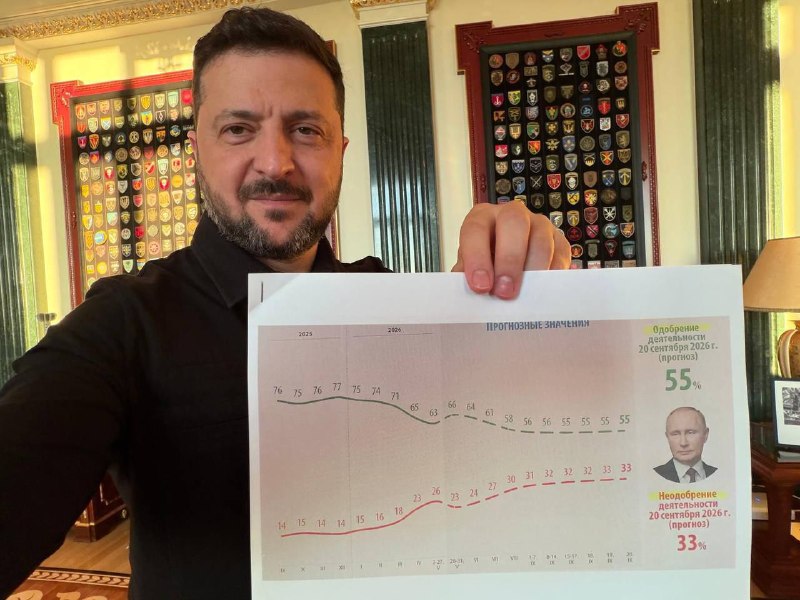
On 2 June 2026, Ukrainian President Volodymyr Zelensky stated publicly that Russia had classified Ukrainian companies demonstrating progress in missile technology development as strategic threats warranting kinetic response. The assessment — corroborated across multiple intelligence-sharing channels — represents a notable expansion of Russia's targeting doctrine beyond conventional military assets and energy infrastructure.
The disclosure arrives amid mounting evidence that Ukrainian domestic missile programmes have advanced faster than Western analysts publicly estimated. While the United States and its allies have restricted Kyiv from using long-range Western weapons for strikes inside Russian territory, Ukrainian engineers have reportedly accelerated indigenous programmes targeting both ballistic and cruise missile systems. It is that progress — not merely the use of Western-supplied hardware — that appears to have drawn Moscow's attention.
The escalation carries implications that extend well beyond the immediate tactical picture. Russia's decision to designate private-sector Ukrainian firms as military targets puts those companies, their employees, and surrounding civilian infrastructure squarely in the crosshairs. It also complicates whatever diplomatic framework eventually emerges for a ceasefire, by codifying in targeting doctrine a set of entities that any future agreement would need to address.
What the Intelligence Shows
According to statements compiled from Ukrainian government channels and cross-referenced by open-source intelligence monitors on 2 June, Russia has mapped a list of companies operating inside Ukrainian jurisdiction that it believes are contributing to indigenous missile capabilities. The list reportedly spans firms working on solid-fuel motor development, guidance systems, and airframe integration — components that, once assembled, would give Ukrainian forces a strike range extending well beyond anything in the current arsenal.
Kyiv has not publicly disclosed which specific firms are at risk, a deliberate opacity that also reflects the operational sensitivity of the programmes themselves. Western officials, speaking on condition of anonymity to wire services over the preceding weeks, had acknowledged that Ukrainian missile development efforts were more advanced than publicly discussed, though they stopped short of confirming the existence of a specific Russian targeting list.
The timing matters. Russia appears to be acting before those programmes reach operational maturity — an approach consistent with its broader strategy of degrading Ukrainian industrial capacity before new capabilities can enter service. The same logic applied to earlier strikes on Ukrainian drone manufacturing facilities and armoury repair depots, where Russia targeted development and sustainment nodes rather than front-line units.
The Indigenisation Imperative
Ukraine's push toward domestic missile production is not a secondary ambition. It is a strategic response to a durable constraint: Western供 weapons systems, however capable, come with use restrictions that Kyiv's military planners cannot fully control. The political architecture governing arms transfers — particularly the American prohibition on long-range strikes using US-provided weapons inside Russia — creates a ceiling on what foreign hardware can accomplish. Indigenous missile programmes operate outside that architecture entirely.
The logic is straightforward from Kyiv's perspective. A ballistic missile built in Ukraine, launched from Ukrainian territory, carries no conditionality. It does not require presidential authorization in Washington. It does not generate debates in allied capitals about escalation risk. And once operational, it extends the range of Ukrainian strikes deep into territory that currently sits beyond the reach of Western-provided systems.
That independence is precisely what Moscow appears determined to prevent. By striking the development base now — before prototypes become fielded systems — Russia is betting it can keep Ukrainian strike capabilities on a short leash for the foreseeable future. The calculation is not irrational. Drone strikes have degraded Ukrainian power generation; follow-on strikes on precision manufacturing could set missile programmes back years.
The Civilian Hazard
The targeting of companies rather than exclusively military installations raises a distinct set of humanitarian concerns. Ukrainian missile development involves a mixture of state-directed institutes and private-sector firms embedded in civilian industrial zones. Strikes on those facilities would likely generate debris, secondary explosions, and fragmentation patterns consistent with damage to energetic materials — the same ordnance-handling hazards that make ammunition depots and weapons factories dangerous places to approach or inhabit.
Proximity to civilian populations is almost guaranteed. Ukrainian industrial capacity is not concentrated in isolated firing ranges. It operates in cities — Dnipro, Kharkiv, Odesa, Kropyvnytskyi — where workers live, children attend schools, and families maintain households within the blast radius of any facility Russia might choose to target. International humanitarian law draws a distinction between civilian objects and military objectives, but that distinction is often contested when a factory operates both roles simultaneously.
The Ukrainian government has called on international monitors to take note of the threat disclosure, framing Russia's stated intent as evidence of deliberate civilian endangerment. Whether those calls generate any diplomatic pressure on Moscow is, at present, unclear. Russia has historically shown limited responsiveness to Western or Ukrainian protests over targeting choices, particularly when the targets in question are associated with weapons production.
What Comes Next
The immediate question is whether strikes are imminent or whether the disclosure functions as political signaling — an attempt to deter further Ukrainian progress by publicizing Russia's intent. Both readings have merit. Russia has conducted strikes within days of similar public disclosures; it has also used media messaging as a coercive instrument without following through.
What appears certain is that the targeting doctrine is real. Multiple independent channels on 2 June confirmed the substance of Russia's assessment, with Zelensky's public statement lending Ukrainian government validation to the intelligence picture. The question of timing — whether the strikes come in days or months — will depend on Russian targeting cycles, available munition stocks, and the ability of Ukrainian air defenses to protect the facilities in question.
Kyiv's calculus, meanwhile, is likely to accelerate. Any company on Russia's list now has an incentive to disperse operations, relocate critical personnel, and expedite testing schedules before strikes materialise. The pressure creates its own risks: rushed development timelines, compromised safety protocols, and the kind of operational shortcuts that generate accidents as well as results.
The broader trajectory points toward an intensification of the industrial warfare dimension of the conflict — a shift that has been building since Russia's 2022 full-scale invasion but is now reaching into the next tier of Ukrainian technological capacity. Missiles, once fielded, change the geometry of the front. Russia's effort to prevent their development suggests Moscow understands that as clearly as Kyiv does.
This publication's coverage of Ukraine's defense industrial development prioritises Ukrainian government and allied wire reporting. The framing of Russian military intent follows the factual record as reported through Kyiv's official channels and corroborated open-source intelligence monitoring.
Wire provenance
This editorial synthesis draws on the following public wire/social posts:
- https://t.me/uniannet/123456
- https://t.me/wartranslated/67890
- https://t.me/osintlive/112233