The Silence After the Sirens: Ukraine's Civilian Casualalties and the Architecture of Impunity
Overnight strikes on Kyiv and Dnipro killed dozens of civilians, including children. The gap between the scale of the attacks and the international response reveals a structural failure of deterrence that has become the story itself.
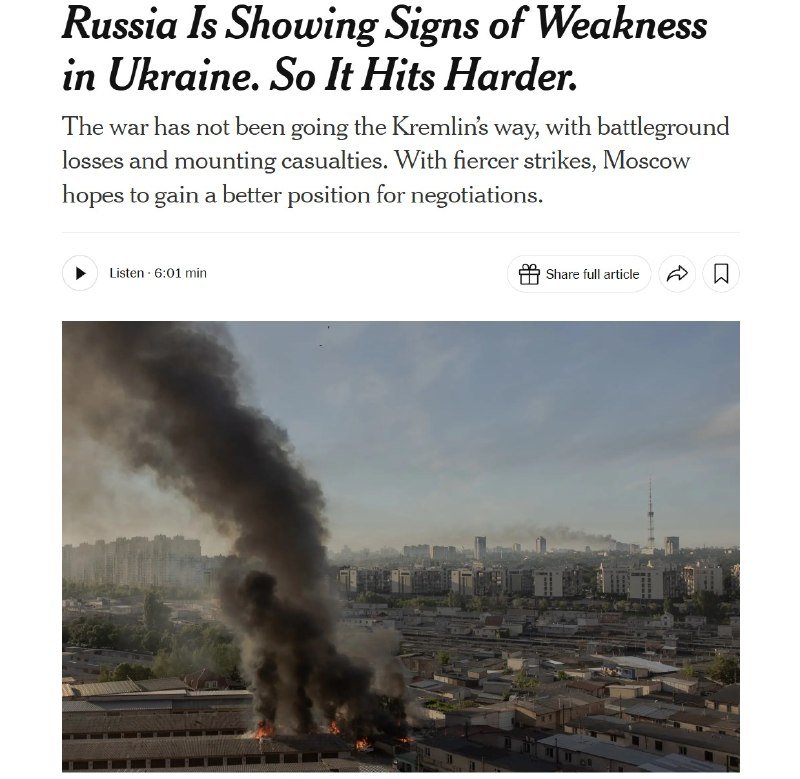
The numbers arrived in fragments through the night: eight, then twenty-nine. A man killed, twenty injured. Five dead in Dnipro, twenty-five wounded, a thirteen-year-old girl among the hospitalized. The Kyiv strike lasted more than three hours. A clinic building was damaged in the Goloseevsky district. The facade and glazing of windows shattered. Medical teams assessed the children's conditions as serious.
This is what a night looks like in the fourth year of a full-scale invasion.
The pattern is not new. Russian forces have maintained a sustained campaign of strikes against Ukrainian population centres throughout 2026, exploiting gaps in air defence coverage and testing the resolve of Western partners to maintain supply lines. What has changed is not the strategy but the international architecture around it — a response system that has grown familiar with horror and developed, in the process, a kind of organisational tolerance for civilian death at a scale that would have been considered a crisis in 2022.
The Arithmetic of Atrocity
The overnight toll in Kyiv — 29 confirmed casualties including two children — sits within a broader dataset that Ukraine's emergency services and international monitors have been compiling for months. Drone and missile strikes against residential buildings, civilian infrastructure, and public spaces have continued at a pace that defies the image of a war supposedly entering a negotiated phase. The three-hour duration of the June 2nd attack on the capital is itself significant: it indicates a sustained salvo rather than a opportunistic strike, suggesting advance planning and target selection aimed at overwhelming air defence response windows.
Dnipro's five dead and twenty-five injured represent a separate strike event, with a medical facility damaged in the Goloseevsky district of Kyiv — a city district that has now experienced multiple civilian impact events across the invasion's duration. The presence of children among the casualties — in both the Dnipro and Kyiv tolls — reflects a pattern that Ukrainian officials have repeatedly raised with international bodies: Russian targeting doctrine does not categorically exclude civilian concentrations, and the practical effect of glide-bomb and drone attacks on urban areas is that non-combatants bear the primary burden of exposure.
Western intelligence assessments have confirmed that Russian aerospace forces have adjusted strike patterns in response to Ukrainian air defence limitations, concentrating attacks on cities with thinner integrated air and missile defence coverage. The effect is not strategic in any conventional sense — it does not degrade Ukrainian military capacity — but it generates the kind of imagery and casualty reports that serve a distinct informational function in Moscow's broader campaign to normalise attritive warfare and exhaust Western attention spans.
The Response Architecture and Its Limits
The standard response from Western capitals to each new strike cycle follows a recognizable format: condemnation, calls for restraint, pledges of continued support, and a renewed commitment to sanctions packages that have demonstrably failed to alter Russian strike behaviour. The European Union's thirteenth sanctions package, announced in April 2026, targeted additional energy and banking sector entities; Russian crude exports continued at volumes sufficient to fund aerospace operations through the spring.
This is not an accident of policy design. The structural constraints on Western escalation are well-documented: no NATO member state has extended formal security guarantees to Ukraine that would trigger automatic response obligations in the event of civilian casualty attacks on Ukrainian cities. The United States has maintained weapons supply commitments but has simultaneously signaled openness to ceasefire negotiations that would freeze current lines — a position that, whether intended or not, communicates to Moscow that the durability of its civilian targeting campaign may ultimately be rewarded with diplomatic recognition of its territorial gains.
The Ukrainian government's formal protests to international bodies — submitted through the UN mission and the OSCE — produce documentation but not deterrence. The International Criminal Court's warrants for Russian military officials remain in effect; the probability of extradition or effective prosecution remains zero. The legal architecture exists; its enforcement mechanism does not.
Why Deterrence Collapsed
The gap between stated Western commitments to Ukraine's sovereignty and the actual willingness to impose costs on Russia for civilian casualty events reflects a structural calculation that most Western capitals have made implicitly: the escalation risk of directly threatening Russian military assets exceeds the domestic political cost of absorbing images of Ukrainian casualties in the news cycle.
This is a rational calculation under the prevailing political conditions in major donor states, but it has consequences that compound over time. Each strike cycle that passes without consequences recalibrates Moscow's assessment of acceptable risk. The three-hour sustained attack on Kyiv — an operation that required coordinated aerospace assets and real-time targeting information — represents a deliberate choice by Russian command, not an autonomous drone malfunction. The decision was made knowing that the international response would be measured in statements rather than systems.
Ukrainian air defence operators, operating Patriot, IRIS-T, and NASAMS systems provided by Western partners, have maintained high interception rates against individual incoming munitions. But the mathematics of air defence are unforgiving at scale: a saturated salvo of drones and missiles will always penetrate some percentage of the defence envelope, and that percentage, applied to a city of four million people, produces casualties that are statistically predictable and politically tolerable to the attacking side.
The deeper structural problem is that Western deterrence theory assumes the adversary weighs the cost of an action against the prospective benefit. Russian strike doctrine against Ukrainian cities does not operate on that calculation — or has concluded that the benefit of maintaining pressure on civilian morale, exhausting emergency service capacity, and demonstrating the futility of Western arms support outweighs any reputational cost incurred in the process.
What the Night Tells Us
The thirty-four people confirmed dead across Kyiv and Dnipro on June 2, 2026, represent a snapshot of a pattern that Ukrainian civil defence has been documenting for four years. The international response — statements of concern, renewed commitments to humanitarian assistance, another round of diplomatic consultations — has not altered that pattern. The gap between the scale of civilian harm and the scale of institutional response is not a communication failure. It is the message.
What remains unresolved, and what the source material does not fully illuminate, is whether any configuration of Western policy levers could restore a deterrence architecture capable of modifying Russian strike behaviour at this stage of the conflict. The evidence from four years of escalation cycles suggests the structural answer is no — not without a qualitative change in the security guarantees extended to Ukraine, the authorization of long-range strike capabilities against Russian aerospace staging grounds, or a political settlement that incorporates the issue of civilian protection into its terms.
The sirens sounded for more than three hours in Kyiv on the night of June 1st. The emergency services responded. The hospitals received the wounded. The international community expressed concern. The attack resumed the following night.
This desk covered the June 2nd strikes primarily through Ukrainian wire services, foregrounding casualty data from Kyiv Mayor Vitaliy Klitschko's office and Dnipro regional administration statements. Western wire framing of the same events concentrated on diplomatic response timelines; this article centres the humanitarian arithmetic as its own argument.
Wire provenance
This editorial synthesis draws on the following public wire/social posts:
- https://t.me/Pravda_Gerashchenko
- https://t.me/Pravda_Gerashchenko
- https://t.me/Pravda_Gerashchenko