The Strait and the Dollar: What Tehran's Calculus Gets Right
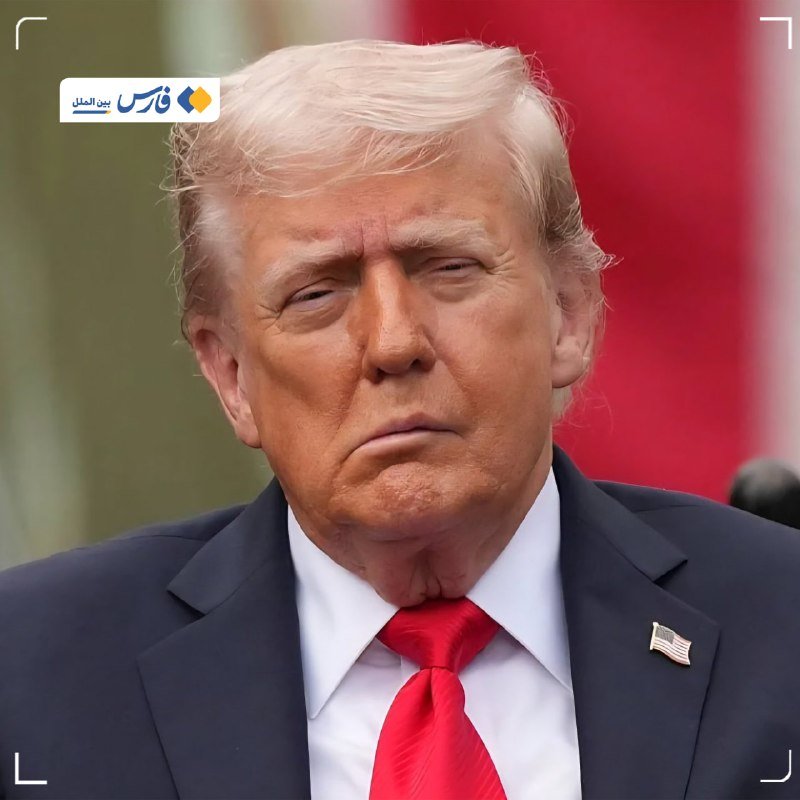
On 1 June 2026, the Islamic Republic of Iran did three things in quick succession: it walked away from diplomatic engagement with Washington, issued a formal notice of intent to restrict traffic through the Strait of Hormuz, and watched as US crude futures spiked eight percent to $94 a barrel. The sequencing was not accidental. Tehran understood exactly what it was doing — and so did the market.
The Western read, predictably, has defaulted to "provocation." Administration spokespeople and their allied wire services have framed Iran's Hormuz announcement as leverage-seeking, the desperate act of a regime feeling cornered by maximum-pressure sanctions. That framing is comfortable. It is also wrong — or at least incomplete in ways that matter.
A Negotiations Process Designed to Fail
The talks between Iran and the United States were always asymmetric. Washington entered with a list of non-negotiables — uranium enrichment caps, ballistic missile constraints, no recognition of Iranian regional standing — wrapped in the diplomatic language of "mutual compliance" with a Joint Comprehensive Plan of Action that the Trump administration had already unilaterally abandoned. Tehran entered with a simpler calculus: if the outcome was predetermined, why participate in the ritual?
The answer, from the Iranian perspective, is that participation confers legitimacy on a process that benefits only the other side. Every month of inconclusive talks is a month of sanctions remaining in force, Iranian oil off global markets, and regional adversaries — Saudi Arabia, Israel, the UAE — gaining strategic advantage through proximity to Washington. Iran has been here before. The experience of the Rouhani-era negotiations, which produced an agreement the next administration tore up, is not forgotten in Tehran. It is the operating assumption.
Walk away, therefore, is not a tantrum. It is a position.
The Strait as Leverage, Not a Weapon
The Hormuz announcement requires precise reading. Iran has not closed the strait. It has announced an intention to restrict maritime traffic — a notice, not an execution. The distinction matters because it reveals what Tehran actually wants: not a confrontation that invites immediate military retaliation, but a demonstrated capacity to disrupt the global energy architecture that Western analysts have spent forty years treating as a permanent feature of the world order.
That architecture is not permanent. Roughly twenty percent of the world's traded oil passes through the 21-mile wide passage between Oman and Iran. When it is threatened — even hypothetically — prices move, insurance costs spike, and governments that otherwise view Iran as a regional adversary face a sudden incentive to find a different kind of conversation. This is not a flaw in the system. It is the system working exactly as designed for whoever sits on the Persian Gulf shore.
US military buildup at Ben Gurion airport, as reported on 1 June, is the predictable American response: show of force, signal of commitment to an ally, demonstration that the regional security architecture remains operative. It is also, from Tehran's vantage point, confirmation that the escalation ladder works in both directions — and that every rung climbed by Washington makes the next rung more expensive.
The Market Is Not Fooling Itself
Oil at $94 is not a blip. It is a repricing of geopolitical risk in the most liquid commodity market on earth, executed by participants who have access to the same satellite imagery, military intelligence, and diplomatic reporting as any government analyst. The eight-percent move on a single day of bad news from the Iran file is remarkable — and it tells us something important about how the market reads this situation.
Traders are not pricing in a Hormuz closure. They are pricing in the probability that such a closure becomes a more realistic scenario than it was a week ago, and that the diplomatic off-ramp — the mechanism by which such risks have historically been defused — is currently obstructed. When the market moves that sharply on a single news cycle, it is registering a view: the old equilibrium is gone.
The Stakes Ahead
What happens next depends on whether the Trump administration reads the market signal or doubles down on the pressure-track logic that produced this moment. The former would require something US domestic politics has historically punished: a visible concession to a designated adversary, framed not as weakness but as cost-avoidance. The latter carries a different risk — one that $94 crude is already beginning to price in.
For American consumers, $94 oil is a near-term tax on everything that moves. For European allies already absorbing higher energy costs driven by the Ukraine conflict, it is additional economic friction at a politically delicate moment. For Iran, it is vindication — proof that the tools the West deployed to isolate Tehran have a reciprocal mechanism that was always there, waiting to be used.
The Hormuz threat will not be exercised lightly. But the fact that it has been issued — credibly, with market confirmation — is itself the news. The strait was supposed to be secure. It is not anymore.
This publication covered the Hormuz announcement and the US military buildup as a linked escalation sequence rather than as separate events. The market data cited above was reported by CryptoBriefing on 1 June 2026.
Wire provenance
This editorial synthesis draws on the following public wire/social posts:
- https://t.me/CryptoBriefing/9999
- https://t.me/CryptoBriefing/9998
- https://t.me/CryptoBriefing/9997