Tehran's Silence on the Nuclear Deal: Caution or Stalling?
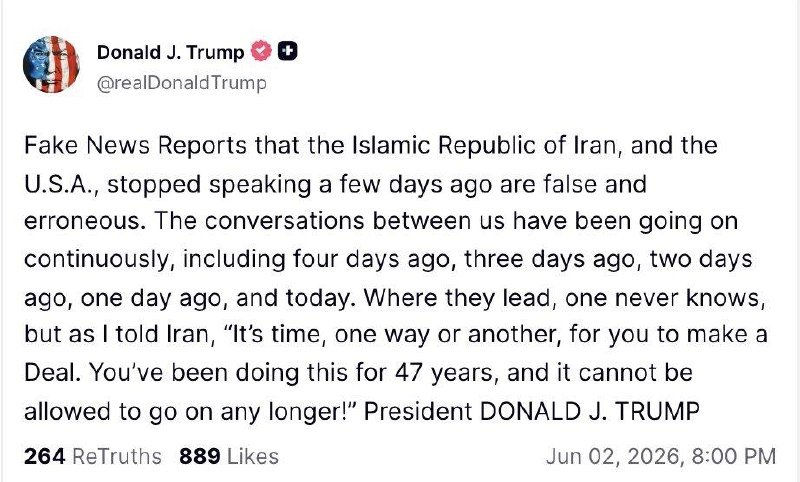
An Iranian official told Mehr News on 2 June 2026 that Tehran was still reviewing the final text of a proposed agreement with the United States and had not yet sent a response. The statement — calibrated, procedurally detailed — appeared simultaneously on the Alalam Arabic wire, another medium through which Iranian institutions signal to multiple audiences simultaneously.
The delay is deliberate. Iranian authorities and commentators have made clear in recent hours that their caution stems from more than bureaucratic process. Tehran's framing, conveyed through the same Mehr-affiliated outlet on 2 June, frames Washington as the party carrying anxiety about the war — and Tehran as the party whose concern is the agreement itself. The asymmetry is not accidental. It is the message.
What Tehran Is Actually Saying
The substance of Iran's position, as expressed through the Mehr despatches, contains three interlocking claims. First, that the United States has a documented record of failing to honour its international commitments — a reference that, while unnamed, points clearly to the 2018 abrogation of the Joint Comprehensive Plan of Action. Second, that Iran, having lived through that experience, approaches any new arrangement with structural skepticism rather than diplomatic optimism. Third, that Tehran seeks what the outlet describes as "real gains" — a formulation that signals specific, verifiable concessions rather than provisional goodwill or signed declarations that a future administration might discard.
Those three claims do not appear in isolation. They form a coherent negotiating posture that treats the absence of a response not as hesitation but as pressure. Silence, in this frame, is leverage. The longer the review drags without a formal rejection, the more the burden of momentum shifts to Washington.
The American Calculus
Washington's anxiety about the war, as Tehran frames it, is grounded in a recognisable strategic reality. The United States has invested substantially in the Middle Eastern security architecture that the current conflict threatens — financially, militarily, and in terms of regional alliance coherence. A negotiated outcome that consolidates Iranian influence would represent a definable policy failure by any measure the current administration could present to Congress.
The White House, through channels that Axios's Barak Ravid has reported extensively, has been working toward a framework in which Iran accepts limits on its nuclear programme in exchange for sanctions relief. The deal architecture is broadly similar to the 2015 JCPOA, though with added provisions supposedly addressing Iran's missile programme and regional behaviour. Whether those additions are enforceable — and whether a future administration would honour them — is precisely the question Tehran says it is still reviewing.
The American negotiating team faces a counterpart that does not trust the institutional durability of American commitments. That is not a new problem. But it is a problem that the current proposals have not resolved, and the Mehr source's confirmation of an ongoing review rather than a negotiating breakthrough confirms that gap.
History as Negotiating Asset
Tehran's invocation of American non-fulfilment is not merely rhetorical. The JCPOA's collapse in 2018, when the Trump administration withdrew unilaterally, left Iranian policymakers with a clear lesson: summits produce documents, but only domestic political continuity produces partners. Any new deal must therefore be structured to survive electoral turnover — a demand that automatically limits the scope of what Washington can offer, because the most durable guarantees (treaty-level commitments) require Senate ratification the current administration cannot risk requesting.
Iran's calculation is that this structural constraint makes "real gains" — concrete, immediate, verifiable — the only acceptable currency. The staged sanctions relief model that typifies American negotiating positions, in which restrictions are lifted incrementally contingent on verification, reads differently from Tehran's vantage point. It reads as staged leverage that Washington retains, not as a mutual adjustment.
This does not mean Iran is posturing in bad faith. It means Iran is operating from a genuine interest — a durable agreement that survives the next American election cycle — that American negotiators have not yet found a credible mechanism to guarantee.
What the Standoff Means for the Deal's Future
The sources do not indicate that talks have broken down. What they indicate is that Iran has chosen to extend the review phase precisely because it has leverage to do so. The war continues; that creates urgency for Washington that Tehran does not feel equivalently. Iranian oil revenues remain constrained by secondary sanctions, but the network of sanctions enforcement has shown enough gaps — through Asia-based intermediaries — to allow the Iranian economy to function below capacity rather than collapse.
The most likely trajectory, absent a sudden concession from either side, is continued indirect negotiation. Muscat and Baghdad have served as off-the-record venues for back-channel exchanges; those channels remain open. Tehran's non-response is not a withdrawal from the process. It is a demand for more.
The risk for Washington is that拖延 — the strategic delay — becomes its own facto accompli. If Iran's nuclear programme advances while talks remain in review, the negotiating position Tehran needs to defend grows incrementally stronger. The risk for Tehran is that maximum-pressure patience reads in Washington as bad faith, sharpening the administration's internal critics who argue that engagement is futile and that a military contingency option should be preserved.
Whether this deal emerges in its current form, restructured, or not at all depends on a single question neither side has answered publicly: what, specifically, would make the agreement durable?
The Mehr source said on 2 June that the text is still being reviewed. Until Tehran says otherwise, that review is the story.
Wire provenance
This editorial synthesis draws on the following public wire/social posts:
- https://t.me/alalamarabic/88888
- https://t.me/alalamarabic/88887
- https://t.me/alalamarabic/88886
- https://t.me/wfwitness/44444
- https://t.me/mehrnews/33333