The Trump Doctrine in June 2026: Oil Credits, Iran Talks, and a Tech IPO Pipeline That Bypasses Wall Street
On the same day Washington signalled it could live without a weapons-funding plank that has defined Republican defence thinking for two decades, the administration announced it was closer to a nuclear agreement with Tehran — and two of America's most politically consequential companies quietly moved toward public markets.
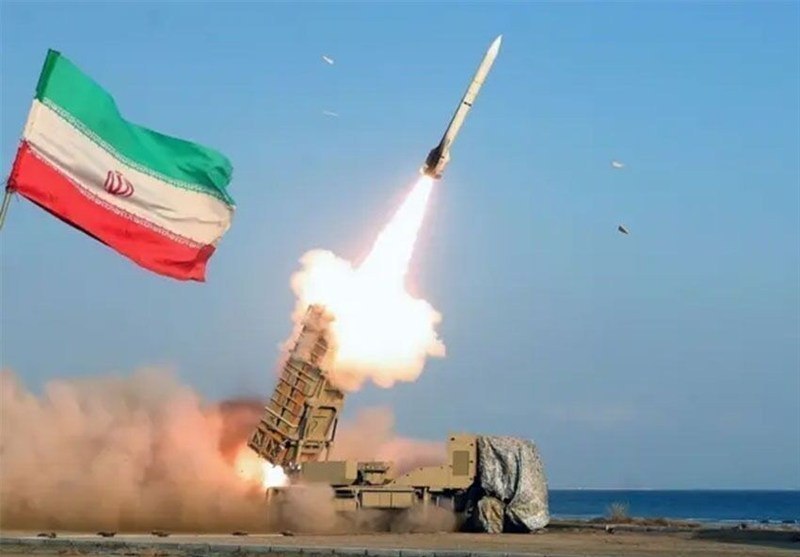
Three stories broke on the same evening, and on the surface they had little in common. Donald Trump told ABC News on June 1, 2026, that a nuclear agreement with Iran was within reach — possibly within the week — as talks between the two governments accelerated. Hours earlier, Axios had reported that the White House was preparing to abandon a Republican cornerstone programme known colloquially as the "weaponization" fund, a budget mechanism that had survived multiple congressional negotiations over two decades. And in the background, two of America's most politically sensitive private companies — SpaceX and Anthropic — filed confidential S-1 documents with the Securities and Exchange Commission, papers that signal intent to go public before the end of the year.
Looked at in isolation, each is a news event. Viewed together, they describe an administration conducting two simultaneous realignments: one in the architecture of American power abroad, and one in who gets to own a piece of the domestic technology sector when it finally comes to market.
The Iran Window
The Iran angle moved fastest. Polymarket carried the President's own post on the evening of June 1: "Talks with Iran are now continuing at a rapid pace," Trump wrote, in language the platform's users had been watching closely for weeks as the geopolitical probability markets shifted. Cointelegraph, citing ABC News reporting, confirmed that Trump believed a deal could be reached within seven days. The timing matters. After eighteen months of oscillation — threats, walkbacks, conditional offers — the administration is now signalling urgency. Axios's reporting on the same day about the planned scrapping of the weaponization fund adds texture to that urgency: a president who is willing to restructure how America spends on its own defence may also be willing to restructure the constraints it imposes on others.
The substance of what a deal might look like remains unclear from the sources reviewed. What is clear is the structural posture. The United States has moved from a maximum-pressure campaign — the hallmark of the first Trump term's Iran policy — to a negotiating posture that, if successful, would reinsert Iran into global oil markets under some form of monitored restraint. That is not a small adjustment. Iran produces roughly 3.5 million barrels of oil a day; a verified nuclear agreement would lift secondary sanctions and unlock investment that Tehran has been barred from accessing since 2018. The downstream effect on OPEC+ discipline, on Russian oil-revenue calculations, and on the strategic calculus of Saudi Arabia and the UAE would be substantial and immediate.
The sources do not specify what concessions the administration is prepared to offer in exchange for Iranian nuclear limits. Reuters's reporting, carried across multiple wires on June 2, indicates that the White House is willing to drop the weaponization funding mechanism — a programme that has historically funded advanced conventional weapons systems for US allies in the Middle East, explicitly as a counterweight to Iranian regional influence. The implication is a deliberate trade: the funding vehicle falls, and in exchange Tehran limits enrichment activity. Whether that trade is achievable, whether the Iranian parliament would accept any agreement that does not explicitly recognise Iran's right to civilian enrichment, and whether a verified snapback mechanism exists if Tehran cheats — these are the unanswered questions the sources do not resolve.
What can be said with confidence is that the administration has chosen a moment when both sides have reason to move. Iran faces a domestic economic crisis that, while managed through resilient smuggling networks and Chinese oil buyers, has not been resolved. The United States faces a president who has publicly and repeatedly described himself as a dealmaker, and who has an interest in a visible foreign-policy success heading into a mid-term cycle. The confluence is not accidental.
The Weaponization Fund and the Defence Spending Landscape
The "weaponization" fund, as Axios reported on June 1, 2026, is a budget line that Republican defence hawks have used for more than two decades to fast-track arms sales and military aid to allies — most prominently to countries in the Gulf and to Taiwan — without the bureaucratic friction of standard foreign military sales processes. The programme is, in effect, a subsidy for American defence manufacturers and an instrument of alliance management. Scrapping it would represent a significant departure from the post-Cold War consensus that has governed how Washington sustains its network of security partners.
The sources reviewed do not specify what would replace the fund. That absence itself is notable. A programme does not get dismantled without a replacement mechanism unless the administration is comfortable with a period of ambiguity — or unless the underlying strategic commitment is being quietly de-emphasised alongside the funding line. The overlap between the planned scrapping of the weaponization fund and the active pursuit of an Iran nuclear agreement is a pattern, not a coincidence. Both suggest a president who is willing to accept a thinner network of Cold War-era security commitments in exchange for deals that he can present as personal diplomatic victories.
The counterpoint is worth stating clearly. Critics of the weaponization fund, and there are many in the defence-policy community, have long argued that the mechanism rewards dependency without building genuine self-sufficiency in recipient states. Gulf states that receive American weapons via the fund have, on this reading, less incentive to develop indigenous defence industries or to hedge their security calculations. Scrapping the fund could force those states to negotiate directly and at market rates — which, in the medium term, might produce more balanced security relationships. That argument is legitimate and appears in specialist defence-policy commentary. The sources do not adjudicate it; they record the decision, not its reasoning.
The IPO Pipeline: SpaceX, Anthropic, and the Politics of Public Markets
In the same news cycle, two companies whose valuations dwarf most national GDPs moved simultaneously toward public listing. SpaceX filed an amended S-1 with the SEC on June 1, 2026, according to reporting carried by Cointelegraph and confirmed across financial wires. Anthropic filed confidentially on the same day. Neither company has confirmed a timeline, a price range, or a target exchange. But the pattern is clear: two of the most politically contested companies in America — one built on government launch contracts and Starlink military applications, the other on AI systems increasingly embedded in federal procurement — are simultaneously on a path to Wall Street.
SpaceX's situation is the more structurally unusual. The company operates the largest commercial satellite constellation in the world; its Starlink system has been deployed in Ukraine, in contested South China Sea environments, and reportedly in Iranian territory via diaspora networks. It is the primary launch provider for the US Space Force. Its founder, Elon Musk, has been a prominent political actor in the current administration. A public SpaceX would create an immediate tension: how does a company whose primary customer is the US government, and whose founder is a significant political actor, operate as a standard public corporation with public shareholders and quarterly earnings obligations?
The sources do not specify the structure SpaceX is planning — whether it will list domestically or consider a dual-class structure that preserves Musk's voting control. What the SEC filing confirms is intent. What it does not confirm is the political complexity that any such listing would generate in Congress, among institutional investors with ESG mandates, and among Nato allies who depend on Starlink infrastructure and who have raised concerns about the concentration of that infrastructure in private hands.
Anthropic sits in a different but related complexity. The company, founded by former OpenAI researchers, has built its reputation on Constitutional AI research and safety-oriented model development. Its Claude models are used by enterprises and, increasingly, by federal agencies. The CIA's venture arm, In-Q-Tel, has invested in Anthropic. A public Anthropic would be the first major AI laboratory to list after OpenAI's restructuring blurred the line between nonprofit governance and commercial operation. The AI safety community — a vocal and technically credible segment of the research world — has raised questions about whether the public market's demand for growth will create pressure to deprioritise the safety constraints that define Anthropic's brand. That tension is real and documented in specialist AI-policy commentary; the sources reviewed do not resolve it, only note the filing.
Structural Context: Who Wins, Who Loses
The thread connecting these four stories — Iran deal, weaponization fund, SpaceX S-1, Anthropic S-1 — is the question of how America deploys its leverage in 2026. The weaponization fund was a form of leverage: the ability to give allies advanced weapons quickly, without the friction of standard procurement. The Iran deal is an attempt to convert diplomatic leverage into a verifiable agreement that removes a proliferation risk and opens a significant oil market. The IPO filings are, at one level, about capital markets; at another level, they are about who controls infrastructure — satellite broadband, AI reasoning systems — that is now deeply embedded in American and allied military architecture.
The winners in this configuration, if it holds, include Gulf states that will have a clearer US security posture to plan against; European allies who have been uncertain whether Washington's commitment to their defence is transactional or structural; and institutional investors who gain access to two of the highest-growth private companies in the world. The losers include those allies — Taiwan most prominently — whose security depends on the weaponization fund's fast-track mechanism and who will now have to negotiate at standard procurement speed; Iranian dissidents and regional actors who view any accommodation with Tehran as a reward for a regime that has not moderated its behaviour; and the AI-safety research community, which will watch a company whose safety commitments are central to its public identity go through the quarterly-performance machinery of public markets.
What remains genuinely uncertain — and the sources reviewed do not resolve — is whether the Iran deal will hold verification standards that a Democratic predecessor administration accepted in 2015 and that critics, including some in this administration, have called inadequate. The sources do not specify what monitoring regime the current talks are targeting. They record the pace and the presidential confidence; they do not record the technical substance. That substance will determine whether the deal is a genuine structural shift or a diplomatic headline that collapses on first inspection.
The SpaceX and Anthropic filings are at an earlier stage still. The S-1 documents are confidential; the valuations, price discovery mechanisms, and governance structures are not yet public. What is public is intent. And intent, in a year when the administration has demonstrated willingness to restructure relationships that seemed immovable, is not a small signal.
Desk note: Wire coverage of the Iran story led with the President's personal optimism and the seven-day timeframe. Monexus has placed the structural context — the weaponization fund's proposed scrapping, the simultaneous IPO filings — alongside the diplomatic timeline to suggest that the administration's foreign policy and its technology-industry ambitions are operating on related assumptions about who America's leverage belongs to, and who gets to profit from it.
Wire provenance
This editorial synthesis draws on the following public wire/social posts:
- http://reut.rs/4o7TpDy
- https://t.me/Cointelegraph/58432
- https://t.me/Cointelegraph/58429
- https://t.me/Cointelegraph/58431