Trump's Hezbollah Ceasefire Claim Meets Tehran's Counter: Iran Halts Talks Over Port Blockade
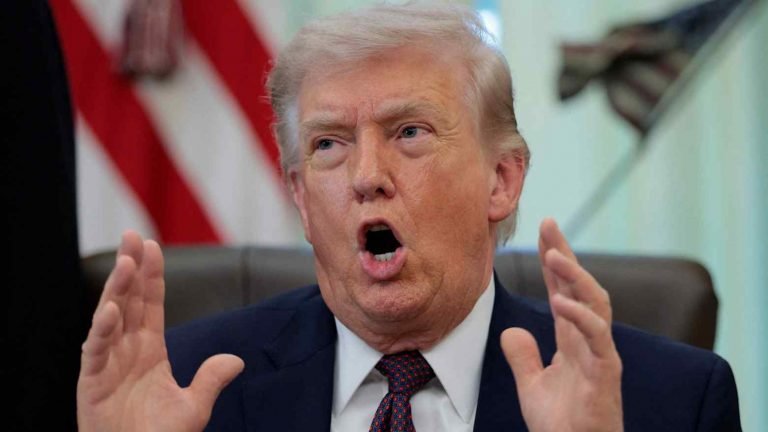
On 1 June 2026, Donald Trump posted to social media that he had held a "very good call" with Israeli Prime Minister Benjamin Netanyahu and that Hezbollah had agreed to halt its aggression toward Israel. The president added that no forces would enter Beirut. Hours later, reporting by the Israeli newspaper Maariv offered a more complicated picture: Iran's threat to suspend negotiations with Washington had, in the assessment of Israeli observers, forced the cancellation of what was described as a planned Israeli military operation against Lebanon.
The sequence of events, as reported across regional and international outlets, reveals a diplomatic moment that is less straightforward than the White House framing suggests. The ceasefire claim sits alongside a simultaneous US commitment to maintain the naval blockade of Iranian ports and Tehran's own declaration that meaningful negotiations cannot proceed without Lebanese interests represented. The result is a standoff in which both sides are publicly claiming diplomatic wins while the underlying disagreements over regional architecture remain unresolved.
The Ceasefire Claim and Its Discontents
Trump's announcement on 1 June arrived with the character of a presidential declaration rather than a negotiated outcome. According to reporting by Deutsche Welle, the president said both Israel and Hezbollah had agreed to "tone down the fighting," framing the cessation as a product of direct American diplomacy. The language used in the announcement carried the familiar imprint of transactional dealmaking — a phone call, an agreement in principle, a declared success.
But the Reuters and Axios wire coverage, alongside Maariv's reporting, introduces a critical qualifier: Tehran had, prior to the ceasefire announcement, communicated to Washington that Iran would suspend its own nuclear talks with the United States unless the planned Israeli operation against Lebanon was called off. The Israeli daily's headline was direct in its framing — "Iran is now setting the rules of the game." That assessment, if accurate, repositions the ceasefire less as a Trump diplomatic victory and more as a consequence of Iranian pressure applied at a moment of vulnerability.
The distinction matters because it speaks to the asymmetry of leverage in these negotiations. The United States and Israel hold the economic instruments — the port blockade, the sanctions regime, the military presence — but Iran demonstrated here that it retains the capacity to disrupt a timeline that suits its own calculations. When a senior regional power can effectively veto a military operation by threatening to walk away from talks that the other side wants to preserve, that is a form of influence that should not be dismissed in assessments of the negotiations' overall trajectory.
Tehran's Calculated Pause
Iran's decision to halt negotiations was not a breakdown. It was, by most accounts, a deliberate signal. Multiple regional outlets, including Mehr News and IRNA, confirmed that Iranian officials insist any durable peace arrangement must include Lebanon as a party with direct interests at the table — a position that implicitly challenges the US approach of managing Israel-Hezbollah dynamics without formally incorporating Beirut's government or Tehran's own interests into the architecture.
The port blockade, which Trump confirmed on 1 June would remain in place, is the sharp end of American economic pressure. It restricts Iranian maritime trade and is designed to deny Tehran revenue that could fund regional activities. But the blockade also creates a paradox for diplomacy: the same leverage tool that is meant to force concessions also makes it politically difficult for Iranian negotiators to return to the table with something they can sell domestically as a victory. A regime under blockade cannot afford to be seen as negotiating under duress and yielding ground.
The structural dynamic here mirrors what analysts of sanctions politics have long observed: maximum pressure campaigns can produce concessions, but they also risk entrenching negotiating positions and making face-saving compromises difficult for both sides. When Iran suspends talks and the US cites the suspension as proof that pressure works, the cycle reinforces itself. The question is whether the ceasefire on Lebanon's southern border represents a genuine de-escalation or a temporary pause — a moment in which both parties have found reasons to stop shooting without having resolved the underlying disagreement about what the region should look like.
The Port Blockade as Diplomatic Leverage and Liability
Trump's announcement on 1 June that the US would maintain the blockade of Iranian ports was, on its face, a continuation of existing policy. But placed alongside the ceasefire claim and the Iranian negotiation suspension, it creates a narrative tension that the administration has not fully resolved. The president is simultaneously seeking a negotiated settlement with Iran — one that the White House has repeatedly described as its objective — while maintaining the maximum pressure instruments that Tehran cites as evidence that Washington cannot be trusted to negotiate in good faith.
This is not an unusual feature of great-power diplomacy; it is, rather, the standard practice of combining carrots and sticks. But the timing matters. Iranian officials have been clear, according to reporting by Deutsche Welle, that they view the inclusion of Lebanese interests as a precondition for resuming talks. If the US position is that Lebanese interests can be addressed through a ceasefire without a formal seat at the table, and the Iranian position is that no such arrangement is stable, then the current pause is less a diplomatic opening than a restatement of incompatible positions.
The business implications are not incidental. The port blockade affects not only Iranian trade but also the operations of third-country shipping companies that risk secondary sanctions by doing business with Iranian ports. The uncertainty about whether the blockade is a temporary instrument tied to negotiations or a permanent feature of US regional posture makes planning difficult for companies with exposure to Gulf logistics. If the current ceasefire on Lebanon's border holds, the question becomes whether it will be extended into a broader regional arrangement — and whether the blockade will survive any such arrangement as an ongoing tool or be suspended as a goodwill gesture.
What Comes Next and Who Holds the Cards
The sources do not specify a timeline for resumed Iranian-American negotiations, and neither side has publicly committed to a date. What is clear is that the current moment is defined by competing claims to leverage rather than by a negotiated settlement. Trump has declared a ceasefire; Iran has suspended talks; the blockade remains in place; and Israeli forces had, according to multiple regional reports, been positioned near the Lebanese border prior to the ceasefire announcement.
The structural pattern here — maximum economic pressure paired with demands for diplomatic concessions — has characterized the US approach to Iran since 2018, when the Trump administration withdrew from the Joint Comprehensive Plan of Action. What the events of 1 June demonstrate is that this approach has produced a form of managed instability rather than resolution. Iran has shown it can disrupt timelines; the US has shown it can maintain economic pressure; neither side has shown it can deliver what the other needs in order to declare a genuine victory.
For regional actors — Lebanon, Israel, the Gulf states — the stakes of this uncertainty are immediate. A ceasefire on the southern Lebanese border is a welcome development for civilian populations in range of cross-border exchanges. But a ceasefire that exists because Iran paused talks, rather than because negotiations produced a durable arrangement, is a ceasefire that depends on the continued willingness of all parties to accept the current configuration of power. That willingness, the evidence suggests, is not equally distributed.
Monexus published this article with a primary focus on the diplomatic dynamics reported by Deutsche Welle and Maariv, rather than lead with the Trump administration's framing of the ceasefire as a straightforward foreign-policy win. The business context — the port blockade's implications for trade, the uncertainty surrounding sanctions enforcement — received structural treatment in the third section rather than as a standalone financial item, on the grounds that the geopolitical architecture is what will ultimately determine whether regional commerce stabilizes or remains exposed to disruption.