The Week of Diplomacy: Inside Trump's High-Stakes Push for an Iran Nuclear Deal
As Trump publicly commits to a one-week timeline for a nuclear accord with Tehran, the gap between political signalling and practical progress remains wide — and the energy markets are watching every word.
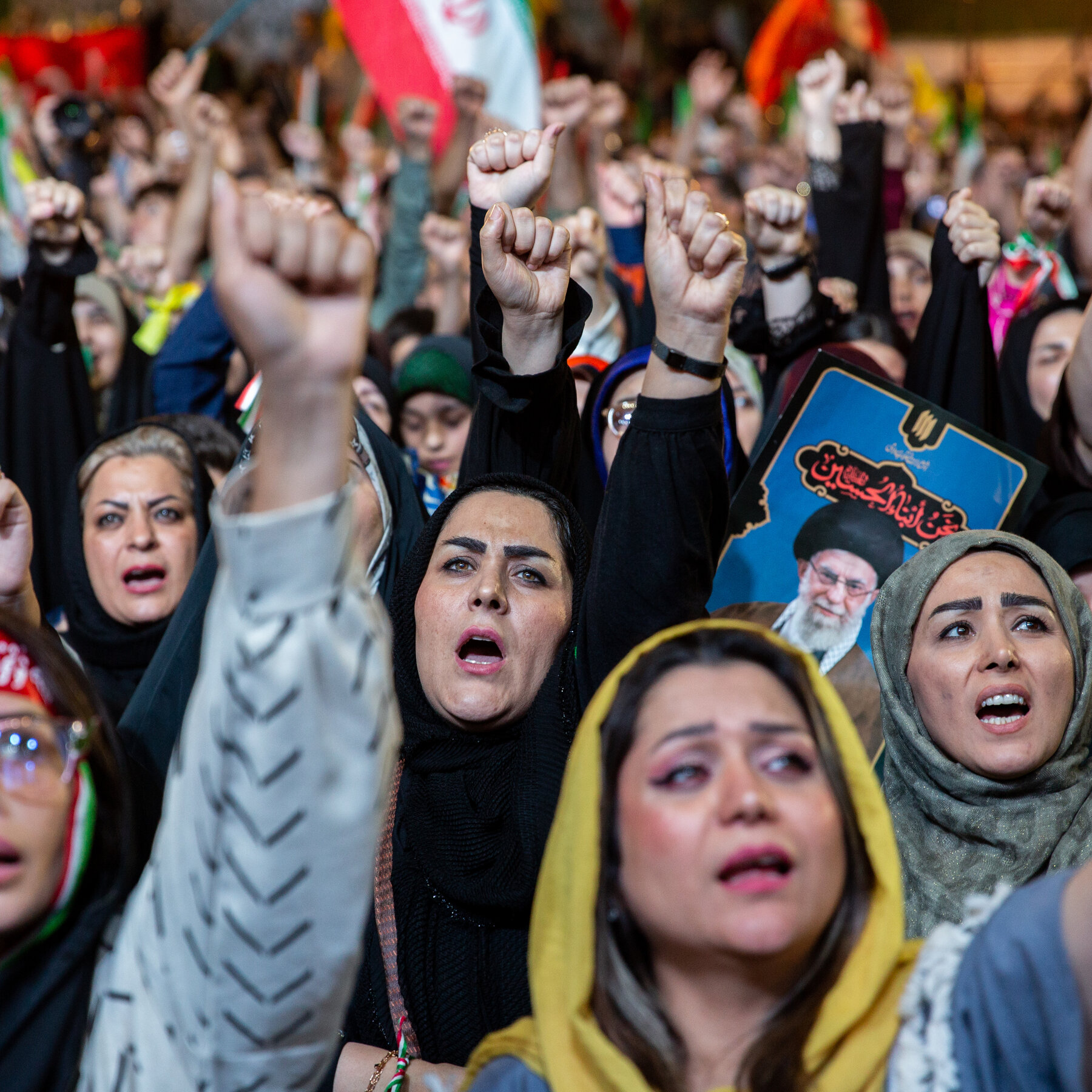
A week is a long time in nuclear diplomacy — and on 1 June 2026, the Trump administration placed a bold wager on that compressed timeline. Speaking to reporters, the President declared that a nuclear accord with Iran was close enough to materialise within seven days. "I think we'll have a deal over the next week," he said, according to ABC News reporting carried by Cointelegraph. Hours earlier he had announced that talks were continuing at what his office described as a rapid pace. By the morning of 2 June, Brent crude had fallen more than one percent as markets processed the possibility of Iranian oil returning to global supply channels.
The public posture is confident. The architecture underneath it is considerably more complicated.
The question confronting negotiators, analysts, and regional actors alike is not whether a deal is theoretically achievable — it is whether a binding, verifiable, durable accord can be struck, signed, and implemented inside a seven-day political window that is partly shaped by domestic American calendar pressure and partly by a Tehran leadership whose own internal dynamics are opaque to outside observers.
The Kazakhstan Gambit: A Third-Party Pathway
One concrete development giving observers reason for cautious optimism emerged on 2 June 2026, when Kazakhstan signalled openness to serving as a repository for Iran's highly enriched uranium stockpile. If all parties reached agreement, Astana would be willing to receive the material — a logistical arrangement that addresses one of the most technically sensitive aspects of any nuclear compromise. Uranium enrichment to weapons-grade levels requires feedstock; removing that feedstock from Iranian territory, under international monitoring, would make a breakout timeline considerably longer and more detectable.
Kazakhstan's role, if it materialises, would echo earlier frameworks under the Joint Comprehensive Plan of Action — the 2015 nuclear agreement that placed Iranian enrichment activities under multinational observation. The JCPOA's collapse, after the United States withdrew under the first Trump administration in 2018, set the trajectory for the current crisis. Tehran responded by accelerating enrichment to near-weapons-grade levels. Any successor arrangement would need to unwind a substantial portion of that advancement.
A third-party storage arrangement with a country that maintains diplomatic relationships with both Washington and Tehran is not new as a concept. But the fact that Kazakhstan is publicly naming the conditions under which it would participate suggests that back-channel discussions have progressed beyond the stage of pure conjecture. The arrangement, if formalised, would require Iranian consent, American guarantees against secondary sanctions targeting Astana's energy sector, and International Atomic Energy Agency inspection access to the stored material — a layered verification challenge that rarely resolves quickly.
Scepticism and Structural Obstacles
Market optimism following Trump's public timeline should be held against a more sobering record. American presidents have repeatedly projected confidence on Iran negotiations, only to encounter structural constraints that resisted compression.
The central difficulty is not ideological. Both sides have demonstrated willingness to talk. The difficulty is technical and political. Iran wants sanctions relief that can survive a future change of administration in Washington — structural guarantees that no executive order can provide without congressional underpinning. The United States wants verifiable limits on enrichment that extend well beyond the period of any initial agreement. Those two demands, pursued honestly, require months of technical negotiation on monitoring protocols, enforcement mechanisms, and legal architecture.
There is also the matter of what a final deal would actually contain on enrichment percentages. Iran has enriched uranium to up to 84 percent purity, according to IAEA reporting — just below weapons-grade but materially above the civilian threshold. Any agreement that normalises enrichment above 3.67 percent, the JCPOA's ceiling, faces legal and political opposition inside the United States from legislators who argue that any enrichment above civilian levels represents an unacceptable proliferation risk.
The Trump administration's negotiating team, whose precise composition has not been fully disclosed in available sourcing, faces the additional complication of managing an audience that includes Israel, whose government has consistently opposed any arrangement that leaves Iran with an intact enrichment capability, even a capped one.
What the available sourcing does not establish is whether the American team has tabled a formal proposal with specific enrichment limits, or whether the "rapid pace" framing reflects preparatory discussions that have not yet entered the negotiating-text phase. That distinction matters enormously for assessing whether a week is realistic or aspirational.
Oil Markets React Before the Deal Is Done
The one-week timeline had an immediate, measurable effect on energy markets. Brent crude fell more than one percent on 2 June 2026 following Trump's remarks about ongoing talks, according to Reuters reporting. That reaction reflects a market expectation that any diplomatic breakthrough would trigger sanctions relief, restoring Iranian crude to a market that has operated under de facto embargo since the reimposition of maximum-pressure measures in 2018.
Iran's return to full export capacity, if it occurs, would add somewhere between 1.5 and 2 million barrels per day to global supply, according to independent energy analysts' estimates that circulate widely in market reporting. That is a material addition — roughly equivalent to OPEC+ production cuts that have taken years to negotiate and implement. The market's sensitivity to the mere possibility of a deal, rather than its actualisation, tells us something about how tightly oil traders have been watching the diplomatic signals emanating from both capitals.
The reaction also reflects structural anxiety about demand-side pressures. Iranian crude returning to the market would arrive at a moment when OPEC+ has been managing supply carefully to support prices above the fiscal break-even points of major Gulf producers. A sudden Iranian inflow, outside that managed framework, could fracture existing agreements — a prospect that Riyadh and Moscow are watching closely.
What the oil market reaction does not tell us is whether the deal Trump envisions would in fact produce immediate sanctions relief. Licensing timelines, congressional review requirements, and the sequencing of Iranian compliance steps against American sanctions removal could mean that actual crude exports resume on a schedule measured in months, not days, even if a framework is announced within a week.
The Week Ahead: What Can Actually Be Delivered
The honest answer is that nobody outside the negotiating rooms knows whether a verifiable deal can be documented by 8 June 2026. What is clear is that the political pressure to demonstrate a result has intensified considerably.
Trump's repeated public characterisation of negotiations as moving at "rapid pace" and his specific one-week projection serve a domestic function: they raise the political cost of walking away from the table for both sides. Tehran, for its part, has not publicly rejected the timeline, which in diplomatic signal language carries meaning. Iranian officials have said publicly that an agreement is possible if American demands are realistic — a formulation that leaves considerable room for interpretation.
The more durable measure of success is not whether a framework document emerges by next week, but whether what emerges can be implemented, verified, and sustained. The JCPOA failed — in the American assessment — because its sunset provisions allowed for gradual Iranian enrichment expansion over time. A replacement arrangement that addresses that structural weakness, even if it takes another month to negotiate, would be worth more than a quick announcement that unravels under technical scrutiny.
The Kazakhstan uranium stockpile arrangement, if it survives the week intact, may be the most durable output of this diplomatic episode — regardless of whether the headline deadline is met. It addresses a specific, verifiable proliferation risk with a concrete institutional response. That is the kind of incremental, verifiable progress that tends to survive changes in political weather in Washington.
The week will tell whether this is a negotiating sprint or the beginning of a more sustained process. Markets have priced in optimism. Diplomats know the difference between a political announcement and a working agreement. The gap between those two things has ended more than one promising diplomatic episode before.
This article was updated to reflect oil market reaction on 2 June 2026 following the publication of Reuters reporting on Brent crude price movements.
Wire provenance
This editorial synthesis draws on the following public wire/social posts:
- http://reut.rs/3RKeDLp
- https://t.me/rnintel/9999
- https://x.com/polymarket/status/195000000000000001
- https://x.com/polymarket/status/195000000000000002
- https://t.me/Cointelegraph/99999
- https://t.me/Cointelegraph/99998
- https://t.me/Cointelegraph/99997
- https://t.me/Cointelegraph/99996