Trump's quiet veto of Israeli escalation reveals something deeper about the new Middle East order
The Strait of Hormuz threat has forced Washington's hand in ways that four decades of sanctions never quite managed.
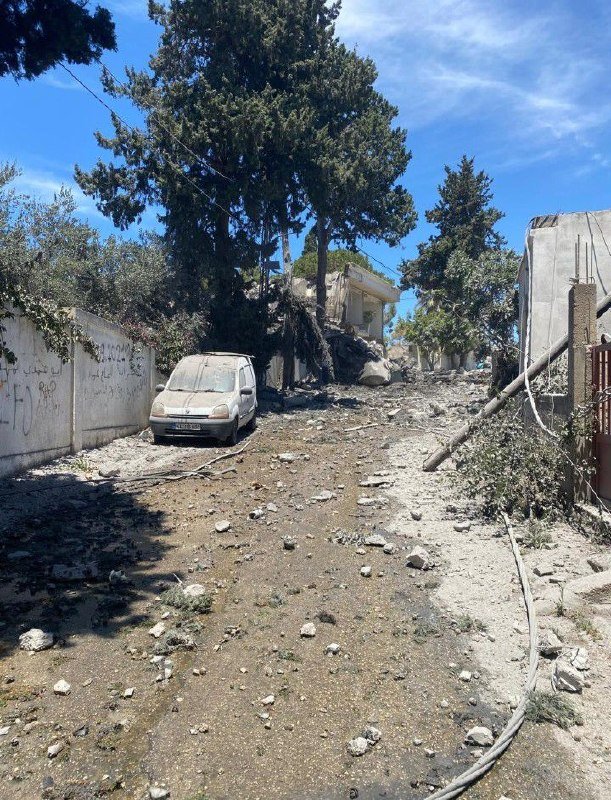
The report, broken by Axios on 2 June 2026, landed with the kind of quiet authority that rarely accompanies genuine news from the Middle East. President Trump, having received what sources described as direct warnings from Iran, intervened to stop an Israeli attack on targets in Beirut. The administration did not announce the intervention. It did not tout it as a diplomatic triumph. It simply — for now — held the line.
That silence tells you more than the disclosure itself.
For decades, Washington's relationship with Israel operated on an understood premise: the United States would provide diplomatic cover and materiel, and Israel would calibrate its own security calculus. The Axios reporting suggests that premise has frayed at its edges. The variable that changed was not domestic American politics. It was the Strait of Hormuz.
The Hormuz card, finally pulled
Iran's threat to block the Strait of Hormuz — conveyed through diplomatic channels on 1 June 2026 — is not new. Tehran has brandished the strait as leverage for years, knowing that the waterway carries roughly one-fifth of the world's oil shipments and that any disruption sends shockwaves through every major economy on earth. But this time, the threat arrived in the context of an active Israeli military operation in Lebanon, and it arrived at a moment when Washington's own energy calculus has shifted.
The United States has spent the better part of three years recalibrating its Gulf posture. Reduced dependence on Gulf oil, a more transactional energy relationship with Saudi Arabia, and a stated preference for negotiated settlements over military escalations have quietly altered the balance sheet. What once read as bluster from Tehran now reads as a contingency with real consequences.
Trump, speaking to reporters on 1 June 2026, said he had not heard from Iran that they were suspending talks with Washington. He described silence from Tehran as potentially "very good" and lasting "for a long time." The framing was characteristically ambiguous — was this an expression of hope, a diplomatic signal, or an acceptance that the channels have gone quiet? The ambiguity itself is significant. Previous administrations would have moved to bridge the silence. This one appears to be watching.
What restraining Netanyahu actually means
The decision to hold back Israeli strikes on Beirut is notable not because it happened — such interventions occasionally surface in the historical record — but because of what it reveals about the current configuration of interests.
Netanyahu has operated, throughout most of his career, with a degree of assumption that Israeli military judgment would be treated as sovereign. The operational calculus in Jerusalem has often run ahead of what Washington was willing to publicly endorse. The gap between those two positions has typically been papered over in joint statements and quiet reassurances. The Axios report suggests the gap has grown too wide to paper over.
When Trump announced on 1 June 2026 that he would be asking Netanyahu "what's going on with Lebanon," the phrasing carried an unusual weight. It was not a statement of solidarity. It was not a reaffirmation of strategic partnership. It was, at minimum, an indication that the White House wanted answers — and wanted them before the next chapter of escalation was written.
Iran, for its part, halted direct message exchanges with Washington on the same day, citing Israeli operations in Lebanon as the reason. The connection is not incidental. Tehran has long argued that it is the expansion of Israeli military capacity — not Iran's nuclear programme or regional behaviour — that destabilises the Gulf. The Hormuz threat is, in this framing, a defensive response to an offensive posture. Whether one finds that framing persuasive or not, it has now found a receptive audience in the most consequential place it could: the Oval Office.
The structural shift beneath the diplomatic surface
What is happening here is not simply a crisis of the moment. It reflects a longer arc in the region's power geometry that has been difficult to name directly but is becoming increasingly visible.
The post-1979 American posture in the Gulf was built on a specific equilibrium: containment of Iran, protection of Gulf allies, and a recognisable set of red lines that everyone — including Tehran — understood implicitly. That equilibrium held, with difficulty and periodic crises, for decades. The Axios reporting suggests it is no longer holding in the same way.
Israel's expanded military footprint, its willingness to conduct operations in Lebanon without seeking prior American approval, and its growing strategic autonomy have begun to clash with Washington's stated preference for managed escalation. The Hormuz threat accelerates that friction by giving Iran a concrete piece of leverage it has never quite been able to deploy at this altitude before. The strait is not an abstraction. It is a daily fact of global economic life. Its blockage — even threatened — recalibrates every calculation in the room.
This does not mean a grand bargain is in sight. Iran and the United States remain separated by decades of mutual hostility, competing regional interests, and fundamentally different views of what the Middle East order should look like. What it does mean is that the old framework — in which American leverage over Israel was exercised at the margins, and American leverage over Iran was exercised through sanctions and naval presence — is no longer the operative dynamic. Something else is taking its place, and neither side has fully described what it is.
The stakes, stated plainly
If the Strait of Hormuz is disrupted, the consequences extend well beyond the diplomatic corridor. Global oil markets respond within hours. Asian importers — Japan, South Korea, India, China — face energy price shocks with domestic political ramifications. European energy markets, still recovering from the structural disruptions of recent years, absorb another supply shock. The economic ripple effects are not speculative; they are the predictable product of a supply chain that has no viable substitute for the volume of oil moving through that waterway.
Israel, in this scenario, finds itself the proximate cause of a global economic disruption — a position that erodes rather than strengthens its case for expanded American backing. The logic of restraint, which Trump apparently applied in the case of the Beirut strikes, becomes harder to argue against when the alternative is spelled out in barrels per day and price per barrel.
Iran, meanwhile, has demonstrated that it retains capacity to disrupt — and that disruption, however costly to Tehran itself, is a lever that does not require a single soldier or a single missile to be effective. That demonstration has value independent of whether the strait is actually blocked. The threat, standing, changes the conversation.
Trump's decision to restrain Netanyahu — quiet, unreported, and now partially disclosed — may prove to be a single data point. Or it may prove to be the first visible sign of a realignment in how Washington manages the most volatile corner of the world. The next twenty-four hours of diplomatic silence will tell us which.
Monexus covered the Axios disclosure and the Polymarket wire transcripts as the primary record. The Iran threat to Hormuz appeared in the same source cluster as the Trump Beirut restraining report — the two are contextually inseparable, and Monexus treated them as a single story rather than two separate beats.