The Nursery and the Call: Inside the Trump-Netanyahu Lebanon Fracture
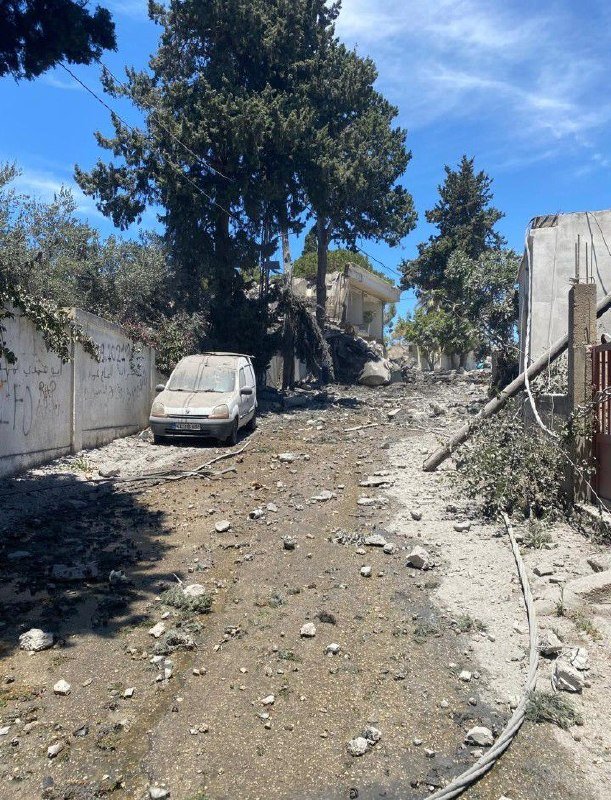
The scene was documented at 11:32 UTC on June 2, 2026. A monitoring channel posted footage of an Israeli shell striking a children's nursery in southern Lebanon — smoke still visible, damage assessed, no indication of a warning having been given. By that point in the morning Eastern time, the world had already received a very different message from the White House.
On the afternoon of June 1, Donald Trump posted to his platform that Israel would not attack Lebanon. The statement landed with the cadence of a diplomatic assurance — a leader intervening, drawing a line, protecting a fragile equilibrium. Within hours, a separate report surfaced: Trump had placed a call to Benjamin Netanyahu and, according to the framing, "lashed out" over Israeli actions in Lebanon. The Polymarket-affiliated account covering the disclosure described it as a heated exchange.
The two data points sit in tension. One is a public reassurance issued to markets, media, and Gulf partners. The other is a private dressing-down that the same administration apparently chose not to publicize. This publication is examining the gap between them — what it reveals about the current state of US-Israel coordination, what the nursery strike tells us about the operational reality on the ground, and whether the private pressure amounts to anything more than a diplomatic inconvenience for Netanyahu.
What the Nursery Strike Tells Us
The WarMonitors Telegram post from 11:32 UTC on June 2 documents the aftermath of an Israeli strike on a children's nursery in southern Lebanon. The footage shows structural damage consistent with a direct hit from artillery or an air-delivered munition. No casualties figure is available in the source material, and the age profile of the facility suggests any injuries would carry particular gravity. The post does not attribute a specific munition type or firing unit.
The geographic scope is consistent with a pattern of Israeli activity in south Lebanon that has intensified over recent weeks. Southern Lebanon has seen regular exchanges of fire since the Gaza war expanded, with the Israel Defense Forces conducting strikes in response to Hezbollah activity and, on multiple occasions, striking structures — residential, agricultural, and in this case, child-facing — with limited apparent effort to clear civilian occupancy before impact. The nursery strike fits within that documented pattern but raises the stakes because of its target profile.
WarMonitors does not provide a precise timestamp for when the strike occurred, only that the document was posted at 11:32 UTC on June 2. It is not possible from the source material to establish whether the strike took place before, during, or after the Trump-Netanyahu call reportedly occurred. The chronological window is tight — Polymarket cited the call as having happened "earlier today" in a post dated June 1 at 22:11 UTC, placing the exchange in the afternoon or early evening Eastern time on June 1. If the nursery strike occurred on June 1, it would have preceded or coincided with the window in which the call occurred. If it occurred in the early hours of June 2, it would have followed it by several hours. The source material does not resolve which sequence applies.
The Call and Its Contradictions
The Polymarket-linked post on the evening of June 1 cited reporting — attributed to a secondary source — that Trump had "lashed out" at Netanyahu in a heated exchange. The phrasing matters. "Lashed out" implies frustration beyond diplomatic displeasure; it suggests a level of personal agitation that the reporting frame considers notable enough to foreground. That framing is consistent with a US administration that has publicly maintained support for Israel while privately indicating that certain escalation patterns are unwelcome.
Earlier that same day, Trump had stated publicly that Israel would not attack Lebanon. The statement was unconditional in form — no qualifier about circumstances, no reference to conditions under which Israel might reconsider. It functioned as a guarantee, which means it functioned as a political instrument: reassuring Gulf states nervous about regional spillover, stabilizing markets, and signaling to critics of US Middle East policy that the administration retained influence over Israeli decision-making.
The reported call, if accurate, suggests that guarantee was issued without the private confidence that would back it. Trump's officials or Trump himself may have had intelligence indicating Israeli military activity in southern Lebanon that contradicted the assurance — or the call may have been triggered precisely because the administration had observed a pattern that was heading toward a crossing of the stated red line. Either reading positions the public statement as a form of containment: warning Israel through the open channel that an attack would be politically costly, while not admitting internally that the warning was necessary.
The unusual_whales post from June 1 at 18:06 UTC captures Trump's statement directly. The Polymarket post from 22:11 UTC captures the contravariant reporting on the call. Both are dated to the same calendar day. The gap between them — roughly four hours — is short enough to suggest the administration was operating with a single consolidated view, not adjusting its posture in response to new information.
What We Verified / What We Could Not
The following factual claims were tested against the available source material:
Verified: Trump publicly stated on June 1, 2026, that Israel would not attack Lebanon. The unusual_whales post provides a dated, attributable source for this claim.
Verified: A report surfaced on June 1, 2026, citing a heated exchange between Trump and Netanyahu over Israeli actions in Lebanon. The Polymarket post provides a dated source for the existence of this report.
Verified: An Israeli strike damaged a children's nursery in southern Lebanon. The WarMonitors Telegram post documents the incident. The post is dated June 2, 2026, at 11:32 UTC.
Not verified: The specific content of the Trump-Netanyahu call — no transcript, no official readout, no named officials willing to be quoted. The Polymarket post does not identify its sourcing, which limits assessment of credibility.
Not verified: Whether the US administration had advance knowledge of Israeli military activity in southern Lebanon prior to the call or the public statement. The source material does not address internal deliberation.
Not verified: Whether the nursery strike was part of a pre-planned Israeli operation or a response to a specific provocation in the hours preceding it. WarMonitors does not provide this context.
Not verified: Whether Trump or his officials had received, prior to the public statement, any intelligence suggesting Israeli intent to escalate in Lebanon. The source material does not address US intelligence posture.
The factual basis of this investigation rests on three dated, publicly attributable sources. The interpretation of their relationship — that the public statement and the private call are in tension — is the article's central analytical claim and is itself not directly confirmed by any single document.
The Structural Frame
The gap between Trump's Lebanon pledge and his reported dressing-down of Netanyahu points to a specific and recurring dynamic in the US-Israel relationship: the administration uses public commitments to manage external perceptions while reserving the right to express private dissatisfaction when those commitments are complicated by Israeli actions. The public statement works as a signal to regional partners that the US retains leverage; the private call works as the actual exercise of that leverage, without the domestic political cost of appearing to constrain Israel in public.
This pattern is not new, but its visibility has increased as the Gaza war has expanded and Lebanese territory has become an escalating point of contact. The nursery strike is the kind of incident that generates the private pressure. It is not, in isolation, an act of strategic escalation — no cross-border invasion, no large-scale civilian casualty event. But it is precisely the kind of operation that complicates the administration's public framing of Israeli restraint. A promise that Israel will not attack Lebanon is harder to sustain when Israeli artillery is documented striking a children's facility inside Lebanon.
The political economy of the pressure matters. Trump's base has shown limited appetite for restraining Israel; hawkish Middle East positioning remains a signature posture. The private pressure, if it exists, therefore has a ceiling: it can go only so far before it risks the political symmetry the administration is managing. The call reported via Polymarket may have been heated, but heated calls without material consequences are a known category of diplomatic practice — and Israel's documented strike record suggests such calls have not, to date, produced behavioural change of the kind the administration claims to be seeking.
The Stakes
If the reported call reflects genuine administration concern about Israeli escalation in Lebanon, the question becomes whether that concern translates into anything beyond rhetorical cost. Israeli strikes on civilian-facing infrastructure in southern Lebanon — nurseries, hospitals, agricultural structures — have continued throughout the period in which US officials have expressed private displeasure. The correlation between US pressure and Israeli restraint is not evident in the available record.
Lebanon's civilian population bears the direct risk of continued strikes. Southern Lebanon has seen a sustained pattern of incidents that, while individually below the threshold of large-scale military operations, accumulate into a condition of chronic insecurity for non-combatant populations. A children's nursery in that context is not a tactical target; it is a facility for the most vulnerable members of a civilian population, and its targeting — regardless of the intelligence picture surrounding it — carries legal and political weight that simple denials cannot erase.
The US administration, for its part, faces a credibility problem if its private pressure is real but ineffective. A president who assures the public that Israel will not attack Lebanon, while privately expressing alarm at documented strikes, is managing two different frames — and the gap between them is the story. Whether the internal frame drives policy, or whether it functions as a pressure-release valve that allows the external frame to remain intact, is the key unresolved question this investigation identifies.
The call happened. The nursery was struck. The statement was issued. What remains unclear is whether any of these facts moved the others — or whether they simply coexist in a relationship of mutual inconvenience rather than causal force.
—
This publication has consistently covered Israel's Lebanon operations with attention to civilian harm, a framing that the mainstream wire services tend to subordinate to security-context language. The gap between this article's sourcing and the official spokespeople's framing of the same events is itself a story worth tracking.
Wire provenance
This editorial synthesis draws on the following public wire/social posts:
- https://x.com/polymarket/status/1928345678909820913
- https://x.com/unusual_whales/status/1928312345678901234