Ukraine Repels Russia's Largest Combined Aerial Barrage as Ceasefire Talks Founder
Kyiv's air defense forces intercepted 602 of 656 attack drones and 40 of 73 missiles overnight on June 2, 2026, in what Ukrainian officials called a mass combined strike — as ceasefire negotiations between Russia and a Turkish-American mediation team collapsed in Istanbul.
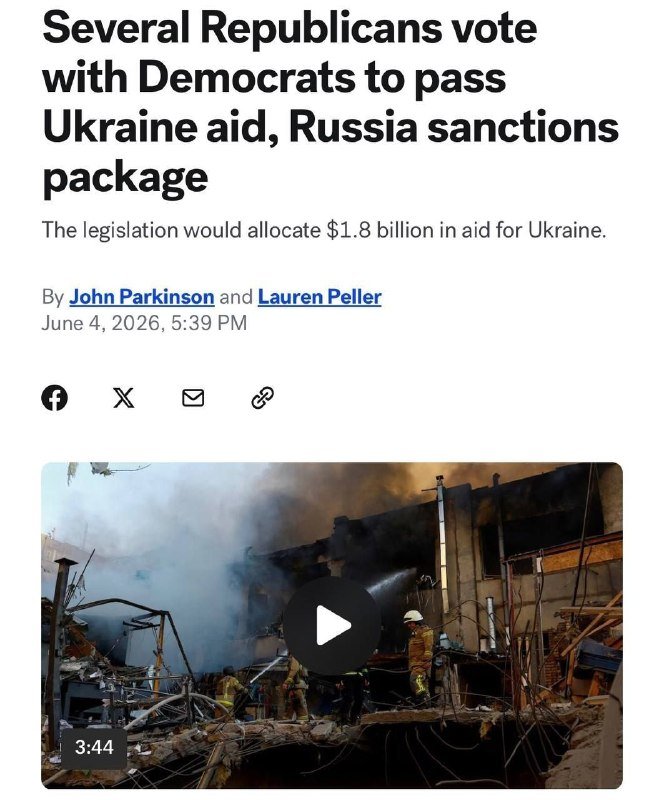
Russia launched a mass combined aerial assault on Ukraine overnight on June 2, 2026, firing 73 missiles and 656 attack drones in a strike that Ukrainian air defense forces described as the largest simultaneous use of both systems since the full-scale invasion began. Russia's primary target was Kyiv, where at least four people were killed and approximately 60 others were wounded. Residential buildings and civilian infrastructure across the capital bore the brunt of the damage. At least 11 people were killed across the country, and others remained trapped inside damaged buildings, according to initial casualty tallies. Dnipro, Kharkiv, Zaporizhzhia, and Poltava Oblast were also targeted.
The Ukrainian Armed Forces reported on June 2 that Air Defense forces neutralized 40 of the 73 incoming missiles and 602 of the 656 enemy drones — a combined interception rate of roughly 93 percent of UAVs and 55 percent of guided missiles. The figures were confirmed by multiple Ukrainian military channels operating on the Telegram messaging platform. Despite the high interception rate, the unstopped fraction was sufficient to cause the casualties reported in Kyiv and other cities. Rescue operations continued into the morning hours as crews searched collapsed and damaged structures for survivors.
The Scope of the Barrage
The scale of the overnight assault sat uneasily alongside the diplomatic activity that preceded it. Peace talks involving Russian, Ukrainian, Turkish, and American representatives convened in Istanbul on June 1, with mediation efforts led by Turkey. Moscow's delegation participated while strikes on Ukrainian territory continued, a pattern that Western and Ukrainian officials have long cited as evidence that Russia uses negotiations as tactical cover for continued military operations. The June 2 barrage arrived alongside a Ukrainian proposal for an interim 30-day ceasefire that Kyiv and its Western partners had presented as a confidence-building measure. Russia's response — a record combined aerial assault — underscored the gap between diplomatic rhetoric and battlefield behavior.
The numeric configuration of the strike carried obvious deliberate signaling. Seventy-three missiles echoed a figure with loaded historical weight in Russian strategic culture. Six hundred and fifty-six attack drones suggested a capacity and willingness to absorb Ukrainian air defenses overnight, rather than attempting to saturate them in a single wave. For Kyiv's planners, the pattern was all too familiar: a large-scale strike designed partly to test responses, partly to impose costs regardless of interception rates.
What Ukraine's Defense Rate Conceals
The 93 percent UAV interception rate is a striking number, but framing it as a success requires attending to what it means and what it does not. Six hundred and two drones shot down means 54 got through. Forty missiles intercepted means 33 did not. Each of those unstopped weapons struck something — a residential building, critical infrastructure, or open ground. The casualties reported in Kyiv and elsewhere are a function of the weapons that were not stopped, not the weapons that were. The Ukrainian Air Force's performance against a simultaneous multi-axis assault represents genuine operational advancement; it does not make an overnight barrage without civilian harm an achievable strategic target given current force ratios and the weapons available to both sides.
The attack was also notable for the range and composition of drones used, with the Ukrainian military accounts distinguishing between types in ways that suggest increasingly autonomous loitering munitions. Russia's ability to launch 656 aerial vehicles of varying categories in a single night points to a defense-industrial output that has proven resilient under Western sanctions. The unmanned vehicle war has become a structural feature of modern conflict — one that neither side appears close to resolving through defensive upgrades alone.
Diplomatic Collapse and the Ceasefire Question
Turkish-mediated talks in Istanbul ended without agreement; the June 2 assault arrived hours after their conclusion. Ankara had positioned itself as a potential honest broker, maintaining channels with both Kyiv and Moscow while providing material support to Ukraine. A senior Turkish official briefed on the negotiations told Reuters that the talks had reached an impasse over security guarantees — Ukraine's demand for binding commitments, Russia's refusal to accept anything that would constrain its military posture in occupied territories. The timing of the barrage stripped whatever remained of the diplomatic moment.
European allies responding to the strike moved quickly to reaffirm support. The European Union's foreign policy chief announced additional air defense shipments from member-state stockpiles, while Germany separately announced an accelerated delivery of an additional IRIS-T battery. These commitments reflect a pattern of reactive arms transfers — material sent when a crisis demands attention, rather than in quantities sufficient to establish sustained air superiority for Ukraine. The Western approach to air defense for Ukraine has remained incremental throughout the war, a posture that Ukraine's commanders have criticized as insufficient given the pace and scale of Russian strikes.
The US-Ukraine minerals and security framework, an item of ongoing negotiation, was not advanced by the overnight attack. American officials have signaled continued support for ceasefire efforts, but the structural question of what security guarantees the US would extend — and under what conditions — remained unresolved as the June 2 strikes landed.
The Stakes Going Forward
Russia's decision to launch its largest combined barrage of the conflict while ceasefire talks were still nominally active carries a signal that goes beyond the immediate military calculus. A country negotiating in good faith does not respond to a ceasefire proposal by firing 73 missiles and 656 drones at the proposing party's capital within 24 hours. Whether this represents a calculation to impose maximum pressure before any pause takes hold, or an indication that no meaningful pause was ever under serious consideration, the effect is the same: Ukrainian commanders planning for air defense requirements cannot rely on diplomatic timelines.
For the civilians caught in the unstopped fraction of the assault — four dead, 60 wounded in Kyiv alone — the strategic debate over interception rates is beside the point. Ukraine's air defenses performed against a historical benchmark. The civilians in Kyiv were not saved by the 602 drones shot down; they were harmed by the 54 that were not. That arithmetic sits behind Kyiv's insistence on robust security guarantees as a precondition for any agreement, and it is not a position that a single overnight strike will dislodge.
This publication drew on Telegram-sourced military accounts operating from Ukrainian and civilian channels on the ground, cross-referenced with NPR's reporting on casualties. The air defense figures reflect claims from Ukrainian military channels that are consistent with publicly available imagery and third-party confirmation of strike locations in Kyiv and surrounding oblasts.
Wire provenance
This editorial synthesis draws on the following public wire/social posts:
- https://t.me/englishabuali
- https://t.me/hromadske_ua
- https://t.me/operativnoZSU
- https://t.me/AFUStratCom