Washington's Oman Ultimatum: A Strait on the Edge of Crisis
The Trump administration has delivered an unmistakable message to Muscat: sever ties with Tehran or face the consequences. What Washington calls deterrence, Oman and its Gulf neighbours may read as the prelude to a regional catastrophe.
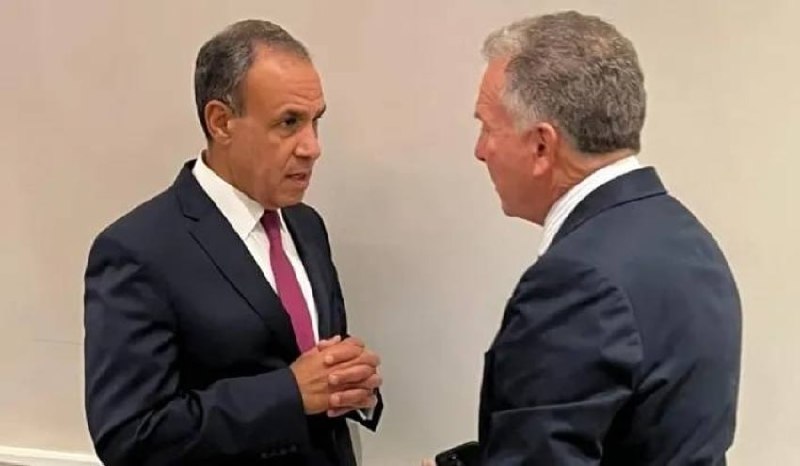
On 2 June 2026, the Trump administration delivered a threat to the Sultanate of Oman that would have been inconceivable from a formal American ally two decades ago. According to reporting by The Cradle Media and confirmed by intelligence assessments cited by the US-side wire community, Washington has warned Muscat that it must abandon its longstanding diplomatic relationship with Tehran — or face sanctions and the prospect of American airstrikes. The trigger for the ultimatum is Oman's apparent openness to a proposal from Iran for joint management of the Strait of Hormuz, the 34-mile maritime corridor through which roughly a fifth of the world's oil trade passes. What Washington frames as a matter of non-proliferation and regional stability, Muscat and its neighbours are likely to read as something more dangerous: the United States attempting to dictate the terms of sovereign foreign policy at gunpoint.
The Strait of Hormuz is not merely a commercial waterway. It is the arterial connection between the Gulf's oilfields and every market that depends on them. Any disruption — whether from military confrontation, economic coercion, or the forced realignment of Omani foreign policy under duress — sends tremors through a global energy system already operating with limited spare capacity. Oman has historically served as a quiet mediator in Gulf disputes, maintaining diplomatic relations with both Washington and Tehran. That positioning is not accidental. It reflects Oman's geopolitical reality: a small state wedged between two powers, reliant on both its relationships and its geography for security. Washington's ultimatum, if accurate, is an attempt to erase that mediating role by executive fiat.
The proposal reportedly under discussion would give Iran a formal consultative voice in the management of transit fees and security arrangements for the strait. Such an arrangement would fall short of Iranian sovereignty over the waterway — no credible account suggests Iran is seeking to blockade or close the strait unilaterally — but it would institutionalise Tehran's presence at a table Oman has historically preferred to keep informal and multilateral. The United States views any formal Iranian role in Hormuz governance as a strategic win for a regime it has subjected to maximum-pressure sanctions since 2018, and as a potential precursor to extractive demands on the energy flows that sustain Western economies. Intelligence assessments cited by US-side reporting indicate Washington believes Oman may support Iran's efforts to impose such fees. Whether that support amounts to enthusiasm for Iranian leverage or merely a preference for structured multilateralism over unilateral Iranian action remains unclear from the publicly available accounts.
The Cradle Media, which first reported the substance of the ultimatum, frames Washington's threat as the latest manifestation of a pattern: the United States using coercive leverage against states it considers insufficiently aligned with its Iran policy. The report notes that Trump himself used language — reportedly telling Omani officials that he would "bomb" the country if it proceeded with the joint-management proposal — that marks a qualitative escalation from the sanctions-focused pressure campaign of previous administrations. Sanctions are a familiar instrument in the Gulf context; the explicit invocation of military force against a partner state is not. Oman's treaty relationship with the United States, including access to ports and overflight rights, has long been understood as the foundation of its security architecture. Washington is now apparently willing to leverage that relationship asymmetrically, threatening the very stability it has historically claimed to protect.
The regional reaction to such an ultimatum, if it becomes public in its full scope, is not difficult to predict. Gulf Cooperation Council states have long balanced their relationship with Washington against a pragmatic engagement with Tehran. Saudi Arabia and the UAE have moderated their own Iran stances since 2023, engaging in back-channel diplomacy and reducing the heat in a proxy competition that was proving costly to both sides. An American ultimatum to a GCC partner to choose sides unambiguously would put pressure on that fragile détente. If Oman yields to Washington, Tehran loses a diplomatic interlocutor it has valued. If Oman resists — and Sultan Haitham bin Tariq has demonstrated a preference for strategic autonomy — the region gains a new fault line. Either outcome serves Iranian interests in one reading: yield means a more isolated Iran, resist means a more divided Gulf. This is the bind Washington has created by converting Oman's mediating position into a binary choice.
The structural logic here runs deeper than any individual policy disagreement. What Washington is attempting is the enforcement of dollar-denominated and sanctions-anchored dollar politics through direct coercion rather than through institutional multilateralism. The dollar's role in global energy pricing depends on the ability of the US Treasury and State Department to cut off or threaten actors who deviate from the sanctioned order. The Strait of Hormuz is a chokepoint precisely because the global financial architecture funnels Gulf oil revenues through dollar-cleared markets. Any arrangement that gives Iran a formal seat at the table — even a consultative one — introduces a counterparty the United States has spent eight years trying to isolate. This is not, at its core, about the specific terms of a fee arrangement. It is about whether the infrastructure of dollar hegemony can be maintained through coercion when diplomatic pathways have failed.
The stakes are concrete and extend well beyond the bilateral relationship between Washington and Muscat. An Oman forced to abandon its Iranian engagement loses its most useful diplomatic instrument in a volatile region. A Oman that resists American pressure and is subsequently subjected to sanctions loses a significant portion of its economic stability — the sultanate's port facilities and free-trade zones depend on international capital flows that could be disrupted by secondary sanctions. An Iran that is further encircled has fewer incentives to maintain even the grudging restraint it has shown on nuclear advancement and regional proxy activity since the 2023 diplomatic thaw. A Gulf region under renewed American pressure to choose sides accelerates the diversification of energy trade away from dollar-cleared markets — a trend that was already visible in Chinese yuan oil contracts and infrastructure investment across South and Southeast Asia. And a world in which chokepoints become the subject of explicit coercive threats from the reigning superpower is a world in which the rules-based order Washington claims to champion is further degraded.
What remains genuinely unclear from the available reporting is the extent to which the ultimatum represents a settled policy decision versus a negotiating position. American officials have not confirmed the specific language attributed to Trump. Oman's foreign ministry has not issued a public response. The proposal for joint Hormuz management may itself be in an early stage of discussion — a concept floated by Tehran, not yet accepted by Muscat. Intelligence assessments that Oman "may support" the fee proposal are not the same as confirmation that it will. It is possible that Washington is applying maximum pressure to a situation that has not yet crystallised, attempting to nip a diplomatic development in the bud before it requires a more complex response. It is also possible that the ultimatum is genuine and reflects a calculation that Oman's geographic and economic vulnerabilities make it an opportune target for the kind of coercive demonstration that might deter others.
Oman's historical record suggests it will not be easily bullied. The sultanate maintained its independence from the GCC's harder-line Iran positions throughout the 2010s, kept its ports open to Iranian commerce when others were enforcing sanctions, and has pursued a foreign policy grounded in survival rather than ideology. Sultan Haitham, who assumed power in 2020 following the death of Sultan Qaboos, has continued that tradition while also deepening security ties with Washington. The current crisis tests whether those ties are partnerships or something closer to a client relationship. The United States appears to have decided they are the latter. Whether Oman agrees is the question that will determine whether the Strait of Hormuz — and the broader architecture of Gulf security — remains as stable as it has been for the past four decades.
This publication's wire coverage of Gulf diplomacy and Hormuz transit arrangements has focused on the coercive dimension of Washington's posture rather than on framing the ultimatum as a legitimate enforcement mechanism. We have sought to surface the structural incentives driving Oman's mediating position and the counterparty risks for the regional order if that position is destroyed.
Wire provenance
This editorial synthesis draws on the following public wire/social posts:
- https://t.me/TheCradleMedia
- https://t.me/GeoPWatch