Iran's Kuwait strike meets Japan's tenth year of fertility decline
Kuwait took a direct Iranian drone strike on 3 June 2026, killing at least one and wounding 63; hours earlier, Nikkei Asia reported Japan's tenth straight year of fertility decline. Two slow-moving stories landed in one trading day.
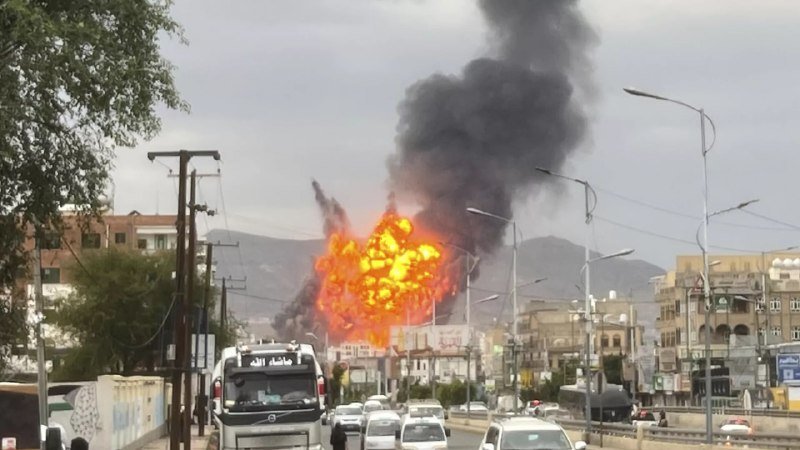
Kuwait International Airport took a direct Iranian drone strike in the early hours of 3 June 2026, killing at least one civilian and wounding 63 — seven of whom required major surgery — according to statements carried by regional channels including The Cradle, the Telegram-based monitors AMK Mapping and GeoPWatch, and the Gulf-focused account wfwitness. Hours earlier, Nikkei Asia reported that Japan's total fertility rate had fallen for a tenth consecutive year to a record low, based on figures released by Tokyo's health ministry. The two events are not in the same story. They landed in the same trading day, and they stress the same Asian growth model from opposite ends: the Gulf hydrocarbon leg, and the East Asian industrial-demand leg.
The Asian growth order of the post-Cold-War era rested on three legs — Gulf oil priced in dollars and exported east, East Asian manufactured exports to the world, and a US-anchored Pacific security architecture. The Kuwait strike challenges the first leg from the supply side. The Japan fertility data challenges the second from the demand side, by shrinking the largest mature Asian consumer base and forcing growth onto a contracting workforce. Both are slow-moving stories in their own right. Both arrived as acute, dated, tradable events in the same 24 hours, and neither has yet been priced into consensus.
The strike and what it reprices
The Cradle reported on 3 June 2026 that Kuwait's Health Ministry had confirmed 63 injuries, including seven who underwent major surgery. AMK Mapping's account added that one civilian was killed and described a "full health mobilisation" by the ministry. GeoPWatch carried the same casualty figures and the ministry attribution. The wfwitness channel circulated footage of the airport's damaged interior. None of these accounts has been independently confirmed by Reuters, AP, or AFP as of writing — a fact that belongs in any trader's note before the open of Asian markets.
Kuwait International Airport is the country's principal international gateway and a transit node for carriers including Jazeera Airways and Kuwait Airways. The economic significance of the strike runs through three channels. The first is aviation: airport disruption forces the rerating of regional transit and pushes traffic through Dubai, Doha, or Bahrain, raising the cost of doing business in the Gulf for every airline, shipper, and tourist operator. The second is insurance: a direct strike on a Gulf state's civilian infrastructure is not in the standard actuarial table, and underwriters will price it as a structural addition rather than a one-off, the moment it is treated as precedent. The third is oil-market signalling: Kuwait is a member of OPEC+, the producer bloc that has been withholding supply to defend prices. A direct Iranian attack on a fellow producer's civilian infrastructure is a signal that the cartel's internal security bargain is breaking down. The dominant Western energy-desk read treats this as a transient risk premium. The structural read is that Gulf states' two-decade investment in export redundancy assumed intermittent, externally directed threats — and a direct strike on a capital-city airport is neither.
Japan's tenth year of quiet decline
While Gulf infrastructure absorbs an external shock, Japan's economy absorbs a self-inflicted one. Nikkei Asia reported on 3 June 2026 that Japan's total fertility rate had fallen for a tenth consecutive year to a record low, based on figures released by Tokyo's health ministry. The specific 2025 figure was not in the available reporting, but the direction is unambiguous: a tenth consecutive year of decline, with no stabilisation in sight.
Demographic decline is, in the short term, a fiscal story. A shrinking working-age population means a shrinking tax base, rising pension and healthcare liabilities, and a fiscal arithmetic that becomes tighter every year the data does not turn. Tokyo has tried the standard policy mix — expanded childcare subsidies, expanded foreign-worker visas, an aggressive robotisation push — and has slowed the decline without reversing it. The constraint is structural. In the long term, demographics are a productivity story: every additional year of decline forces Japan to choose between higher immigration, higher capital intensity, higher fiscal transfers to caregiving, or a slower-growth equilibrium with a smaller per-capita pie. None of these choices is costless, and each is now more politically loaded because the trajectory has now lasted a full decade without reversal.
The fertility data does not cause a crisis tomorrow. It makes every other fiscal and monetary decision a tighter, more politically contested choice than it would otherwise be — a point the consensus has been aware of for years and has, on the evidence, chosen to defer.
Two stories, one growth model
The conventional desk analysis treats the Kuwait strike and the Japan fertility data as unrelated. The case for treating them together is structural. The Asian growth model of the post-Cold-War period rested on three legs: Gulf hydrocarbons priced in dollars and exported to Asia; East Asian manufacturing exported to the world; and a Pacific security architecture provided, ultimately, by the United States. The Kuwait strike challenges the first leg from the supply side, by raising the implicit cost of every barrel, every flight, and every shipment that moves through the Gulf. The Japan fertility data challenges the second leg from the demand side, by shrinking the largest pool of mature Asian consumer demand and forcing the work of growth onto a smaller and older workforce. The third leg is not in either story directly, but it is the obvious common cause of both shocks arriving in the same week.
The counter-read is that both stories are already discounted. Gulf insurance markets have been pricing Iran-related risk for years. Japan's demographic decline has been the dominant macro story for three decades, and the policy toolkit — painful as it is — is well understood. The risk to this counter-read is sequencing. The Kuwait strike is the first Iranian attack on a Gulf state's civilian airport in the current escalation; the Japan fertility data is the tenth consecutive year of decline, but with no stabilisation. Both arrive at a moment when the room to absorb them — fiscal space in Tokyo, security redundancy in the Gulf — is structurally tighter than it was a decade ago. Shocks do not have to be unprecedented to be cumulatively destabilising.
Stakes and what remains unverified
The immediate stakes are tradable. Gulf risk premia, regional aviation insurance, and oil futures will move on the next 48 hours of confirmed information. The structural stakes are larger. If Iran can strike a fellow Gulf state's airport with relative impunity, the implicit security guarantee that has anchored Gulf capital flows to the United States is more conditional than consensus has priced in. If Japan's fertility decline continues on its current trajectory, the world's third-largest economy faces a working-age contraction that no industrial policy, however well-funded, can fully offset. Both conclusions are uncomfortable, and neither is the preferred read of the desks that have spent two decades assuming the Asian growth model would continue on autopilot.
What the available sources do not yet establish, and what this publication flags as a verification limit: the specific casualty breakdown by nationality, the operational status of Kuwait International Airport's runway and terminal facilities, the full list of Iranian targets across the Gulf, and the precise figure for Japan's 2025 total fertility rate. The first three await Western-wire confirmation; the fourth is in Nikkei's longer write-up. Until then, the prudent read is that two of Asia's three growth-model legs are under simultaneous, credible stress — and that the policy responses are not yet visible.
Desk note: Monexus reads these two Telegram-sourced stories together as a single economic event, while the wire desks are likely to file them as separate Middle East and East Asia items. The editorial choice is deliberate: the connection between Gulf hydrocarbon risk and East Asian demographic risk is structural, not coincidental.
Wire provenance
This editorial synthesis draws on the following public wire/social posts:
- https://t.me/thecradlemedia
- https://t.me/AMK_Mapping
- https://t.me/GeoPWatch
- https://t.me/wfwitness
- https://t.me/NikkeiAsia