Kuwait boots two Iranian diplomats after airport strike, in the sharpest Gulf signal of the widening war
Kuwait declared two Iranian diplomats persona non grata within thirteen hours of Iranian drones striking its airport — a small but legible assertion of agency in a war the world's press is still framing as a bilateral US-Iran story.
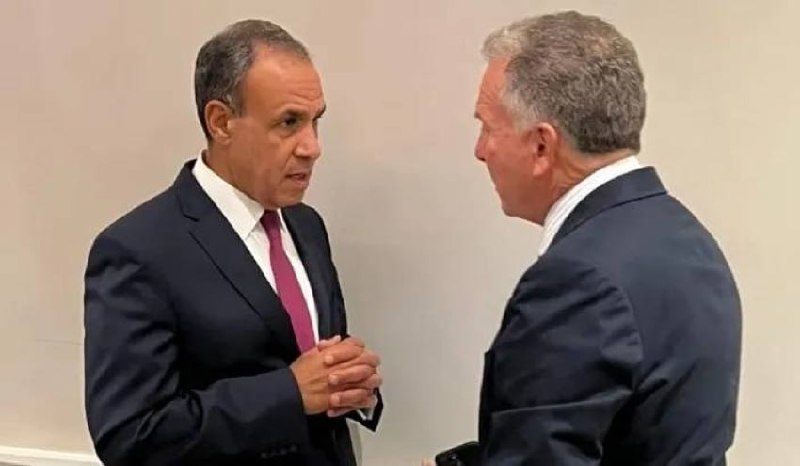
At 13:52 UTC on 3 June 2026, Kuwait declared two Iranian diplomats persona non grata and ordered them out of the country, capping a day in which Iranian drones and missiles had struck the small Gulf state's airport and forced a US military response. The action is a sharp diplomatic signal from a state that has historically preferred quiet diplomacy over public confrontation, and it lands inside a rapidly widening conflict that the world's press has so far struggled to name clearly.
The sequence is worth tracing carefully. By 00:46 UTC, the US military had announced it had carried out "self-defense strikes" against Iranian drones and missiles targeting Kuwait and Bahrain. By 09:32 UTC, reports confirmed Iranian drones had struck Kuwait's airport. By 12:56 UTC, Al Jazeera was reporting that Kuwait and Bahrain were under a missile and drone barrage. By 13:19 UTC, Kuwait had summoned Iran's chargé d'affaires, lodged a formal protest, slashed the size of Iran's embassy staff, declared two Iranian diplomats persona non grata, and ordered them out. The tempo — roughly thirteen hours from interception to expulsion — tells you something about how Kuwait reads its position.
What actually happened
The immediate chain is well documented in the wire and aggregator traffic. Iranian drones and missiles struck Kuwait's airport, causing what Middle East Spectator, citing the Kuwaiti framing, described as "near total destruction" of the facility. The US military intervened with intercepts and what it called self-defense strikes. Kuwait's response was diplomatic rather than military: the foreign ministry summoned Iran's chargé d'affaires, the diplomatic note was filed, the embassy footprint was reduced, and two named diplomats were given a window to leave.
That sequencing — diplomatic first, military second (via the US), public messaging last — is consistent with the playbook Kuwait has used in past standoffs with Tehran. It is also, notably, the playbook of a state that has US forces forward-deployed on its soil and that can rely on the US umbrella for kinetic defence while reserving its own bandwidth for the diplomatic register. The two Iranian diplomats expelled are described as "medium-level," a useful tell: Kuwait is sending a signal without rupturing the relationship entirely.
The structural frame — Gulf states as staging ground
It is tempting to read this as a bilateral Kuwait-Iran dispute. The structural picture is messier. Kuwait, Bahrain, Qatar, the UAE, Oman and Saudi Arabia are all small-to-mid-sized states sitting on top of the hydrocarbon reserves that the global economy runs on and the shipping lanes that global trade depends on. They are also the host territories for the bulk of US force projection in West Asia — the Fifth Fleet's home port is in Bahrain, the main US air operations centre for the Gulf sits in Qatar, and Kuwait has hosted US ground forces for decades.
What that means in practice is that any Iranian move against a Gulf state is, almost by definition, also a move against the US posture in the Gulf. Conversely, any US move against Iran will tend to land on Gulf territory. The Gulf monarchies are not spectators in the US-Iran contest, but they are also not the principals. They are the ground.
The Western press has, with a few exceptions, framed the escalation as "US-Iran clashes" — a bilateral contest between Washington and Tehran. That framing is technically defensible. It is also strategically incomplete. It treats the smaller Gulf states as the backdrop to a great-power story, rather than as polities with their own agency, their own populations, and their own (limited) room to manoeuvre. Kuwait's expulsion of the two diplomats is, in that light, a small but legible assertion of agency: we are the ones whose airport was hit, we are the ones filing the protest, we are the ones deciding who stays in the embassy.
The counter-narrative — Iran and the "resistance" frame
Iranian state media, where it has been possible to verify positions, frames the broader exchange as a defensive act against US forward presence on its own periphery. The standard Tehran line — that Gulf state territory is legitimate Iranian-security terrain because US forces operate from it — has been the through-line of Iranian commentary on the regional security order for years. The argument is that you cannot base an adversary's air force on your soil and then claim neutrality.
That argument has a structural logic worth taking seriously, even where the operational behaviour is not. Iranian strikes on a civilian airport are not a defensive act in any reading of international law, and the targeting of Gulf state infrastructure, rather than US bases specifically, is the tell that the framing is doing work the facts will not bear. The line between "striking at the US presence" and "striking at Kuwait" was always going to be erased by the first exploded terminal. Kuwaiti civilians do not become combatants because the US has a base nearby.
The credible version of the Iranian position — that the Gulf security architecture is fundamentally hostile to Tehran, that the US presence is the driver of regional instability, that the monarchies have outsourced their defence to Washington — survives the specific incident intact. The specific incident, however, also demonstrates the cost of that architecture's failure mode for the smaller states on whose territory it runs. The argument is being made, in effect, with Kuwaiti property.
Stakes
The short-term stakes are kinetic. If the US-Iran exchange continues to escalate, Gulf state infrastructure — airports, ports, refineries, desalination plants — is the terrain on which it will play out. The medium-term stakes are about the diplomatic architecture that the Gulf states have spent four decades building: the GCC, the various normalisation tracks, the careful hedging between Washington and Beijing. A widened war would, at minimum, force Kuwait, Bahrain and others back into a tighter embrace of the US umbrella at exactly the moment that umbrella looks thinner.
What remains uncertain is whether the Iranian strikes were calibrated — a message to the US, with Kuwaiti infrastructure as the cost of delivery — or whether they represent an operational decision to treat the Gulf monarchies as legitimate targets in their own right. The sources do not specify, and Tehran has not, in the material reviewed, made the distinction clear. The next forty-eight hours will tell.
Desk note: Monexus has covered the US-Iran escalation in the Persian Gulf primarily through the lens of Gulf state agency — Kuwait and Bahrain as actors, not as backdrop — rather than as a bilateral Washington-Tehran story. The diplomatic register of Kuwait's response, as distinct from the military register of the US response, is the news.
Wire provenance
This editorial synthesis draws on the following public wire/social posts:
- https://t.me/ClashReport
- https://t.me/Middle_East_Spectator
- https://t.me/bricsnews
- https://t.me/CryptoBriefing
- https://t.me/CryptoBriefing
- https://en.wikipedia.org/wiki/United_States_Fifth_Fleet