Letter: Qeshm, Hormuz, and the word 'self-defense'
On 2 June 2026, CENTCOM announced it had intercepted multiple Iranian missiles aimed at Kuwait and Bahrain and struck a military site on Qeshm Island. The framing of the exchange — and which country's read prevails — will determine what the next seventy-two hours look like.
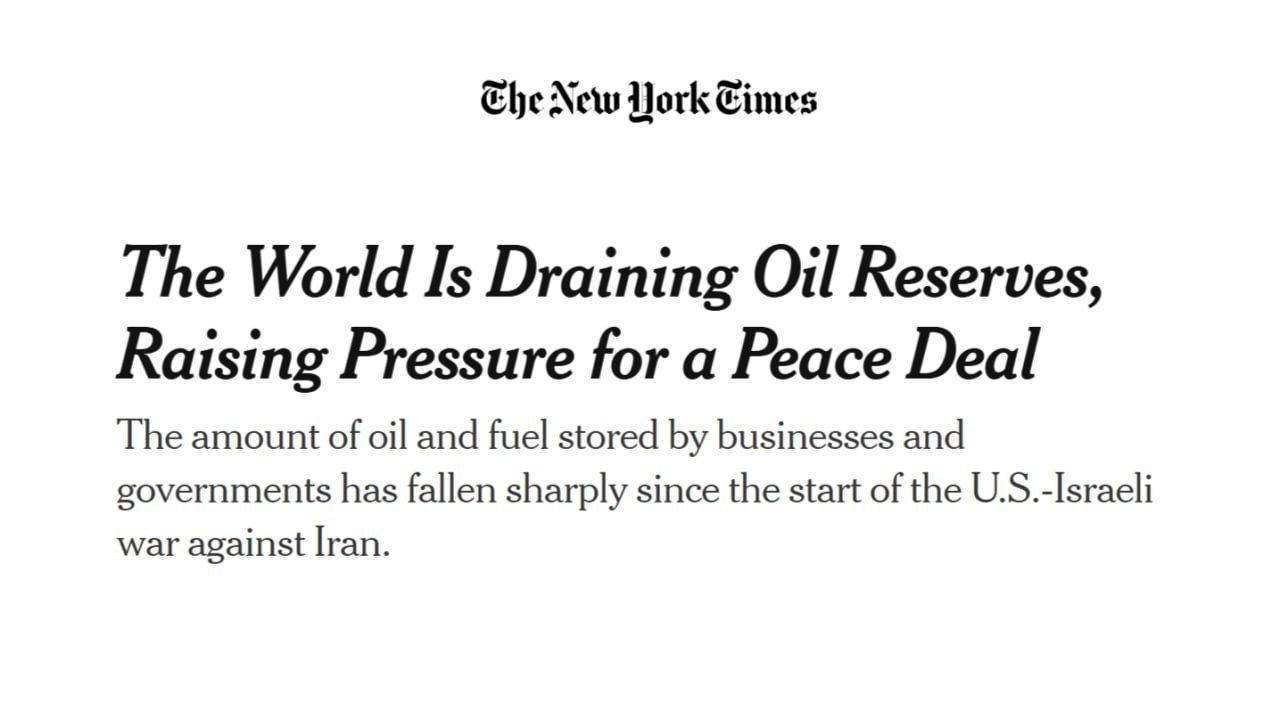
On the evening of 2 June 2026, in a span of hours bracketed between 23:35 UTC and the small hours of 3 June, the United States Central Command announced it had intercepted multiple Iranian ballistic missiles and drones aimed at American forces stationed in Kuwait and Bahrain, and that it had conducted a self-defense strike against an Iranian military ground-control station on Qeshm Island in the Persian Gulf. France 24's live coverage, timestamped 00:43 UTC on 3 June 2026, carried the announcement as the headline item on its Middle East live blog. The sequence, in other words, is not in dispute at the level of what happened. The dispute, such as it is, is over what to call it.
That is the subject of this letter, because the words are doing real work. A strike on Iranian soil, by a foreign military, against a military installation, is — in the plain meaning of the UN Charter — the use of force against the territory of another state. The US is calling it a "self-defense strike." Iran, when its English-language channels catch up, will call it an act of war. The legal predicate of the next seventy-two hours lives entirely inside that gap.
What the wire actually shows
The published chronology, as carried by the channels that picked up CENTCOM's statement, runs in tight sequence. The first item, posted at 23:35 UTC on 2 June via the @wfwitness channel, summarised CENTCOM's claim that American forces had intercepted multiple Iranian ballistic missiles and drones and conducted a self-defense strike on a military ground-control station on Qeshm Island. Within minutes, at 23:37 UTC and 23:38 UTC, the @osintlive and @Middle_East_Spectator channels carried the same statement. The @GeoPWatch account posted a confirmation that CENTCOM had struck Qeshm at 00:15 UTC on 3 June; the @BellumActaNews channel added its own short-form report at 01:53 UTC. A second wave of Iranian drones targeting US forces in Kuwait, which failed to reach their targets, was reported at 01:26 UTC. France 24's live blog, the closest thing to a wire summary in the sources we have, folded the whole sequence into a single running item.
The pattern is the pattern. Coordinated missile-and-drone salvoes aimed at US positions in Gulf monarchies have been a feature of the regional confrontation since 2019. What is novel here is the venue of the US response: a military site on Qeshm Island, struck rather than merely shadowed, and struck with a public statement attached.
The framing contest
There are two coherent reads of the same event. The first is the US read: a hostile state fired ballistic missiles and drones at American servicemembers in two allied countries, and the United States exercised its right of self-defense under Article 51 of the UN Charter by destroying the military assets that had been used to coordinate the attack. That read is legally narrow, factually anchored, and politically defensible. It is also the read the White House will spend the next three days trying to make the only read.
The second read is the read that Tehran will offer: the United States, the country that has maintained a comprehensive sanctions regime against Iran for the better part of a decade, struck a piece of Iranian sovereign territory in the middle of the night, and is now attempting to dress the strike in the language of self-defense. That read is also internally coherent. The phrase "self-defense" has been used in the past twenty years to justify strikes in Iraq, Syria, Pakistan, Yemen, Somalia, and Libya. The legal philosophers of the Just War tradition would have something to say about each of them. The point is not that the two reads are equally persuasive; the point is that the question of which one prevails is a political, not a factual, question.
What the geography tells us
Qeshm Island is not a symbolic target. It sits at the mouth of the Strait of Hormuz, through which roughly a fifth of the world's seaborne oil transits. It hosts Iranian Revolutionary Guard Corps naval facilities and surveillance assets that have, in past confrontations, been associated with harassment of commercial shipping. Striking it is a signal that the United States is willing to escalate vertically — to take out hardened Iranian military infrastructure — while continuing to insist, in public, that the exchange is bounded and discrete.
This is the pattern the past decade has trained every regional capital to read. A limited, technically-defensible strike. A public posture of non-escalation. A reversion to economic pressure and proxy competition within seventy-two hours. The distance between those two things is the room the next round of conflict lives in.
For the Gulf monarchies, the calculation is more immediate. The missiles were aimed at their territory, or at US forces stationed on it. Kuwait and Bahrain have not yet spoken on the record in the sources we have; their room for manoeuvre is finite. Saudi Arabia and the UAE will be asking, in private, whether the US air defence umbrella that intercepted this wave is as reliable on the third or the fourth, and what they are expected to do if the answer turns out to be no.
Stakes and the open questions
What is not in the public record, as of the timestamps in the thread, is the casualty data on either side. CENTCOM's statement does not enumerate losses on the US side, and the Iranian side has not yet published a public assessment — at least not in the sources the wire has carried. The market has not yet fully priced the strike; the next twelve hours of Asian trading will be the first honest price signal. The diplomatic off-ramp, if there is one, has not been identified by name. The Omani and Qatari back-channels, the IAEA, the GCC, and the UN Security Council are the obvious venues; whether any of them can do the work of last time is an open question.
The White House will want the crisis framed as concluded by the end of the working week. Tehran will want it framed as ongoing. The question of which framing wins is the question that determines whether the next seventy-two hours see de-escalation, or yet another major kinetic event between the United States and Iran in a decade of shadow war.
Desk note: Monexus carried the CENTCOM statement as posted by the channels that picked it up first, and folded France 24's running summary on top; the Iranian counter-statement, casualty figures, and any UN or GCC readouts will be added to the wire as they appear.
Wire provenance
This editorial synthesis draws on the following public wire/social posts:
- https://t.me/wfwitness
- https://t.me/Middle_East_Spectator
- https://t.me/osintlive
- https://t.me/GeoPWatch
- https://t.me/BellumActaNews
- https://t.me/wfwitness
- https://t.me/france24_en