Mashhad shrine commissions a jihad inscription for Eid al-Ghadir
A new inscription at the Holy Shrine of Imam Reza in Mashhad binds the Eid al-Ghadir commemoration to a martial, provincial-loyalty register — a small, deliberate act of cultural framing in 2026.
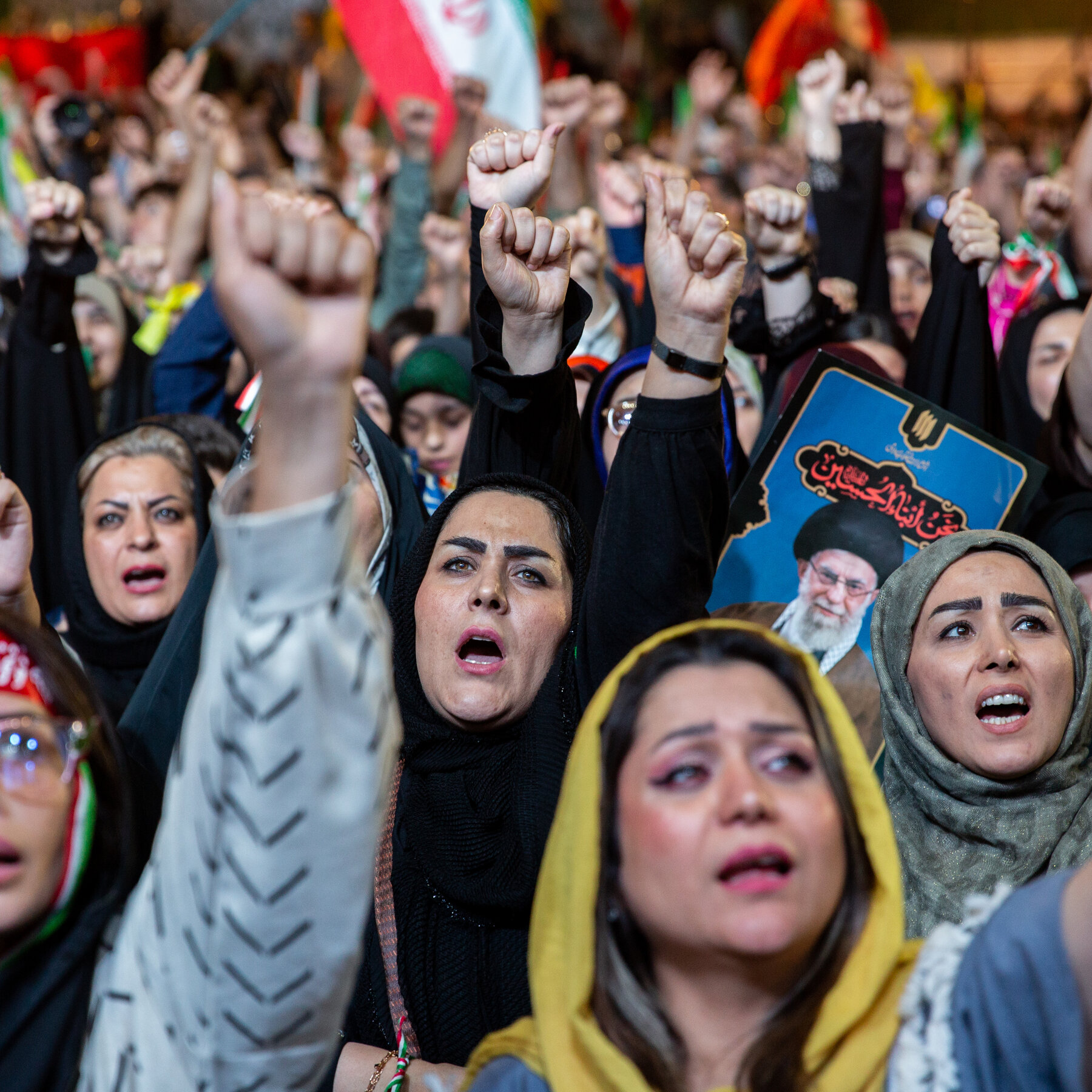
On 3 June 2026, a new inscription appeared on the wall of the Holy Shrine of Imam Reza in Mashhad. The text, photographed and circulated by Iran's Tasnim News Agency, marked the Eid al-Ghadir commemoration. The line it carries is short and unblinking: "We are from Iran and we are men of jihad. We stand by the province till the end." It is the second clause — the "till the end" — that does most of the work. Eid al-Ghadir, the Shia holiday that falls on 18 Dhu al-Hijjah, is theologically about the Prophet Muhammad's designation of Ali as his successor. The Mashhad installation is, more pointedly, about something else: the binding of religious memory, provincial identity, and a martial register in a single public sentence.
The inscription is a small act of cultural positioning, and that is the point. Mashhad's shrine — the largest mosque complex in the world by area, the resting place of the eighth Shia Imam, and one of the largest annual pilgrimage sites on earth — is a place where the Iranian state, the clergy, and the cultural wing of the armed forces have long negotiated what counts as legitimate public devotion. The latest inscription is a reminder that, in 2026, that negotiation has produced a particular answer: devotion that is national, that is local, and that does not flinch from the word jihad.
The text, in its setting
Eid al-Ghadir commemorates the Prophet's statement at Ghadir Khumm, in which, by the dominant Shia reading, he named Ali ibn Abi Talib as his immediate successor. It is one of the most consequential dates in the Shia calendar — a moment of covenant, of designation, of contested inheritance. Theologians, not soldiers, are the proper orators.
The Mashhad installation chooses a different orator. The line installed on the shrine wall is a known chant in Iranian religious-political culture. It is recited at rallies, at funerals of "martyrs," at Basij and IRGC-affiliated events, and at provincial cultural gatherings. Its first clause ("we are from Iran") is a statement of nation. Its second ("we are men of jihad") is a statement of vocation. Its third ("we stand by the province till the end") is a statement of place. The three together are not a devotional formula; they are a posture.
Tasnim, the state-affiliated outlet that circulated the image, presented the installation without commentary on its martial register. In Tasnim's framing, the line is a self-description of a people — the people of Razavi Khorasan Province, of which Mashhad is the capital — and a pledge of solidarity. The reader is left to translate.
The other reading
The same words, in a different context, would carry none of the freight. "Jihad" in its Quranic and classical sense is the striving of the believer — a word used in ordinary devotional speech for the effort to live a moral life, fast the month of Ramadan, or attend to a neighbour. The chant could be read in that register: the people of the province striving, faithfully, on a holy day. The "till the end" could be a religious-mystical commitment to the path of God.
This reading is sincere. It is also incomplete. The phrase "we are men of jihad" has been a fixture of Iranian paramilitary cultural vocabulary since at least the Iran-Iraq war, and its use in a permanent public installation at the shrine of the eighth Imam is the kind of choice that does not happen by accident. Whoever commissioned the inscription — and the shrine's cultural office, like most public religious institutions in Mashhad, is administered by Astan Quds Razavi, the enormous charitable foundation under the supervision of a state-appointed custodian — selected that wording, in that place, on that day. The selection is the message.
The counter-reading is worth registering because the Iranian religious and political establishment, when challenged on similar phrasing, often returns to the spiritual register. The line between spiritual striving and armed readiness is, in Iranian public discourse, deliberately porous — a feature of the system, not a bug.
The shrine as a canvas
Astan Quds Razavi, the foundation that administers the shrine, is one of the wealthiest charitable organisations in the Middle East. It is also, functionally, an arm of the Iranian state — its head is appointed by, and reports to, the Supreme Leader. The shrine is not just a pilgrimage site; it is a public estate, a media platform, and an institution of memory. Decisions about what gets written on its walls are decisions about what the public religious space is taken to mean.
The Mashhad installation sits inside a longer pattern. Inscriptions at the shrine are updated regularly — for the birthdays and martyrdom anniversaries of the imams, for the Islamic New Year, for national occasions. The text of those inscriptions has drifted, over the decades, from the purely devotional toward the political-national. The Mashhad reading rooms, libraries, and museum wings are filled with this drift: a fusion of religious commemoration, anti-imperial framing, and provincial identity. The 2026 inscription is one more stroke.
What makes it worth pausing on is the explicit "jihad" register. In 2026, Iran is operating in a regional environment in which the language of readiness, of "standing till the end," has direct material referents. The direct Iran-Israel exchanges of 2025 and into 2026, the slow grind of the nuclear file, and the persistent friction with the United States have all made martial vocabulary a normal part of state-religious speech. The Mashhad inscription is the local expression of a national mood.
What it signals, and what it doesn't
The installation is not a policy document and should not be read as one. It is an act of cultural framing, in a moment when the public religious space is being asked, gently and continuously, to do more framing work than it has in past decades. The Islamic Republic's founding compact — a fusion of clerical authority, popular sovereignty, and armed vigilance — is being re-stated, in small public sentences, across the country. Mashhad is simply one of the places where the sentence is most legible.
The reading this publication would advance is that the inscription is best understood as a small data point in a much larger pattern of public-space politics. Iranian state-cultural production has, for some years, moved in the direction of making the shrines and public religious sites function as visual bulletins of the prevailing official mood. The Mashhad installation is one bulletin.
What remains uncertain — and what the sources do not specify — is the exact commissioning process, the institutional sign-off, and whether similar installations have been placed in other shrines in the same period. Those are questions for follow-up. What is in the public record is the line itself, the wall, the date, and the agency that circulated the photograph.
The phrase will be read by Iranian Shia faithful in the spiritual register, by Iranian conservatives in the martial register, and by foreign observers in the geopolitical register. The installation's productivity is precisely that it permits all three readings at once, and rewards only the one the reader is already inclined toward. That is what the wall is for.
Monexus covered this as cultural reporting on the iconography of Iranian state-religious public space, not as a stand-alone religion or geopolitics story — the question is what the wall is being used to say, and to whom.
Wire provenance
This editorial synthesis draws on the following public wire/social posts:
- https://t.me/tasnimnews_en
- https://en.wikipedia.org/wiki/Eid_al-Ghadir
- https://en.wikipedia.org/wiki/Imam_Reza_Shrine
- https://en.wikipedia.org/wiki/Astan_Quds_Razavi
- https://en.wikipedia.org/wiki/Basij