RBI denies $12B gold-sale report as India's battery-storage market breaks its own auctions
On 3 June 2026, the Reserve Bank of India denied a $12 billion gold-sale report. Hours earlier, Nikkei Asia reported India's battery-storage auctions have produced a queue of unfinanceable projects. Monexus treats them as a single observation about the gap between Indian policy intent and financial execution.
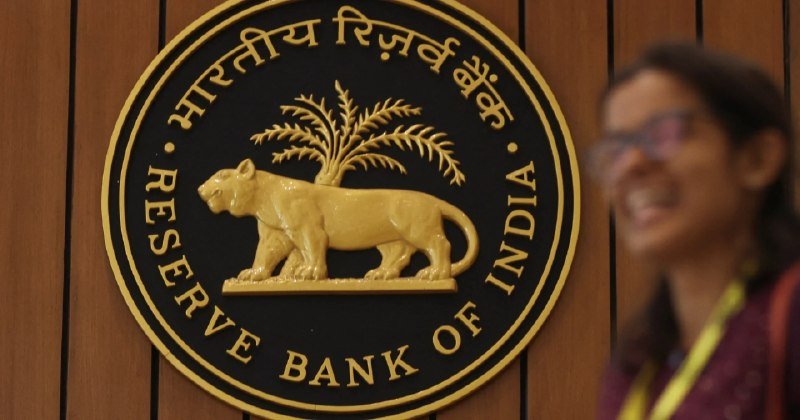
On 3 June 2026, the Reserve Bank of India issued a categorical denial of a media report claiming the central bank had offloaded roughly $12 billion in gold from its reserves. Within hours, a separate dispatch from Nikkei Asia — distributed via the outlet's Telegram channel — laid out a different kind of stress in the Indian economy: battery-storage developers winning contracts at auction prices so low that the projects cannot be financed. Two stories, one morning, one uncomfortable truth. The world's fastest-growing major economy is running into the limits of how it allocates both its savings and its industrial ambition.
That contradiction is the editorial point. New Delhi's official position on gold reserves, the binding constraint on its battery-storage build-out, and the broader question of how a developing economy manages the gap between its balance-sheet firepower and its infrastructure pipeline are all now under fresh scrutiny. The gap between Western financial-wire framing and the lived reality of Indian state capacity is wider than at any point in the last decade.
The $12 billion that wasn't
A wire report circulating on 3 June claimed the RBI had liquidated approximately $12 billion in gold. The central bank's response, picked up by CryptoBriefing's Telegram channel, was unambiguous: the report was inaccurate. The denial matters because India's official gold holdings have become a marker of its monetary-sovereignty narrative. Over the past three years, the RBI has steadily increased its gold reserves while Western analysts parsed the move as either a hedge against dollar-dependence or a quiet diversification play. A $12 billion sale — had it been real — would have been a striking reversal. The denial leaves the question of what, if anything, has actually changed in the RBI's reserve mix, hanging.
The episode is also a reminder that reporting on emerging-market central banks runs through a narrow channel. Major wires carry RBI press releases when they confirm them; when a sale is claimed, attribution can blur. A figure of $12 billion, whether accurate or not, is the kind of number that moves markets in the minutes after publication and gets walked back in the hours after. By the time New Delhi's official response is fully absorbed, the market has already traded the rumour.
A counter-read is worth naming. Some market participants interpret the original report as the speculative positioning that surfaces whenever a major emerging-market central bank is rumoured to be active in the gold market. In that framing, the report may have reflected genuine flow — a smaller RBI operation, perhaps, dressed up in a larger number — rather than pure invention. The RBI is unlikely to confirm or deny the smaller version. Both the official denial and the unofficial speculation have constituencies; neither is a complete account.
When the cheapest bid is the most expensive one
The Nikkei Asia report, distributed the same morning, set out a more durable problem. India's battery-storage build-out — a pillar of its energy transition and a critical buffer for the country's solar additions — is being undermined by the structure of its own auctions. Developers are winning contracts at tariffs so low that the projects cannot be financed on commercial terms. The result is a queue of awarded capacity that may never break ground.
India's battery-storage ambition is not small. The country needs grid-scale storage to make its solar and wind additions dispatchable; it has set successive capacity targets and run competitive auctions modelled on the solar-tender format that worked in the previous decade. But solar auctions were viable because module costs collapsed in parallel. Battery costs have not collapsed the same way, and tariffs awarded in the past eighteen months have, in many cases, fallen below the level at which a bank will underwrite construction debt.
This is the classic auction-design failure: the winning bid is not the one that gets built; the winning bid is the one that loses the least money if the developer quietly walks away. India's battery pipeline is now full of the latter. Until the auction design is recalibrated — through viability-gap funding, longer-tenor debt, or a higher ceiling price — the gap between announced gigawatts and operational ones will continue to widen.
The counter-narrative is the standard industrial-policy one: auction pressure forces developers to find cost reductions they would not otherwise pursue, and India's battery programme will eventually close the gap the way its solar programme did. The evidence for that read is real but stretched. The solar module is a relatively standardised global commodity; battery cells are not. The cell cost-down curve is real, but it is not the same curve, and it does not arrive on the same schedule.
The structural frame
Both stories sit inside a larger pattern. India is a country whose economic statecraft has been praised for its ambition — the production-linked incentive schemes, the infrastructure push, the digital public goods — and criticised for its execution gaps. The two critiques are not contradictory; they are the same observation from two angles. New Delhi can design programmes faster than the financial system can price them.
The gold-reserve narrative runs on a different clock. India has been a net buyer of gold for most of the post-liberalisation era. The country's private gold holdings are estimated at well over 10,000 tonnes, much of it held outside the formal banking system. The RBI's official gold, by contrast, is a smaller and more visible number. A $12 billion move would be material to that official figure but not regime-changing for the country's overall gold position. The fact that the rumour moved markets at all says more about the signal value of an RBI action than about the underlying tonnage.
The pattern in both cases is the same: a country whose macroeconomic policy and industrial policy are both running on a faster cycle than the financial plumbing that has to clear them. Auctions clear at prices the banking system will not honour. Reserves are reported at numbers the wire system is uncertain about. In between, the policy intent is real; the execution is what is contested.
A Global South framing is worth stating plainly. The Western wire reflex in stories like these is to read the policy gap as a failure of capacity. The more honest read, visible from New Delhi, is that the gap reflects the speed at which a developing economy is being asked to design, price, and execute programmes that mature economies have spent decades iterating on. The Indian state is, in effect, running a series of large-scale industrial experiments in real time. Some will fail. The aggregate trajectory is harder to read than any single auction result.
Stakes
If the battery-storage pipeline does not clear, India's 2030 clean-energy targets become harder to meet without additional coal or gas backup. The cost of that backup — financial and environmental — will be borne by the state distribution companies, which are already under fiscal strain. If the gold-reserve question is reopened in a more durable way, the signal to the market is that New Delhi is preparing for a stress event the wires have not yet priced. Neither outcome is necessary. Both are within the range of plausible 2026 outcomes.
The deeper stake is reputational. India is positioning itself, in this decade, as a third pole of the global economy — the country that can sit between the US-China axis and the Global South, accumulating both financial weight and industrial depth. The gold story, even if denied, is a reminder that reserve management in this position is more visible than it used to be. The battery story is a reminder that industrial policy needs to be priced, not just announced. Both are tractable problems. Neither is a crisis. But the working assumption in New Delhi — that execution can lag announcement by a quarter or two without consequence — looks shakier than it did a year ago.
The time horizon to watch is the second half of 2026. By then, the next battery-storage auction round will have cleared at a tariff that either restores bankability or confirms that the pipeline is stuck. By then, the RBI's next reserve disclosure will either confirm a routine quarter or surface a number that reopens the gold question. The wires will read both as data points. They are, in fact, two tests of the same proposition: whether Indian state capacity, in 2026, can keep up with Indian state ambition.
How Monexus framed this: the wire coverage ran the gold denial and the battery-storage story in parallel; this piece treats them as a single observation about the gap between policy intent and financial execution.
Wire provenance
This editorial synthesis draws on the following public wire/social posts:
- https://en.wikipedia.org/wiki/Reserve_Bank_of_India
- https://en.wikipedia.org/wiki/Gold_reserves_of_India
- https://en.wikipedia.org/wiki/Battery_energy_storage_system
- https://en.wikipedia.org/wiki/Solar_power_in_India