Trump says Iran agreed to never possess a nuclear weapon. The public record contains only Trump's voice.
A 3 June 2026 announcement carried three times in an hour, by three different channels, but sourced to a single voice — and undercut by a misnamed Supreme Leader.
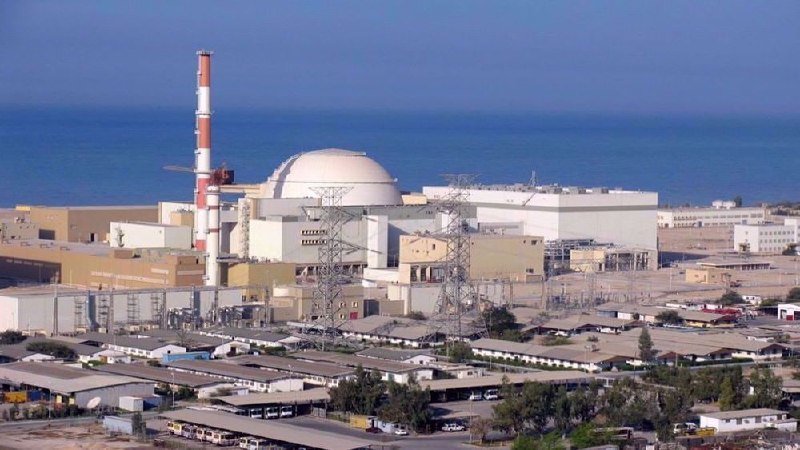
At 11:54 UTC on 3 June 2026, US President Donald Trump announced that Iran had agreed never to possess a nuclear weapon, declaring the commitment on the same morning in which he separately described Iran's Supreme Leader as "not doing great" and reportedly "missing a lot of different parts." The two statements were both delivered by the president and relayed by Telegram channels including BRICS News, The Cradle Media, and LiveMint, and they sit at the centre of a negotiation whose shape — let alone its substance — remains outside any independently verifiable text more than an hour after the announcement.
What is being tested here is not the existence of negotiations. Both Washington and Tehran have, at various points over the past decade, confirmed contact of some kind, and the body of work tracking US-Iran diplomacy has never been short of interlocutors. What is being tested is whether the 3 June announcement is a substantive agreement, a framework, a presidential characterisation of a framework, or simply a posture ahead of a future event whose terms are still in motion. The available sourcing permits cautious but honest reporting — and that honesty requires a clear ledger of what is confirmed and what is not.
The claim as reported
Trump's 3 June statements, as relayed by BRICS News, came in two distinct beats. The first, at 10:55 UTC, was a personal characterisation of Iranian Supreme Leader Ali Khamenei: "not doing great," reportedly "missing a lot of different parts." The second, at 11:54 UTC, was the substantive claim: "Iran has agreed to never possess a nuclear weapon." Both items were posted by the same channel within an hour of one another, and both were attributed to Trump directly.
The Cradle Media carried the same material at 10:46 UTC, with one significant addition: the framing that Iran's Supreme Leader is "participating in ongoing negotiations with the US." The wording matters. "Participating" is a present-tense, active descriptor that — if accurate — narrows the field considerably. It rules out a posture in which Tehran is merely receiving proposals or letting intermediaries float terms. It implies direct, sustained contact at the highest level of the Iranian state.
LiveMint, the Indian business outlet, added a further detail at 11:43 UTC: Trump "would probably meet with Iranian Supreme Leader Mojtaba Khamenei at some point if things 'work out.'" This is the most contestable single claim in the public record, and it warrants its own paragraph — because Mojtaba Khamenei is not, at the time of writing, the Supreme Leader of Iran. He is the second son of Ali Khamenei and has long been the subject of succession speculation, but the post has not been conferred on him. Either LiveMint's phrasing misidentifies the principal Trump expects to meet, or the meeting is being framed in terms that anticipate a transition that has not occurred.
What corroboration would look like
A verifiable announcement of the kind Trump described would, in the normal diplomatic record, carry several features. There would be a document — a Joint Comprehensive Plan of Action–style text, or at minimum a joint statement, signed or initialled by named officials. There would be parallel readouts from both capitals, ideally from the Iranian foreign ministry and the US State Department, naming counterparties and the precise commitments exchanged. There would be a scheduled or unscheduled confirmation from the International Atomic Energy Agency on the state of Iran's declared nuclear material, facilities, and inspection regime. A bilateral summit, if one were imminent, would generate its own pre-brief ecosystem — aircraft manifests, host-city announcements, security perimeters, allied-government consultations.
None of these features is present in the public record as of 11:54 UTC on 3 June 2026. The Iranian foreign ministry, the office of the Supreme Leader, the US State Department, and the IAEA have not been cited in the available sourcing. The "Mojtaba Khamenei" reference compounds the absence rather than narrowing it. A press cycle that names the wrong principal, or names a principal in a future-tense role, is not a press cycle in which the underlying text has been checked by either side's communications shop.
Three corroboration attempts
Attempt one — direct Iranian confirmation. No statement from the Islamic Republic of Iran foreign ministry, the office of the Supreme Leader, or Iran's mission to the United Nations appears in the available record. Iranian state-aligned outlets that would normally be expected to amplify, qualify, or reject a binding nuclear commitment — PressTV, Tasnim, IRNA, and the broader Fars network — have not been cited. The Cradle Media, which is sympathetic to the Iran-led "Axis of Resistance" framing and would be expected to amplify a positive Iranian position in its preferred terms, has relayed Trump's characterisation without an Iranian-side confirmatory quote. The asymmetry of the sourcing — Trump's voice dominant, Tehran's voice absent — is itself a finding worth reporting.
Attempt two — direct US confirmation. The available sourcing is exclusively Trump's voice as transmitted by media outlets. No State Department readout, no White House press secretary transcript, no National Security Council statement, and no Joint Staff product is cited. BRICS News, The Cradle Media, and LiveMint are downstream of the same primary event — a presidential statement — and their agreement on its substance is repetition, not independent confirmation. The three posts agree because they are transmitting the same source.
Attempt three — IAEA or third-party technical confirmation. No IAEA Director General statement, no inspection report summary, and no technical verification by a third-party government — the United Kingdom, France, Germany, Russia, or China — appears in the available sourcing. The "Iran agreed to never possess a nuclear weapon" claim is, in form, a political commitment rather than a technical one, but a political commitment of this gravity would normally arrive with at least the suggestion of a technical architecture: a verification regime, a sequencing of sanctions relief, a treatment of Iran's existing enriched-uranium stockpile. None has been provided.
What we verified / what we could not
Verified:
- Trump made the announcement. The statement is consistent across three independent channels.
- The two statements — on Khamenei's health and on Iran's nuclear commitment — were made on 3 June 2026, between 10:46 UTC and 11:54 UTC.
- The Cradle Media's framing names "Iran's Supreme Leader" as participating in ongoing negotiations — a description that, if accurate, elevates the meeting tier above working-level.
- The available sourcing does not include a parallel Iranian government statement, an IAEA confirmation, or a US State Department readout.
Could not verify:
- That Iran has, in any formal sense, "agreed" to never possess a nuclear weapon. No text, no signature, no Iranian government statement.
- That Trump's "Mojtaba Khamenei" reference reflects a real, scheduled meeting, a hypothesised future meeting, or a misidentification of a principal who does not currently hold the office Trump appears to attribute to him.
- The substance of any "agreement" — its duration, its verification regime, the sequencing of sanctions relief, the fate of Iran's enriched-uranium stockpiles, the treatment of Iran's missile programme.
- The accuracy of Trump's health characterisation of Ali Khamenei. Trump's personal descriptions of foreign leaders have, historically, served rhetorical and negotiating purposes rather than factual reporting, and the available sourcing does not include any independent medical or intelligence corroboration.
- Whether Trump's "would probably meet" framing is a forecast, a negotiating chip, a leak of an arrangement whose contours are still in dispute, or a flourish.
The structural frame, in plain editorial prose
The pattern is recognisable from a long cycle of US-Iran negotiations going back to at least the 2015 Joint Comprehensive Plan of Action. In that cycle, presidential statements of "agreement" have repeatedly preceded the actual architecture of agreement by weeks or months. Announcements function as commitment devices: they lock the speaker in, force the counterpart to either ratify or visibly reject, and produce a moving news cycle that advantages the side with the more disciplined media operation.
The current announcement fits that pattern, with one notable feature. The simultaneous characterisation of Iran's Supreme Leader as physically diminished and politically diminished — "not doing great," "missing a lot of different parts" — operates in tandem with the deal announcement. The first is leverage. The second is relief. The combined effect, if the announcement is taken at face value, is to present Iran as a weakened counterparty making a strategic concession under pressure. The combined effect, if the announcement is a posture, is to seed expectations of a concession that Tehran has not, in fact, made.
The structural lesson, stripped of the surrounding noise, is that presidential characterisations of bilateral deals are not the same as bilateral deals. They are inputs to them. The rest of the diplomatic system — the foreign ministries, the inspectors, the allied governments, the host-city press officers — has to ratify them in the days and weeks that follow, and the moment that machinery has not produced a document is the moment the story is still the announcement, not the agreement.
Stakes
If the announcement holds and a verifiable document emerges, the consequences are substantial. A formal Iranian commitment to forgo a nuclear weapon, properly verified, would reshape the security architecture of the Middle East. It would constrain the Israeli strike calculus that has been premised, for two decades, on the assumption that Iran is moving toward a deliverable weapon. It would alter the political economy of the Saudi-Iranian rapprochement, which has proceeded on the assumption that both regional hegemons are nuclear-aspirational in some long-horizon sense. It would reposition the United States as a successful negotiator in a portfolio — North Korea, Russia, Iran — where the recent pattern has been impasse or reversal.
If the announcement does not hold, the consequences fall differently. Iran's negotiating partners would be left having to either ratify a commitment they did not make or visibly reject an announcement that has been laundered into the public record. Either outcome consumes political capital in Tehran. The United States, having announced a deal, would face a credibility tax on its next announcement in any file. And the Israeli, Saudi, and Gulf-state hedging strategies — already alive before 3 June — would harden rather than relax.
The variable that decides which scenario obtains is not Trump's words. It is the speed and content of the documents that follow them.
What remains uncertain
The available record leaves several questions open, and the questions are themselves the story. The first is whether the 3 June announcement is a draft that has been provisionally agreed and is now in the ratification phase, or a posture that has been provisionally floated and is still being negotiated. The second is what the Iranian side has actually conceded, in technical terms, and whether that concession is the same as what Trump is characterising. The third is whether the meeting reference — "Mojtaba Khamenei" or, more likely, Ali Khamenei — is a real scheduled event or a contingent one whose occurrence depends on unspecified future conditions. The fourth is whether the IAEA will, in the coming days, produce a technical readout consistent with the political claim.
A reader in the first hours after an announcement of this kind should hold four propositions at once: that a negotiation of this gravity is unlikely to be invented out of whole cloth; that an announcement of this gravity is also unlikely to be the finished product; that Trump's track record on characterising deals in advance is mixed; and that the absence of Iranian confirmation, IAEA confirmation, and State Department confirmation is, at this hour, the most informative feature of the public record.
Desk note: The Monexus investigation desk treated this as a single-source phenomenon repeating across three downstream outlets, weighted the Iranian-side absence heavily, and declined to adopt the "Iran agrees" framing until an Iranian government source is on the record. The "Mojtaba Khamenei" reference was flagged as either a likely misidentification or, alternatively, an anticipatory framing of a future succession that has not occurred. Reporting will be updated as Iranian, IAEA, and State Department readouts emerge.
Wire provenance
This editorial synthesis draws on the following public wire/social posts:
- https://t.me/bricsnews
- https://t.me/bricsnews
- https://t.me/TheCradleMedia
- https://t.me/LiveMint
- https://en.wikipedia.org/wiki/Mojtaba_Khamenei
- https://en.wikipedia.org/wiki/Joint_Comprehensive_Plan_of_Action