Zelensky's open letter to Putin: a direct ask, an absent reply
On 4 June 2026, President Volodymyr Zelensky published an open letter to Vladimir Putin proposing direct bilateral talks and a personal meeting. The Kremlin acknowledged receipt but had not responded substantively by mid-evening UTC.
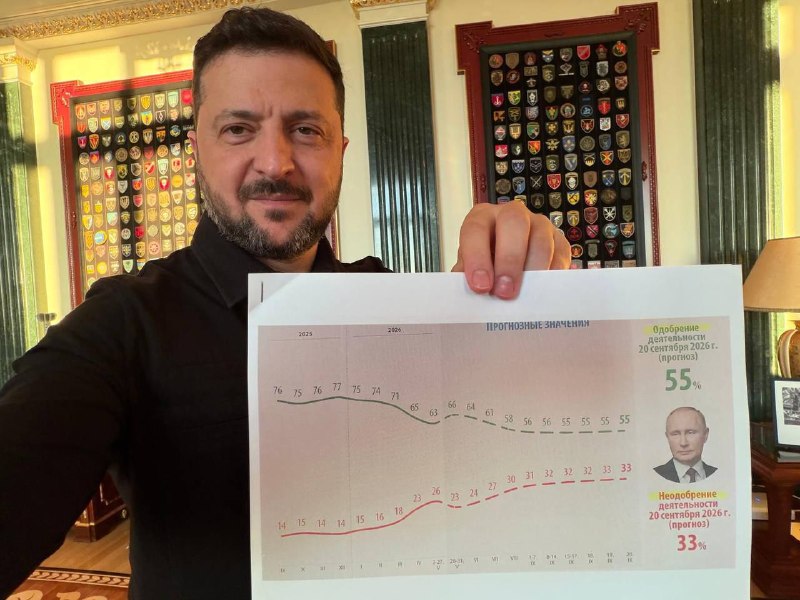
On 4 June 2026, Ukrainian President Volodymyr Zelensky published an open letter to Russian President Vladimir Putin, proposing direct bilateral talks to end the war and offering a personal meeting between the two leaders. The letter, posted on the president's official channels and circulated by Ukrainian outlets, framed the conflict as "your personal choice" — a war "without a real reason" — and asked Putin to sit down with him directly. The Kremlin acknowledged receipt, according to Telegram channels reporting from Kyiv, but had not issued a substantive response by mid-evening UTC.
Zelensky's letter is a piece of political theatre aimed as much at Western capitals and domestic Ukrainian audiences as at the Kremlin. By publicly inviting Putin to negotiate, and by pre-emptively dismissing the standard Russian talking points — NATO enlargement, the status of the Russian language, the broader geopolitical frame — the Ukrainian leader is trying to fix a narrative in advance: the war is Putin's decision, and only Putin can end it. Whether Moscow treats the letter as a serious diplomatic overture or as another move in the information contest will define the next several days of coverage.
The letter's terms
The text, excerpts of which were published on 4 June by Telegram channels including the conflict monitor Clash Report and the Ukrainian outlet Kyiv Post, opens by setting aside the subjects that have shaped the Russian public position since the February 2022 full-scale invasion. "Whatever you say about NATO, geopolitics, and the Russian language — this war is your personal choice," the letter reads, according to Clash Report. "A war without a real reason."
Zelensky then offers a face-to-face meeting. "Ukraine offers to end the war in the format between us and you," reads a separate summary posted by the Operativno ZSU channel. "I offer you a meeting." The Kyiv Post Telegram channel, citing the full text, framed the proposal as direct talks between the two governments, with Zelensky putting himself forward as the Ukrainian counterpart.
The proposal is a notable tactical move. By offering to engage Putin personally — rather than routing the offer through intermediaries, foreign ministries, or third-party mediators — Zelensky attempts to put the diplomatic ball on the Russian side of the court. He also pre-emptively neutralises the long-standing Russian talking point that Kyiv is the obstacle to peace because it refuses to engage: that argument becomes harder to make once the Ukrainian president has publicly asked for a meeting, in writing, on the record.
The Russian side
The Kremlin "saw" the letter, the Operativno ZSU channel reported on 4 June, citing Russian-side statements. Russian state media had not, by the time of writing, run a substantive response. The TSN Ukraine channel reported separately that Putin has, in past statements, named the counterparties with whom he would be willing to sign a peace treaty — a framing that has historically been used by Moscow to raise questions about the legitimacy of Zelensky's government and the durability of any deal he might sign.
That is the structural counter-frame the letter will have to overcome. Moscow's negotiating posture has long combined two elements: maximalist demands (security-architecture changes, NATO non-enlargement, the status of the occupied territories) and a denigration of Kyiv's standing to make binding commitments. Zelensky's open letter does not address the first set of demands — they are excluded by name — and directly confronts the second, by inserting himself personally into the proposed format.
Whether the Russian system treats this as a genuine opening depends on factors the letter cannot reach: battlefield conditions, the domestic political calendar inside Russia, the trajectory of Western military aid, and the appetite in the Kremlin for a deal that would have to be sold to a domestic audience conditioned on a war footing.
The structural frame
The letter arrives in the fourth year of an invasion that has settled, for now, into a pattern of grinding attritional warfare. Front-line movement is measured in metres. Western support packages are passed in tranches and contested in domestic politics from Washington to Berlin. The information environment around the war has hardened, with each side running distinct narratives aimed at its own audience and at the undecided middle.
In that context, an open letter is a familiar instrument — but it does specific work. It produces a discrete, attributable moment. It can be quoted, screenshotted, replayed. It shifts the question of "who is blocking peace" from a matter of competing assertions to a matter of who shows up, or who declines to. That is the lever Zelensky is trying to pull.
There is also an internal Ukrainian dimension. The letter lets Zelensky be seen as the leader who initiated the diplomatic move, regardless of what Moscow does in response. That positioning has value in Kyiv, in European capitals, and in Washington — three audiences whose confidence in the Ukrainian position shapes the willingness to keep supplying matériel. By writing publicly rather than routing the proposal through back channels, he ensures that any future Russian refusal will be visible, attributable, and quotable.
What happens next
The most likely short-term outcome is that Moscow will not accept the meeting in the form proposed, but will not dismiss it outright either. The Russian system has historically preferred to keep negotiations alive at the level of talking about negotiations, while the operational tempo on the ground continues. A counter-proposal — talks at the level of security-council secretaries, or in a third country, or conditioned on a prior Ukrainian concession — is the base case.
The interesting variable is whether any Western capital decides to publicly back the Zelensky proposal as a yardstick. If the United States, the European Union, or the United Kingdom were to formally endorse the meeting offer and call on Russia to accept, the diplomatic weight of any subsequent Russian refusal would be considerably heavier. That step has not, as of mid-evening UTC on 4 June, been taken.
What the letter does not do is change the underlying balance. The war's trajectory is set by matériel, manpower, and political will, not by who writes whom a letter. But it does produce a moment of clarity about who is willing to talk and on what terms — a clarity that has been hard to come by during the extended period of fitful diplomacy that preceded it. The next 72 hours will tell whether the Russian silence is a prelude to engagement, a prelude to a counter-offer, or simply a holding pattern.
Desk note: Monexus has framed Zelensky's letter as a piece of political theatre with diplomatic stakes, not as a substantive shift in the war's trajectory. Ukrainian channels and English-language conflict monitors provided the text; direct Kremlin reaction in primary form was not available at the time of writing and the article notes that explicitly.
Wire provenance
This editorial synthesis draws on the following public wire/social posts:
- https://t.me/Kyivpost_official
- https://t.me/ClashReport
- https://t.me/operativnoZSU
- https://t.me/TSN_ua