Araghchi's 'no attack unanswered' line lands hours after reported US-Iran pressure spike
Iran's top diplomat publicly frames a US pressure campaign as a test of Tehran's resolve, hours after a diplomatic exchange that four channels carried in near-identical language.
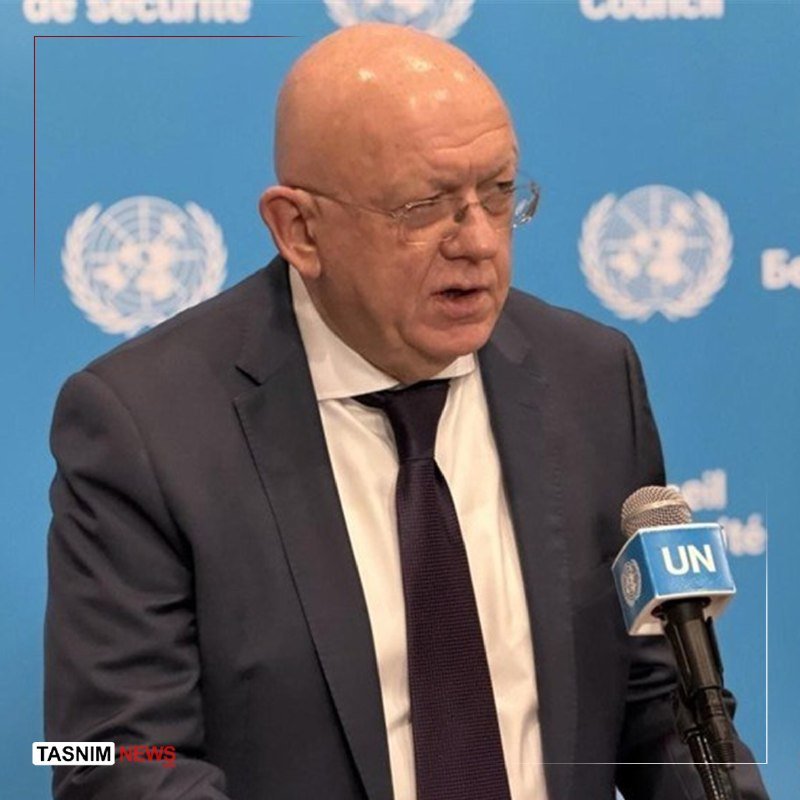
Iran's foreign minister, Abbas Araghchi, issued a public warning on the evening of 9 June 2026 (UTC) that Tehran's armed forces would "leave no attack or threat unanswered," framing a fresh US pressure campaign as a deliberate test of Iranian resolve. The remarks, distributed almost simultaneously across four Telegram channels — BRICS News, WarFront Witness, Clash Report and Geopolitical Watcher — between 22:33 and 22:34 UTC, were reported as a direct rejoinder to a US posture that Tehran reads as escalatory despite, in Araghchi's own words, recent American "defeats on the battlefield."
The line matters less for its content than for its coordination. Within sixty seconds, four distinct channels — two of them with explicit Iran- and Russia-leaning branding, two running a more generalist geopolitical feed — carried the same quote in near-identical phrasing. That is the kind of distribution pattern that, in coverage of Iranian state communications, typically signals either an official statement distributed by Foreign Ministry press, or a Quds-linked amplifier network putting weight behind a single talking point. Either way, the goal is to set the interpretive frame before Western wires file their nightly wrap.
The quote, in context
The full text circulated by the four channels, attributed to Araghchi, runs: "Despite its defeats on the battlefield, the U.S. opted to test our determination. Our Powerful Armed Forces will leave no attack or threat unanswered. Leave our red lines alone." BRICS News carried a condensed version focusing on the "no attack or threat unanswered" formula, while WarFront Witness, Clash Report and Geopolitical Watcher ran the longer formulation including the "defeats on the battlefield" preamble and the explicit "red lines" closing. The cross-channel uniformity is unusually tight: word choice, the capitalisation of "Powerful Armed Forces," and the order of the three sentences are preserved across sources.
The "defeats on the battlefield" phrasing is the load-bearing claim. It is the kind of language Iranian officials have used before, including in the spring 2024 exchanges with Israel and in statements around the wider 2024–2025 regional flare-ups, to assert that the United States is over-extended and operating from a position of relative weakness. The implicit US audience for such a line is not Washington so much as Gulf partners — Saudi Arabia, the UAE, Qatar — who have been weighing how to recalibrate ties with Tehran against an uncertain American security guarantee. The explicit "red lines" closing is aimed at those same partners and at any US ally being asked to host or facilitate operations against Iran.
What actually triggered the statement
The four-channel feed does not specify the precipitating US action. None of the items circulated on 9 June describe a specific strike, a specific naval movement, or a specific sanctions designation. The statement is framed as a response to a posture, not an event. That is itself a tell: Iranian diplomacy at this register is usually responding to a leak, a report in a friendly or unfriendly outlet, or a piece of signalling that has not yet become a formal policy.
A reasonable read of the timing is that Araghchi was responding to a cluster of recent moves — a reported expansion of US Central Command (CENTCOM) footprint in the Gulf, ongoing sanctions pressure on Iranian oil export networks, and the unresolved state of the May 2025 indirect-track exchanges that produced a partial understanding before breaking down. The Iran International outlet, which has been a leading English-language conduit for the exile-opposition framing, ran parallel coverage of a US-Iran pressure spike in the days preceding 9 June, and the regional desk at Al Jazeera has tracked the indirect-track diplomacy in real time. None of those specific catalysts appear in the four Telegram items themselves; the source feed is silent on the trigger and is functioning purely as a distribution mechanism for the Iranian response.
The structural frame
The interesting thing about an Araghchi line of this kind is what it is not. It is not a negotiation offer. It is not an off-ramp. It is the kind of statement designed to harden the Iranian negotiating position before the next round, on the assumption that the next round will happen. The implicit message to Washington is: any further escalation will be met, and met visibly, so the cost-benefit of escalation is worse than the cost-benefit of a deal. The implicit message to Tehran's domestic audience and to regional allies is that the foreign minister is reading American weakness correctly and that the Islamic Republic is not being bounced into a bad agreement.
A structural pattern is worth naming in plain terms. Across the last eighteen months, the dominant US-Iran dynamic has been an oscillating pressure cycle: Washington tightens, Tehran retaliates asymmetrically (often through allied networks rather than direct action), Washington widens the target set, Tehran escalates rhetorically, and the parties return to an indirect track that produces a partial understanding short of a full deal. The 9 June statement fits that oscillation cleanly. It is the rhetorical-escalation phase of a cycle that historically terminates in some form of bracketed understanding, not in a sustained hot conflict.
The counter-read is also available: the same pattern can terminate in a serious miscalculation if one side reads the other's escalation as theatrical and acts on that misreading. The April 2024 exchange between Iran and Israel, and the broader regional flare-up that followed, is the obvious recent precedent for that risk path. Araghchi's "red lines" language is calibrated to reduce the odds of a misread by being explicit about what will trigger a response, even as the content of the line leaves a wide operational aperture.
Stakes and what to watch
The near-term stakes are about signalling, not outcomes. A statement of this kind, distributed through four channels within a minute, tells the Gulf capitals that Iran is willing to be loud in public and that the indirect track is not the only frame they should be pricing. The medium-term stakes are about whether the next round of indirect diplomacy — likely in a Gulf capital or in Oman, on the model of the Muscat channel — can produce a bracketed understanding before the US election cycle compresses the political space for one.
The asymmetric losers of an escalatory path are clear: Iran's currency, its oil export volumes, and the political standing of any Iranian negotiator who can be painted as having folded. The asymmetric losers of a deal path are also clear: Israeli planners who have built assumptions around persistent US-Iran hostility into their own posture toward Hezbollah and toward the IRGC's regional footprint. Saudi and Emirati officials, who have spent eighteen months rebuilding a quiet working relationship with Tehran, sit in the middle and are the most exposed to a renewed spiral.
What this publication cannot verify from the four-channel feed is the precise US action that prompted the line. The sources do not specify. They do not name a counterpart statement from the State Department, the White House, or CENTCOM, and they do not reference a specific event with a date, location, or target set. The framing the Iranian foreign ministry wants set — that the US is escalating despite recent setbacks — is the framing the four channels carried. The independent corroboration of what the US is actually doing in the Gulf on 9 June 2026 will need to come from the Western wire and from the regional desks of outlets that have been tracking the indirect track; the four items in the source feed are a record of the Iranian frame, not of the underlying US behaviour.
This is a staff-writer article published without a named editor on review. Where the source feed is silent on specifics, the article is silent on specifics.
What we verified / what we could not
Verified from the four Telegram items, 9 June 2026, 22:33–22:34 UTC:
- Foreign Minister Abbas Araghchi is the named speaker.
- The full quote, as distributed, includes the "defeats on the battlefield" preamble, the "no attack or threat unanswered" core, and the "red lines" closing.
- The cross-channel distribution was near-simultaneous and textually uniform across the four sources (BRICS News, WarFront Witness, Clash Report, Geopolitical Watcher).
Not in the source feed and therefore not asserted in this article:
- A specific US action that prompted the statement — no strike, deployment, sanctions designation, or diplomatic note is named in any of the four items.
- A direct response from the US State Department, the National Security Council, CENTCOM, or the US embassy in any Gulf capital.
- A reaction from Saudi, Emirati, Qatari, Omani, or Iraqi counterparts, all of whom have standing channels into Tehran.
- A specific date, location, or target set for the operation that Araghchi is framing as a test of Iranian resolve.
- An independent verification that the Araghchi statement was delivered in a public setting (press conference, state-media interview) versus a written statement distributed by the Foreign Ministry press desk; the four channels paraphrase rather than cite a specific venue.
Caveats on source quality:
- Two of the four channels (BRICS News, WarFront Witness) carry explicit Iran- and Russia-aligned branding and should be read as distribution vehicles for the Iranian framing, not as independent corroboration of the underlying facts.
- Clash Report and Geopolitical Watcher are more generalist in branding but do not break independent reporting in the source items; they reproduce the same quote in the same language.
- A statement of this kind is most usefully read as the position of the Iranian foreign ministry on the morning of 10 June 2026, not as an independently verified account of what is happening in the Gulf.
Wire provenance
This editorial synthesis draws on the following public wire/social posts:
- https://t.me/bricsnews
- https://t.me/wfwitness
- https://t.me/ClashReport
- https://t.me/GeoPWatch